July 11, 2026 · 5 min read
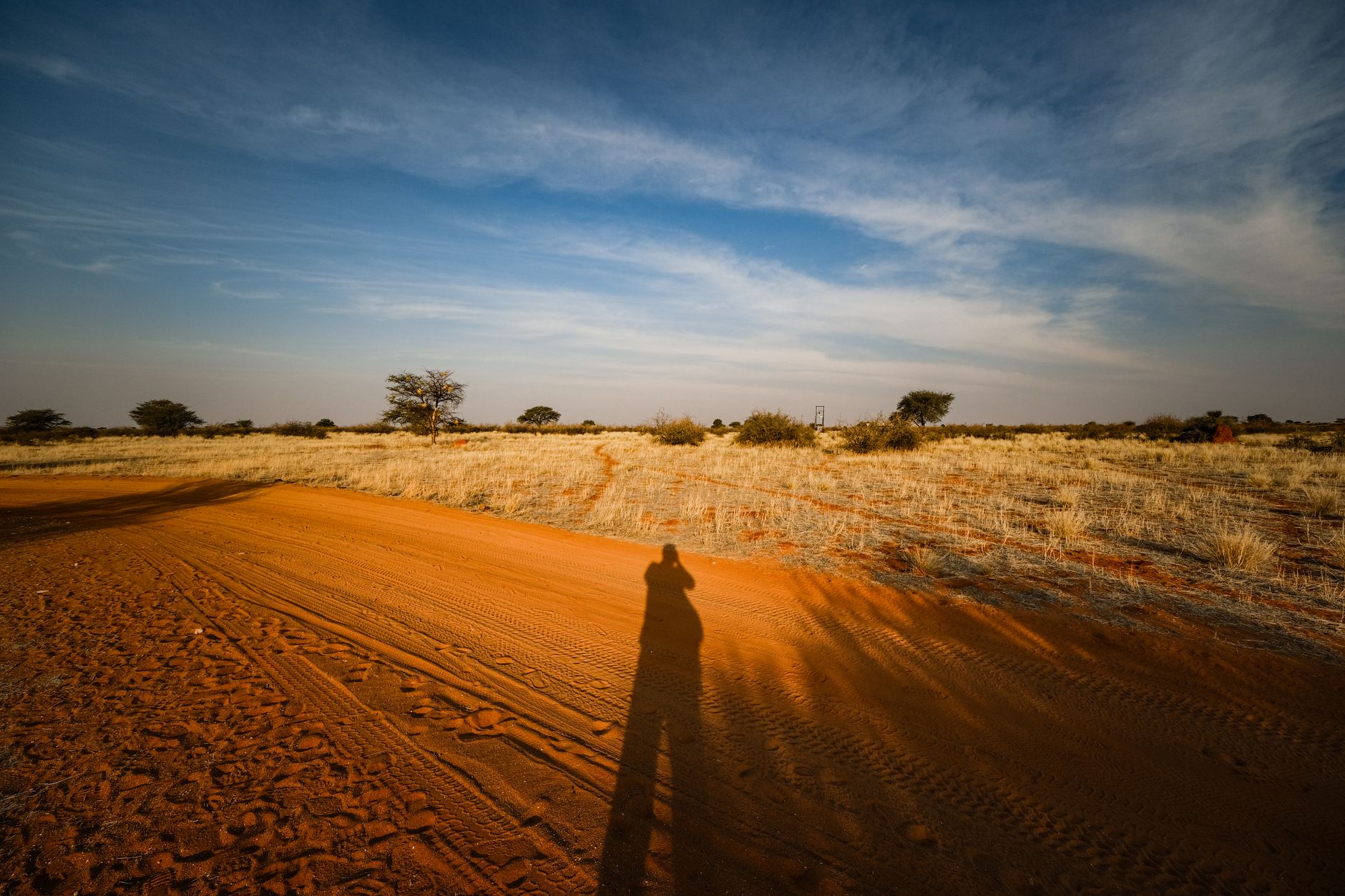
Namibia often appears on itineraries as a quick highlight reel: the iconic dunes of Sossusvlei, the wildlife of Etosha, maybe a glimpse of the Skeleton Coast. While these destinations are undeniably spectacular, they merely scratch the surface of a country that rewards deeper, slower exploration.
For those with the time and curiosity, Namibia reveals itself as a land of ancient secrets, geological wonders, and resilient cultures hidden in its less-trodden paths. Spending months here allows for genuine immersion, uncovering stories that short visits simply can't capture, from desert-swallowed ghost towns to living fossils defying time.
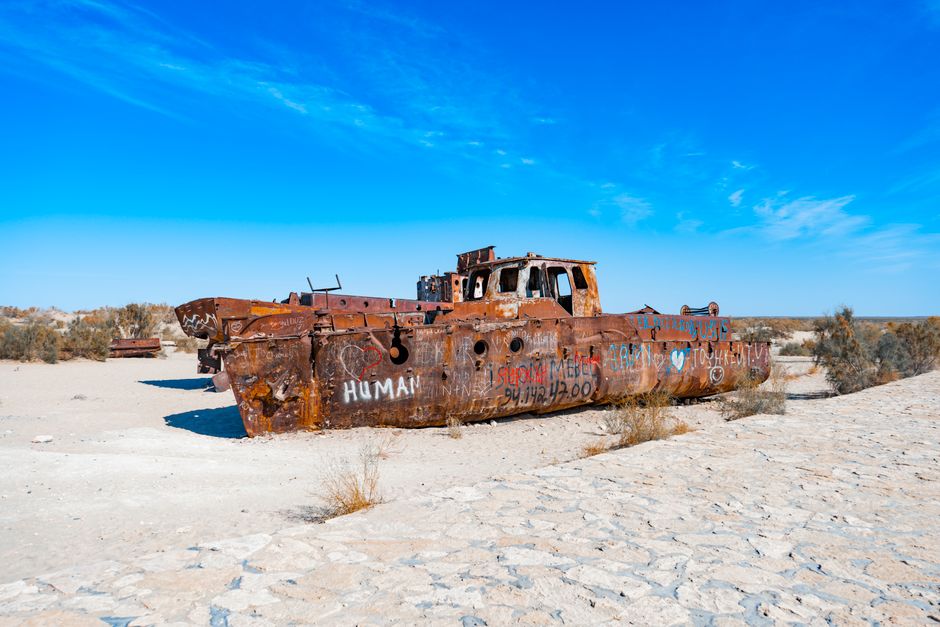
1. The Desert's Graveyard of Ships
Möwe Bay, Skeleton Coast Park, Namibia
Why do ancient shipwrecks sit miles inland, surrounded by nothing but sand dunes and a vast, empty silence?
The Skeleton Coast is a formidable stretch where the powerful Benguela Current and dense fogs have historically conspired to strand countless vessels. What is truly striking is how the encroaching Namib Desert has swallowed many of these wrecks whole, some now lying surprisingly far from the current shoreline. Shifting sands and the relentless desert environment create a surreal landscape where the ocean's past victims are claimed by the land, turning rusting hulls into geological curiosities and stark reminders of nature's power.
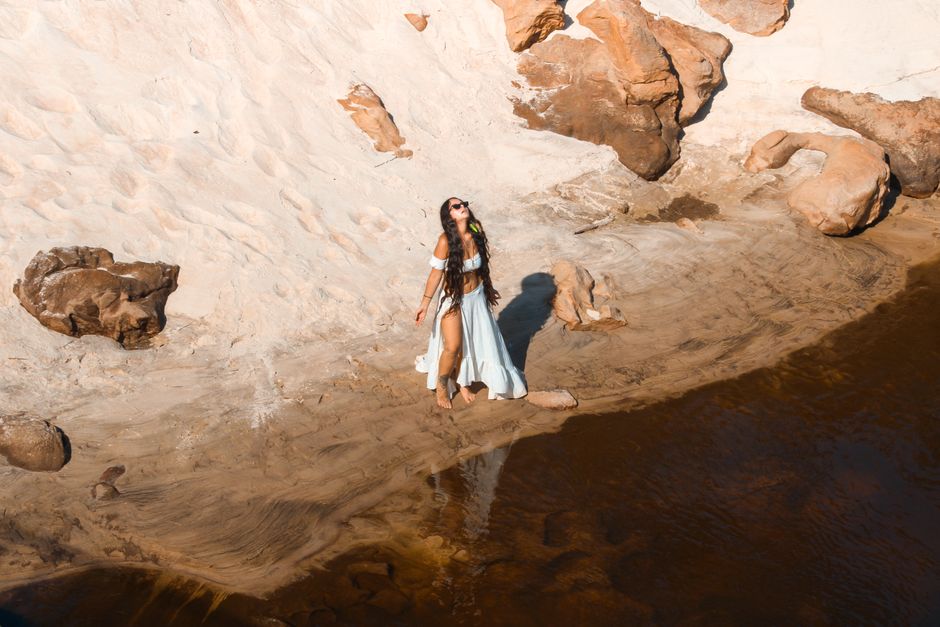
2. Ancient Shamans of the Granite Mountains
Brandberg Massif, Damaraland, Namibia
An enigmatic figure, once mistaken for a European, painted thousands of years ago in the middle of Namibia's colossal highest mountain.
The Brandberg, Namibia's highest mountain, holds thousands of San rock art sites, with the 'White Lady' being the most famous. Part of a larger panel depicting a ritual procession, her identity was a source of debate for decades, with early European explorers misidentifying her due to her light skin tone and elaborate attire. Modern analysis confirms she is a San shaman or hunter, painted with ochre and mineral pigments, a testament to ancient spiritual practices and sophisticated artistic techniques in this remote, arid environment.
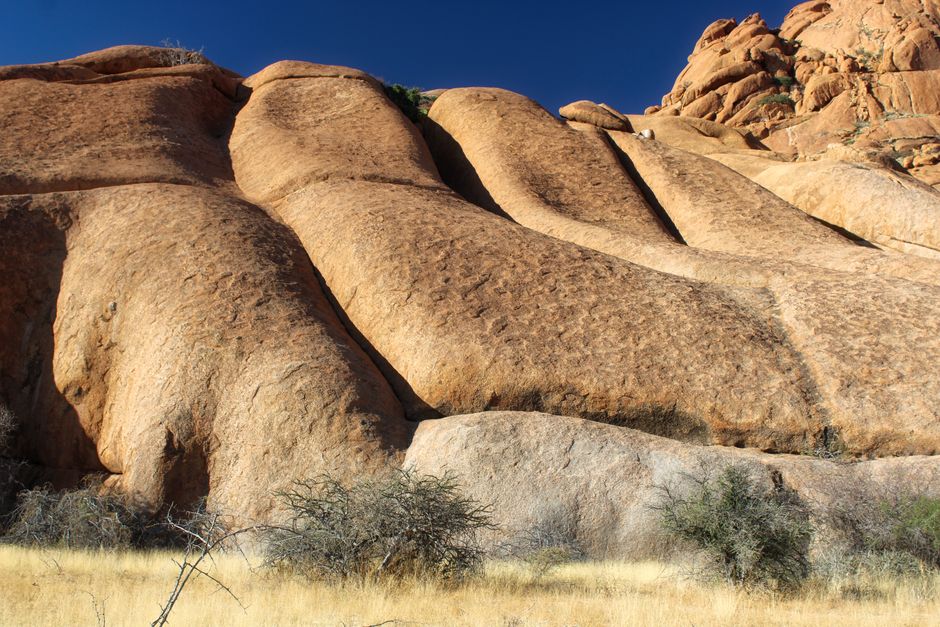
3. The Eroded Heart of a Supervolcano
Erongo Mountains, near Omaruru, Namibia
This ancient volcanic complex cradles a unique landscape where granite boulders balance precariously and ancient humans left a legacy of thousands of rock art panels.
The Erongo Mountains are the eroded remnants of a massive ancient volcano, presenting a dramatic landscape of granite domes, balancing rocks, and hidden valleys. It's not just the geology that captivates; the Erongo is home to thousands of rock art sites, many less accessible and less studied than those at Twyfelfontein. These paintings and engravings, created by San people over millennia, depict animals, humans, and abstract symbols, offering an intimate glimpse into the spiritual and daily lives of hunter-gatherers in this rugged environment.
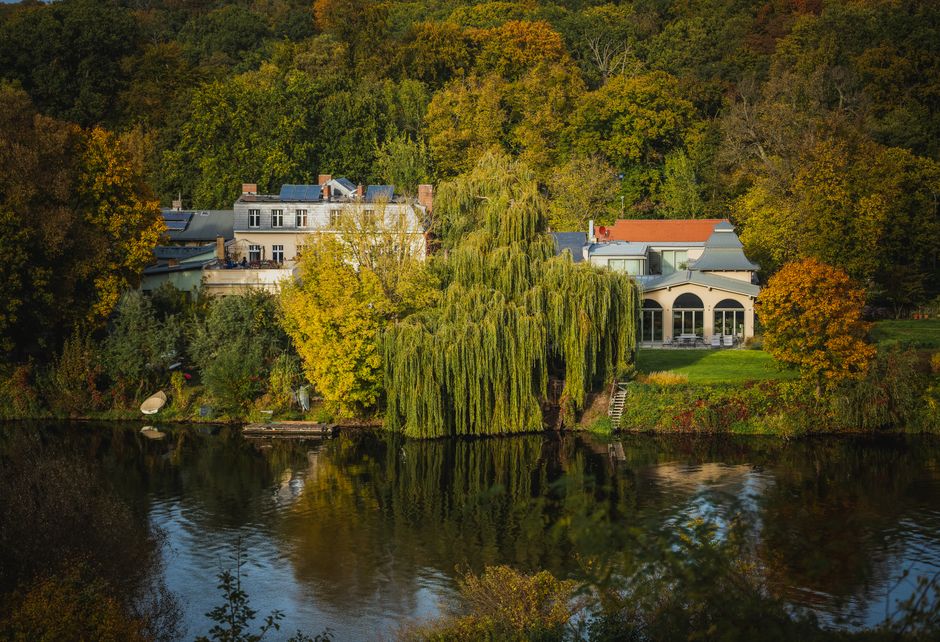
4. Cascading Lifeline on a Desert Border
Epupa Falls, Kunene River, Namibia
On Namibia's remote northern border, a mighty river plummets over a series of cascades, sustaining lush palm forests and an ancient culture amidst an otherwise arid landscape.
The Epupa Falls are not a single, grand drop but a series of dramatic cascades where the Kunene River plunges over a kilometer-long stretch. This powerful river forms the border between Namibia and Angola, and its waters nourish a narrow ribbon of dense vegetation, contrasting sharply with the surrounding dry Mopane woodlands. It’s a vital lifeline for the Himba people, whose traditional lifestyle and distinctive adornments are deeply intertwined with the river and its resources, offering a unique window into a culture adapting to a changing world while maintaining ancient customs.
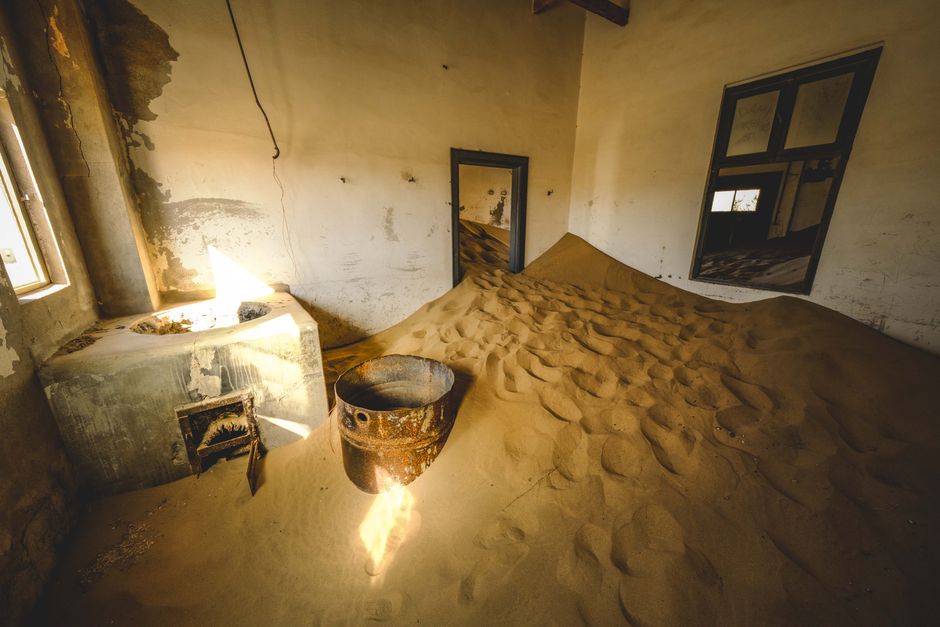
5. The Wind-Swept Remains of Diamond Dreams
Elizabeth Bay, near Lüderitz, Namibia
This diamond mining ghost town, once bustling, now slowly surrenders to the encroaching desert, its abandoned buildings filled with sand and silence.
Elizabeth Bay, south of Lüderitz, was another diamond mining settlement that boomed and then bust. Unlike Kolmanskop, it was operational more recently, closing in the 1990s, giving its decay a slightly different feel. The strong winds constantly blow sand through the windows and doors of the deserted buildings – the power station, accommodation blocks, and recreation halls. Exploring Elizabeth Bay offers a stark visual of nature's relentless reclamation, a testament to the fleeting nature of human enterprise against the backdrop of the powerful Namib Desert.
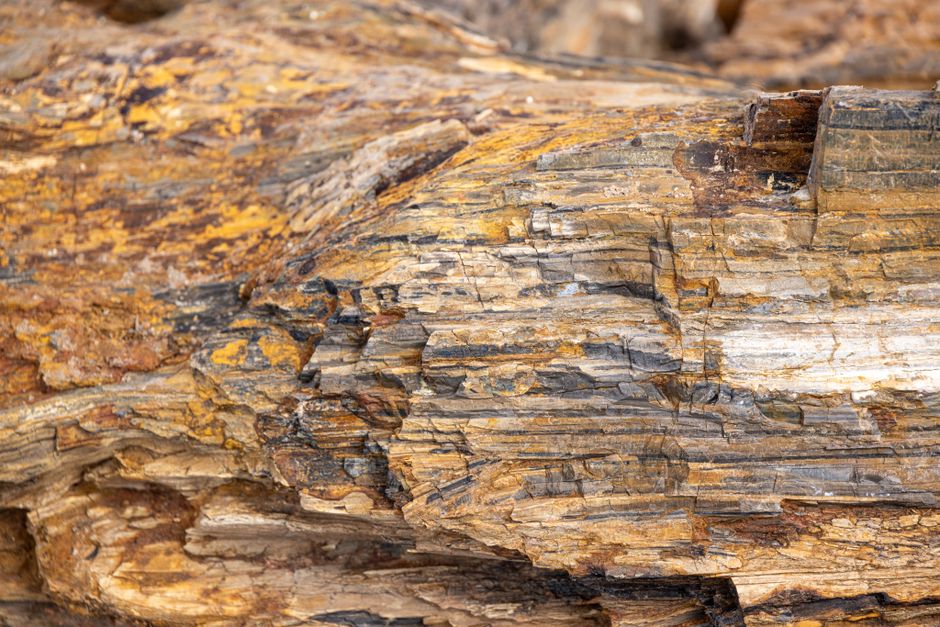
6. The Giant Petrified Trees of Khorixas
The Petrified Forest, near Khorixas, Namibia
These aren't just ancient trees, but colossal fossilized logs, some reaching over 30 meters, transported by ancient floods and turned to stone over millions of years.
This geological site presents a fascinating spectacle of ancient wood transformed into rock. Millions of years ago, massive trees, likely from a distant forest, were uprooted and carried by powerful floods into what was then a vast inland sea or swamp. Over eons, silica-rich water replaced the organic material of the wood, molecule by molecule, preserving the intricate cellular structure of the trees as stone. Walking among these giant, silent logs, visitors encounter a tangible link to a prehistoric landscape, far removed from present-day arid Namibia.

7. The Immortal Plant of the Desert
Welwitschia Plains, Namib-Naukluft Park, Namibia
Scattered across this barren landscape are individual plants that can live for over 1,500 years, some even 2,000, defying the desert's harsh conditions with just two leaves.
The Welwitschia mirabilis is a botanical marvel, endemic to the Namib Desert and a true living fossil. Each plant produces only two leaves in its entire lifespan, which continuously grow and fray over centuries, often resembling an octopus. These remarkable survivors draw moisture from coastal fogs, a testament to their incredible adaptation. The Welwitschia Plains offer a unique opportunity to witness these ancient individual specimens in their natural, protected habitat, providing a profound sense of deep time and resilience.
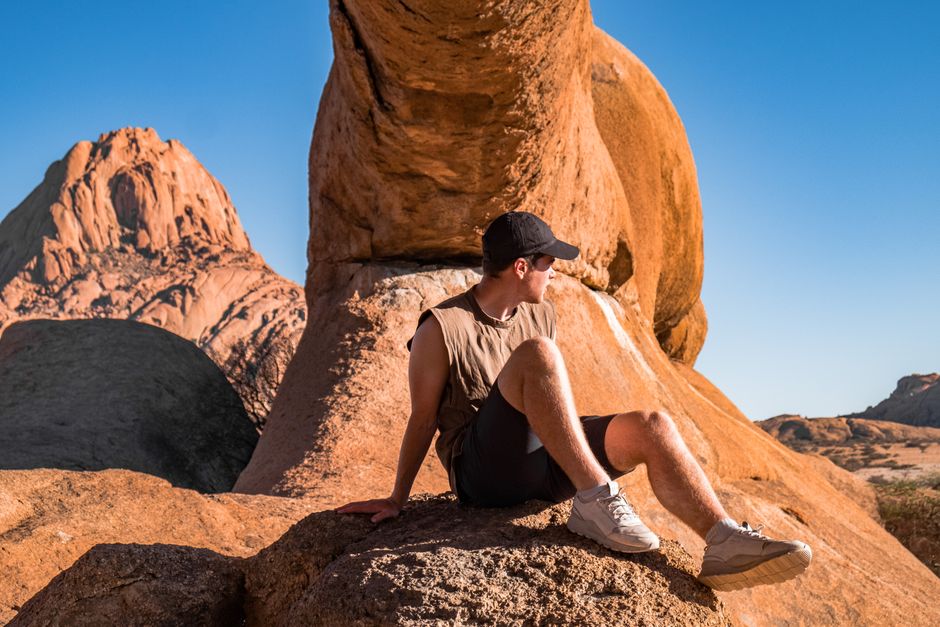
8. Touching a Piece of the Cosmos
Hoba Meteorite, near Grootfontein, Namibia
This isn't just a rock; it's the largest single meteorite ever found on Earth, an iron behemoth weighing an estimated 60 tons that crashed here 80,000 years ago.
The Hoba Meteorite lies where it fell, never having been moved due to its immense size and weight. Composed primarily of iron and nickel, its surface exhibits distinct features from its fiery atmospheric entry and impact. Discovered by a farmer in 1920, it provides a tangible connection to outer space, offering a rare opportunity to touch a piece of the cosmos right here on Earth. Its sheer scale and the story of its journey through space make it a remarkable natural monument.
Frequently asked questions
Is Namibia safe for long-term travel?
Namibia is generally considered safe for travelers, even for extended periods, especially outside major cities. However, long-term travel requires careful planning for remote areas, including carrying sufficient water, fuel, and communication devices, and informing others of your route.
What is the best time of year for an extended trip to Namibia?
The dry season (May to October) is popular for wildlife viewing and has pleasant temperatures, making it ideal for extended exploration. However, the shoulder seasons (April, November) offer fewer crowds and unique landscapes, with occasional rains bringing the desert to life, which can also be rewarding for a longer stay.
What unique challenges does long-term travel in Namibia present?
The sheer vastness of Namibia means long driving distances between points of interest, often on gravel roads, requiring a reliable 4x4 vehicle. Infrastructure can be sparse in remote regions, so preparedness for self-sufficiency, including water and fuel, and understanding local customs, are key challenges.
How can the AllTours.ai app enhance a long trip through Namibia?
AllTours.ai transforms your exploration by providing instant, in-depth narratives about the places you encounter. Simply point your phone camera at any landscape, landmark, or even a unique plant like the Welwitschia, and the app will narrate its history, geology, and culture in your language, revealing layers of story you might otherwise miss during a long, independent journey.
Photography via Pexels. AllTours.ai is an AI audio tour guide — point your camera at any landscape and hear its story.