September 7, 2026 · 4 min read
Canada's winters are legendary for their crisp air and blankets of snow, leading many to wonder: does the cold weather in Canada make it harder to explore outdoors? While the mercury certainly drops, the answer is a resounding 'no'—in fact, winter transforms the landscape, revealing a side of Canada that's both breathtaking and uniquely accessible.
Beyond the well-trodden ski slopes and bustling Christmas markets, there are countless hidden wonders waiting to be discovered. From ancient geological marvels to towns literally tilting on permafrost, Canada's colder months offer a chance to witness truly extraordinary phenomena. Here are some incredible, lesser-known spots where winter doesn't just make it possible to explore, it makes it unforgettable.
1. The Frozen Cathedral
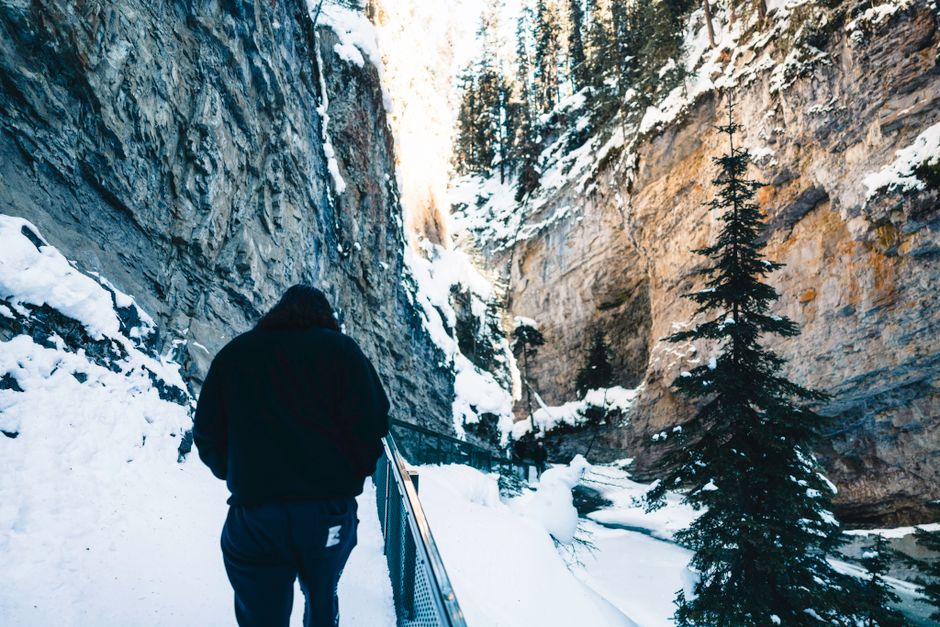
Maligne Canyon, Jasper National Park, Canada
Walk on a frozen riverbed, deep within a canyon, gazing up at towering icefalls where water once thundered.
Maligne Canyon in Jasper National Park is the deepest accessible canyon in the park, and in winter, it becomes an otherworldly ice wonderland. As temperatures plunge, the river freezes solid, allowing adventurers to walk on the canyon floor. Here, waterfalls transform into magnificent blue and white ice sculptures, some reaching several stories high, creating a natural cathedral of ice.
2. Canada's Twin Impact Craters
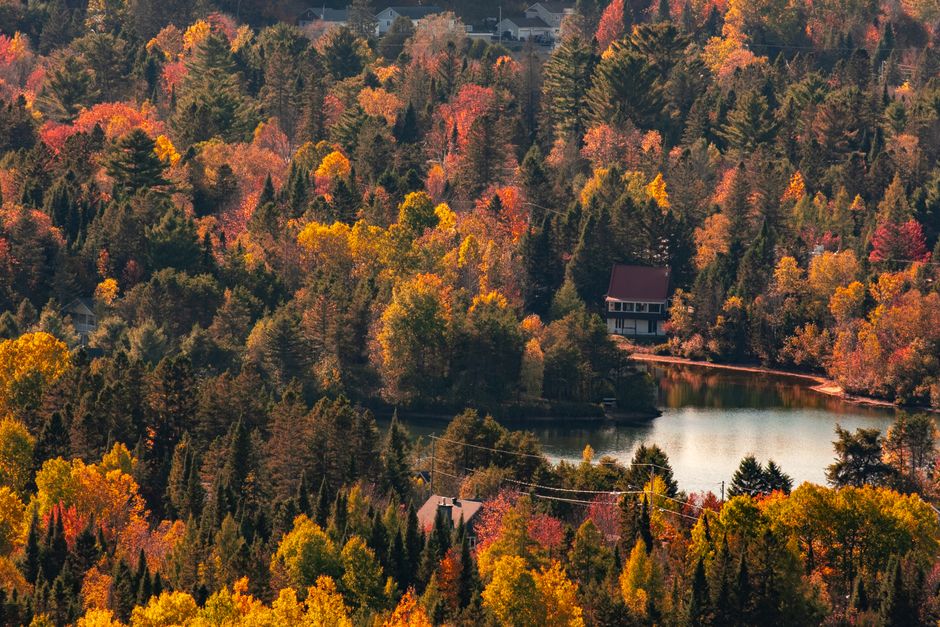
Clearwater Lakes, Quebec, Canada
Discover two perfectly circular lakes that are actually ancient meteor impact craters, visible as stunning ice-covered eyes from above.
Deep in northern Quebec lie the Clearwater Lakes (Lac à l'Eau Claire), a pair of circular lakes that are a rare example of twin meteor impact craters. Formed by a meteor shower millions of years ago, the western crater is younger and more perfectly preserved, while the eastern one is older and more eroded. In winter, the frozen expanse accentuates their distinct circular forms, offering a stark geological spectacle unique in the world.
3. The Stone Guardian of Superior
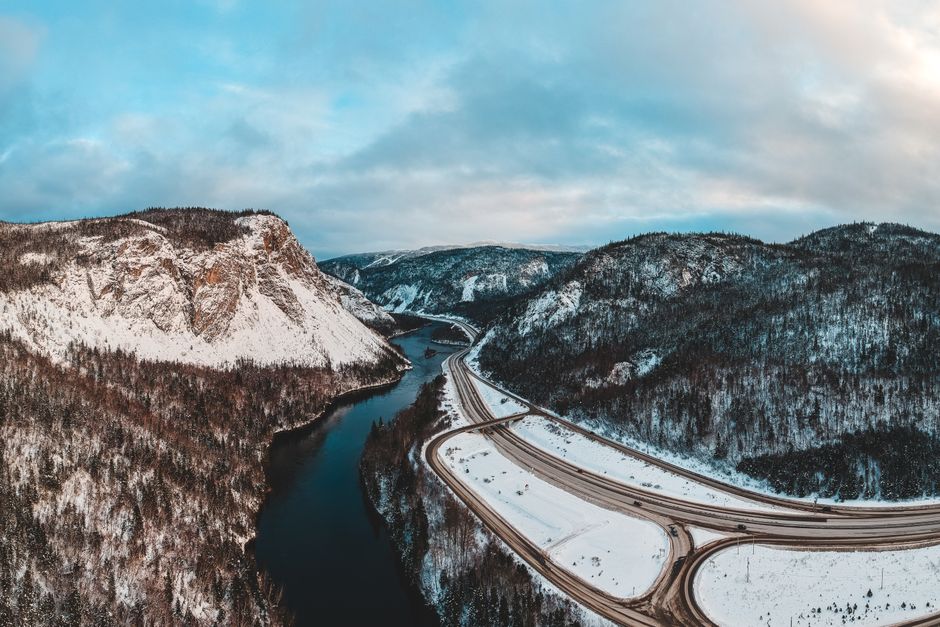
Sleeping Giant Provincial Park, Ontario, Canada
Witness a massive rock formation resembling a sleeping giant, steeped in Ojibwe legend, standing sentinel over a frozen Lake Superior.
Sleeping Giant Provincial Park, on the Sibley Peninsula near Thunder Bay, is named for its mesa-like rock formation that strikingly resembles a giant lying on his back. Ojibwe legend identifies this as Nanabozho, turned to stone. In winter, the snow-dusted 'Giant' stands in stark relief against the sometimes-frozen waters of Lake Superior, offering unparalleled views and a profound sense of ancient mystery amidst the biting cold.
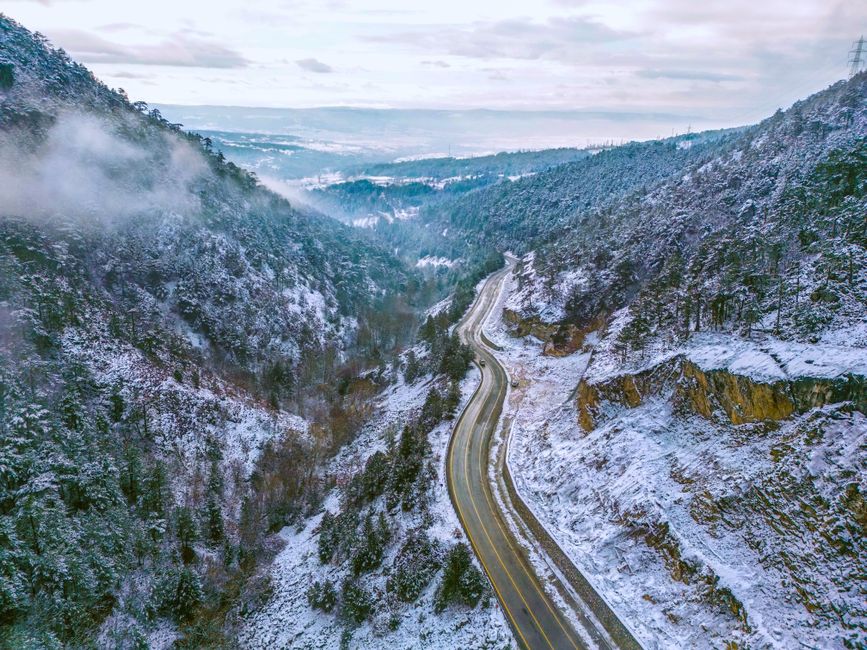
4. Where Tides Freeze in Time
Fundy Trail Parkway, New Brunswick, Canada
Experience the world's highest tides creating colossal ice formations along a rugged coastal trail in winter.
The Bay of Fundy is famous for having the highest tides on Earth, but in winter, this natural wonder takes on an entirely new dimension along the Fundy Trail Parkway. Extreme tides, combined with freezing sea spray and sub-zero temperatures, sculpt the cliffs and beaches into incredible ice formations and frozen waterfalls. The parkway provides dramatic viewpoints to observe this ephemeral, ever-changing masterpiece of ice and ocean.
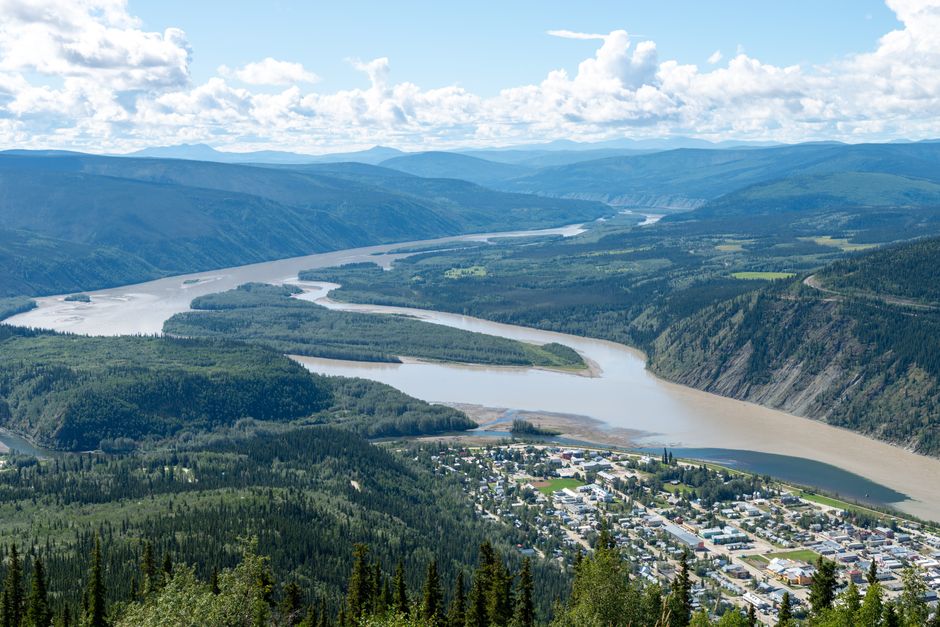
5. The Tilting Gold Rush Town
Dawson City, Yukon, Canada
Explore a historic Gold Rush town where buildings constantly tilt and sink due to the persistent permafrost beneath them.
Dawson City, the heart of the Klondike Gold Rush, is a town frozen in time, but its foundations are anything but stable. Built on permafrost, the ground beneath its historic buildings—including the iconic Palace Grand Theatre—thaws and refreezes, causing structures to shift, tilt, and sometimes sink. This unique battle against the elements has earned some buildings the nickname 'drunken buildings,' a fascinating testament to human resilience in the far North.
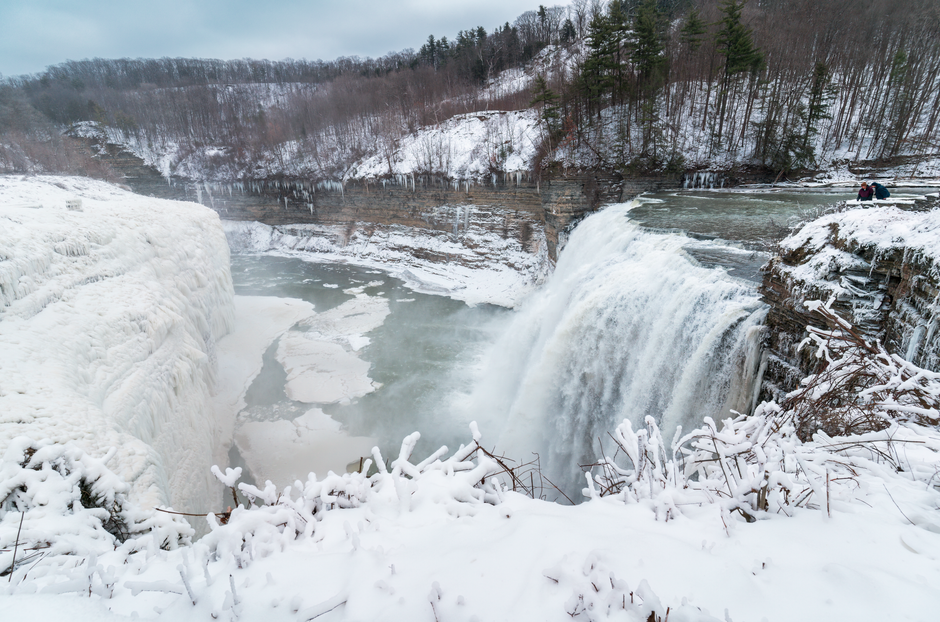
6. The Frozen Giant of the North
Nahanni National Park Reserve, Northwest Territories, Canada
Witness Virginia Falls, a waterfall twice the height of Niagara, often frozen solid into a monumental ice sculpture in the remote wilderness.
Nahanni National Park Reserve, a UNESCO World Heritage site, protects a vast, wild expanse of the Mackenzie Mountains. Its crown jewel is Virginia Falls (Nailicho), a colossal waterfall plunging 90 meters. In the depths of winter, this immense cascade can partially or entirely freeze, transforming into an awe-inspiring, silent ice monument. This remote wonder, often only accessible by air, offers a truly epic and serene winter wilderness experience.
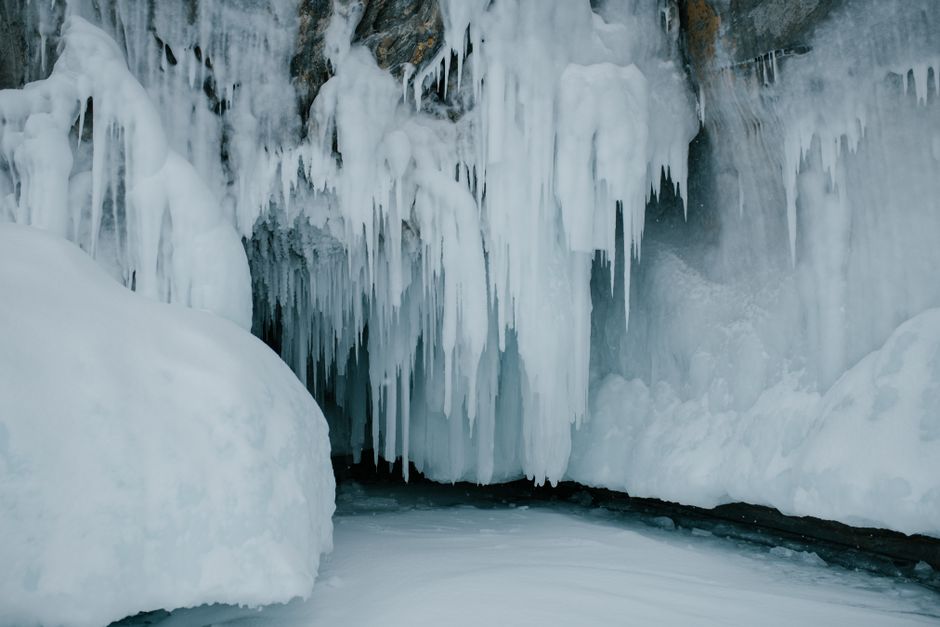
7. The Ephemeral Ice Grottoes
Lake Superior North Shore, Ontario, Canada
Discover breathtaking ice caves along the northern shore of Lake Superior, forming only when conditions are perfectly cold and still.
Along the rugged northern shore of Lake Superior, near areas like Silver Islet, sandstone cliffs are carved with natural sea caves. In specific, consistently cold winters, when the lake freezes thick enough, these caves become accessible. Inside, they reveal stunning formations of icicles, frozen waves, and translucent blue ice, creating an ephemeral grotto that is as rare as it is beautiful—a true reward for braving the cold.
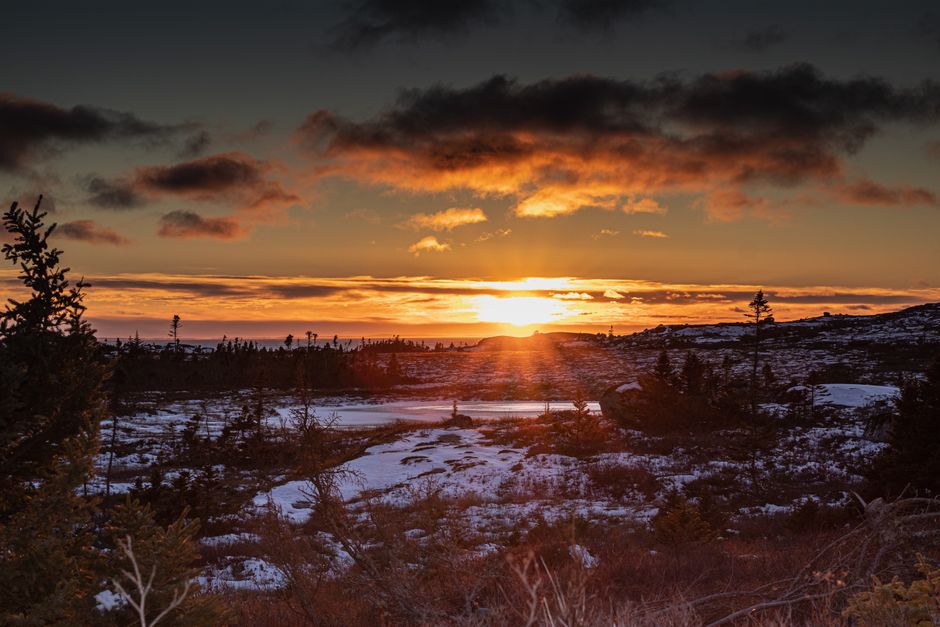
8. Walking on the Earth's Mantle
Gros Morne National Park, Newfoundland and Labrador, Canada
Trek across a barren, Mars-like landscape where the Earth's mantle, usually miles below the surface, is exposed to the elements.
Gros Morne National Park is a UNESCO World Heritage site renowned for its dramatic fjords and unique geological features. The Tablelands area is particularly extraordinary: it's one of the few places on Earth where the planet's mantle has been pushed to the surface. This creates a striking, barren landscape of peridotite rock. In winter, a blanket of snow further accentuates its alien beauty, offering a stark and humbling experience of deep geological time.
Frequently asked questions
Is winter a good time to visit Canada for outdoor activities?
Absolutely! While cold, Canadian winters offer a unique array of outdoor activities not possible at other times of the year, from ice skating on frozen canals to exploring ice caves and snowshoeing through pristine wilderness. With proper gear, it's an incredibly rewarding season for exploration.
What essential gear do I need for winter outdoor exploration in Canada?
Layers are key: thermal base layers, an insulating middle layer (fleece or down), and a waterproof/windproof outer shell. Don't forget warm, waterproof boots, thick socks, a hat that covers your ears, gloves or mittens, and a neck gaiter. Hand and foot warmers can also be a lifesaver.
Are there any unique winter festivals or events in Canada?
Canada hosts many unique winter festivals, celebrating everything from ice sculpting to carnival traditions. Major events include the Quebec Winter Carnival, Ottawa's Winterlude, and various light festivals across cities. Many smaller towns also have local winter fairs and cultural celebrations.
How does the AllTours.ai app enhance winter exploration in Canada?
AllTours.ai transforms your phone into a personal AI audio tour guide. Simply point your camera at any landmark or landscape—be it a frozen waterfall, a unique rock formation, or a historic building—and the app will narrate its history, geology, and cultural significance in your preferred language, making every winter discovery come alive with its story.
Photography via Pexels. AllTours.ai is an AI audio tour guide — point your camera at any landscape and hear its story.