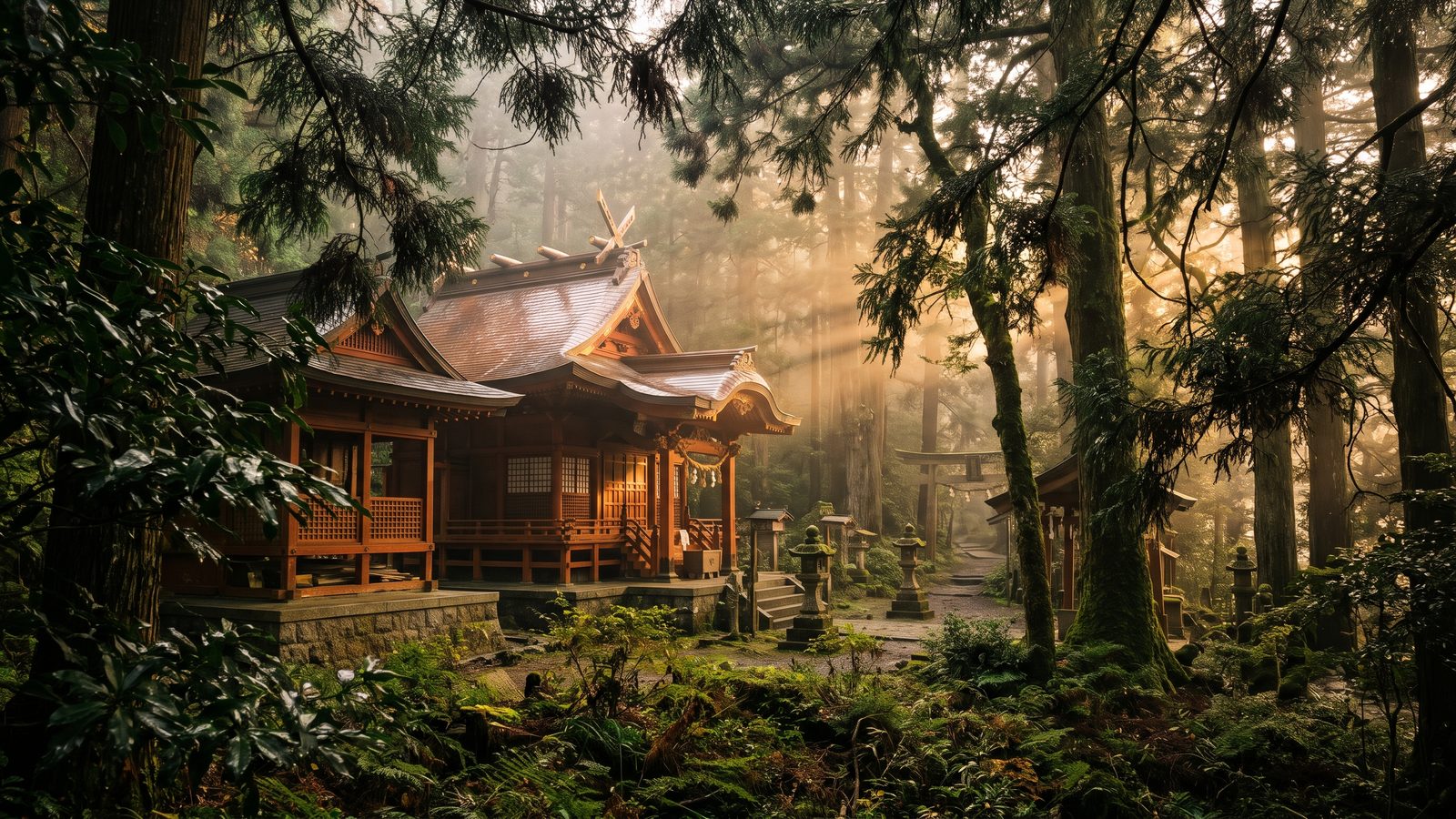
Step into the sacred embrace of Mount Arayama, where ancient forest paths lead you into centuries of Japanese spiritual tradition. Enveloped by an eight-hundred-year-old cryptomeria grove, this sacred sanctuary offers a peaceful retreat from the modern world. As you walk through the torii gates, this audio tour guides you through deep-rooted Shinto customs, serene sacred architecture, and the timeless harmony between humanity and the natural mountain realm.
Discover the shrine's rich legacy from its ancient Heian period origins to its role as a samurai refuge and agricultural sanctuary. Whether you seek quiet contemplation, exquisite wooden craftsmanship, or photographic inspiration, your journey through these hallowed grounds will connect you directly to the living spirit of the mountain.
What you'll hear on this tour
Stop 1. The Sweeping Nagare-Zukuri Architecture
You stand before the main sanctuary, admiring the exquisite nagare-zukuri style of the honden. Its sweeping cypress roof gently curves like a wave, directing rainwater away from the sacred core to symbolize protection and purification. Reconstruction dates back to the twelfth century, and if you look closely at the aged copper roof tiles and intricate carvings adorning the haiden's eaves, you feel a link across centuries. Unseen within resides the mountain kami, guardian of travelers and bountiful harvests. On clear days, sunlight hits gilded ornaments, offering a glimpse of the divine energy that has continuously defined this hallowed ground.
Stop 2. Within the Ancient Sacred Grove
Step into the chinju no mori, the sacred grove surrounding the shrine precinct. You immediately feel a cool drop in temperature as majestic cryptomeria trees, some standing for over eight hundred years, filter sunlight into dappled patterns across the mossy forest floor. The colossal trunks of these sugi trees rise around you like natural pillars, their textured bark holding centuries of silent prayers. Take a deep breath to inhale the earthy scent of damp soil and cedar needles. As mountain bird calls echo through the high canopy, you experience a vibrant ecosystem where the kami are believed to dwell most profoundly.
Stop 3. Deep Roots of Mountain Worship
You trace the origins of Arayama Shrine back to the Heian period, long before these wooden structures stood. Early ascetics and settlers recognized the mountain's power, marking consecrated spaces with simple himorogi ropes. Imperial court records from the ninth century document offerings sent here, proving its early spiritual prominence. During the turbulent Kamakura period, local samurai clans visited to pray for victory before battle, viewing the mountain kami as a formidable protector. Beyond warfare, the shrine served agricultural communities, as priests maintained vital knowledge of weather patterns and planting cycles, fostering an enduring bond between the land and its people.
Stop 4. Purification and Divine Connection
Passing beneath the torii, you undergo harae, symbolically stepping out of the everyday world and into sacred space. Pause at the temizuya water basin to cleanse your hands and mouth, a ritual of mind and body before approaching the kami. As you stand before the worship hall, participate in traditional reverence: bow twice, clap twice, and bow once more to invite the deity's presence. Feel the palpable reiki, or spiritual energy, lingering in the air. This place embodies musubi, the core Shinto concept of connection, binding humanity, the divine, and the surrounding wilderness into one unbroken spiritual realm.
Stop 5. Living Traditions and Sacred Rituals
Look around at the vibrant culture woven into daily life here. Hanging wooden ema plaques carry written wishes and gratitude to the mountain wind, while omikuji paper fortunes offer divine guidance—tied to tree branches if unfavorable to leave misfortune behind. Notice the thick shimenawa ropes binding sacred trees and stones, marking the presence of divine spirits in accordance with ancient animistic tradition. During the autumn Matsuri, traditional music and dance fill the shrine grounds, bringing generations together. Every detail you witness, from purification rituals to seasonal festivals, reflects an enduring cultural reverence for the sacred natural world.
Stop 6. Capturing Shadows, Light, and Yūgen
Frame your shots thoughtfully as you navigate the interplay of light and shade beneath ancient cedars. To capture the aesthetic of yūgen—a subtle, mysterious grace—try framing the main sanctuary through dense foliage rather than taking a direct frontal view. Look for fine textures: velvety moss clinging to stone lanterns, weathered wood grain on the eaves, and patinated copper tiles. Soft golden hour light often creates ethereal mist along the torii path. Isolate the vivid vermillion structures against deep forest greens, or use a slow shutter speed to capture rustling leaves while honoring the serene, quiet atmosphere of devotion.
Planning your visit
- Best time to go
- Early morning or late afternoon during autumn for misty light and vibrant atmosphere
- Approximate duration
- about 1 hour
- Where to start
- At the shrine's outer torii gate along the forest approach path
Access and conditions change seasonally — check the official site before you go.
Frequently asked questions
Is Arayama Shrine worth visiting?
Yes, Arayama Shrine is worth visiting for its peaceful atmosphere, 800-year-old cryptomeria forest, historical heritage dating to the Heian period, and beautiful traditional Shinto architecture.
How long do you need at Arayama Shrine?
Most visitors spend about 45 minutes to an hour exploring the main sanctuary, practicing purification rituals, walking through the ancient tree grove, and taking photos.
What is the history of Arayama Shrine?
Originating in the Heian period as a mountain worship site, the shrine received 9th-century Imperial offerings, served as a sanctuary for Kamakura samurai, and guided local agricultural communities for centuries.
Keep exploring
Header image is an AI-generated illustration of Arayama Shrine. AllTours.ai is an AI audio tour guide — point your camera at any landmark and hear its story.