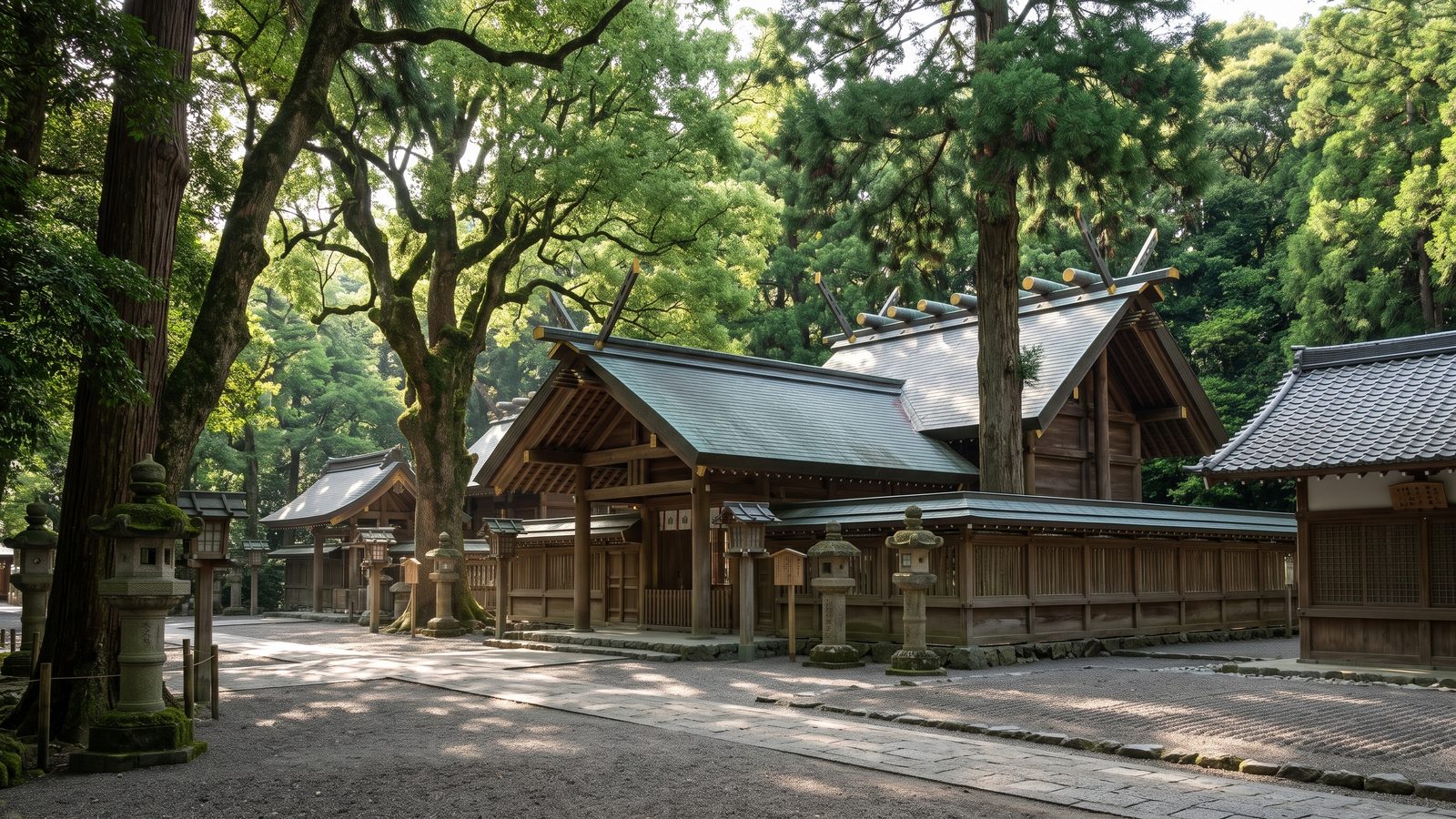
Step into Atsuta Jingu Shrine, a sacred sanctuary in Nagoya with nearly 2,000 years of spiritual heritage. Enveloped by an ancient forest, this tranquil complex holds a revered place in Japanese history as the home of the legendary Kusanagi-no-Tsurugi sword, one of the Three Sacred Treasures. As you walk its peaceful paths, you follow in the footsteps of emperors, samurai, and centuries of devout pilgrims.
This self-guided audio tour reveals the sacred traditions, architectural elegance, and timeless legends embedded within the shrine grounds. Discover centuries-old camphor trees, ceremonial sake barrel displays, and the quiet beauty of Shinto rituals that continue to connect Japan's ancient past to its vibrant present.
Listen to a sample
The opening of this tour, exactly as AllTours narrates it on site.
What you'll hear on this tour
Stop 1. The Main Sanctuary and Sacred Sword
You stand before the Honden, the main sanctuary of Atsuta Jingu, crafted in the pristine Shinmei-zukuri architectural style. Observe the unpainted cypress wood and the straight rooflines punctuated by chigi roof finials and katsuogi logs. This sacred building enshrines Amaterasu Omikami, represented by the legendary Kusanagi-no-Tsurugi, one of Japan's Three Imperial Regalia. The spiritual energy around this sanctuary feels remarkably strong, marking the place where the divine presence rests. You feel the deep weight of centuries of faith as quiet prayers rise from this hallowed ground. The immaculate craftsmanship preserves its sanctity, serving as an enduring guardian of Japan's ancient spiritual heritage.
Stop 2. Two Millennia of Imperial Lore
You walk across ground carrying nearly two thousand years of history, dating back to the reign of Emperor Keikō in the second century. Legendary hero Yamato Takeru-no-Mikoto used the sacred sword Kusanagi-no-Tsurugi to escape a burning field before entrusting the blade to his aunt, Miyazu-hime. After his death, she enshrined the divine sword here, establishing these sacred grounds. Through centuries of fires, earthquakes, and civil conflicts like the Onin War, the shrine was repeatedly rebuilt through steadfast imperial support. From ancient imperial messengers to modern post-war reconstruction, Atsuta Jingu remains a vital guardian of national identity and unbroken tradition.
Stop 3. The Sacred Chinju no Mori Grove
You step into the cool, clean air of the chinju no mori, a sacred forest that shelters the shrine from the surrounding city. Towering kusunoki, or camphor trees, dominate the leafy canopy above you, their gnarled trunks predating the surrounding buildings by centuries. Sunlight filters down through the dense foliage, casting moving patterns of shadow across the forest floor. You hear the rustle of leaves and distant bird calls thriving in this protected sanctuary, where spirits of the kami are believed to reside. These ancient trees stand as silent guardians, anchoring the spiritual heart of Nagoya within their deep, enduring roots.
Stop 4. Ceremonial Sake Barrels of Devotion
You pause before towering stacks of decorative sake barrels, known as kazaridaru, lining the pathway. Donated by prestigious breweries across Japan, these ornate barrels display intricate labels representing deep gratitude and reverence for the shrine's deities. This centuries-old tradition connects master sake brewers with Shinto spiritual practices, offering fine rice wine to the kami in exchange for community prosperity and blessings. While the displayed barrels are symbolic, rice wine plays an essential role in purification rites and festival rituals. As you admire the colorful display, you witness a living connection between Japanese craftsmanship and ancient spiritual tradition.
Stop 5. Living Customs and Shinto Rituals
You observe visitors engaging in timeless Shinto rituals throughout the shrine grounds. At the temizuya water pavilion, worshippers purify their hands and mouth before approaching the main sanctuary. In front of the hall, pilgrims bow twice, clap twice, and bow again to greet the resident kami. Look around to see wooden ema plaques filled with heartfelt wishes and paper omikuji fortunes tied to branches. During the annual Reisai festival in June, vibrant processions and music bring the local community together. Even the hidden presence of the divine sword shapes this reverence, connecting your footsteps to centuries of spiritual practice.
Stop 6. Priestly Rites and Ancient Rhythms
You witness the meticulous preservation of sacred traditions practiced by the kannushi priests. Dressed in white robes and formal headwear, they perform the daily asa-yu-omatsuri morning and evening prayers using ancient protocols passed down through generations. Priests carefully arrange shinsen offerings of rice, sake, salt, and water upon the altars to express gratitude for life's essential blessings. During grand ceremonies, the ambient air comes alive with the archaic notes of gagaku music and the elegant movements of kagura dance. This continuous dedication to ancestral rites preserves the shrine's sacred atmosphere, carrying ancient spiritual practices directly into the modern world.
Planning your visit
- Best time to go
- Early morning for a peaceful experience amidst the shaded forest trails before afternoon crowds arrive.
- Approximate duration
- about 1 to 1.5 hours
- Where to start
- Begin at the main entrance gate near Jingumae Station or Jingu Nishi Station, leading into the forest path.
Access and conditions change seasonally — check the official site before you go.
Frequently asked questions
Is Atsuta Jingu Shrine worth visiting?
Yes, Atsuta Jingu is one of Japan's most important Shinto shrines, housing the legendary Kusanagi-no-Tsurugi sword (one of the Imperial Regalia) and featuring an ancient forest sanctuary in the heart of Nagoya.
How long do you need at Atsuta Jingu Shrine?
Most visitors spend between 1 and 1.5 hours exploring the main sanctuary hall, walking through the ancient camphor tree forest, and viewing the ceremonial sake barrels.
What is the historical significance of Atsuta Jingu Shrine?
Founded nearly 2,000 years ago during the reign of Emperor Keikō, the shrine was established to house the Kusanagi-no-Tsurugi sword entrusted by the legendary hero Yamato Takeru, making it a key spiritual guardian of Japanese imperial heritage.
Keep exploring
Header image is an AI-generated illustration of Atsuta Jingu Shrine. AllTours.ai is an AI audio tour guide — point your camera at any landmark and hear its story.