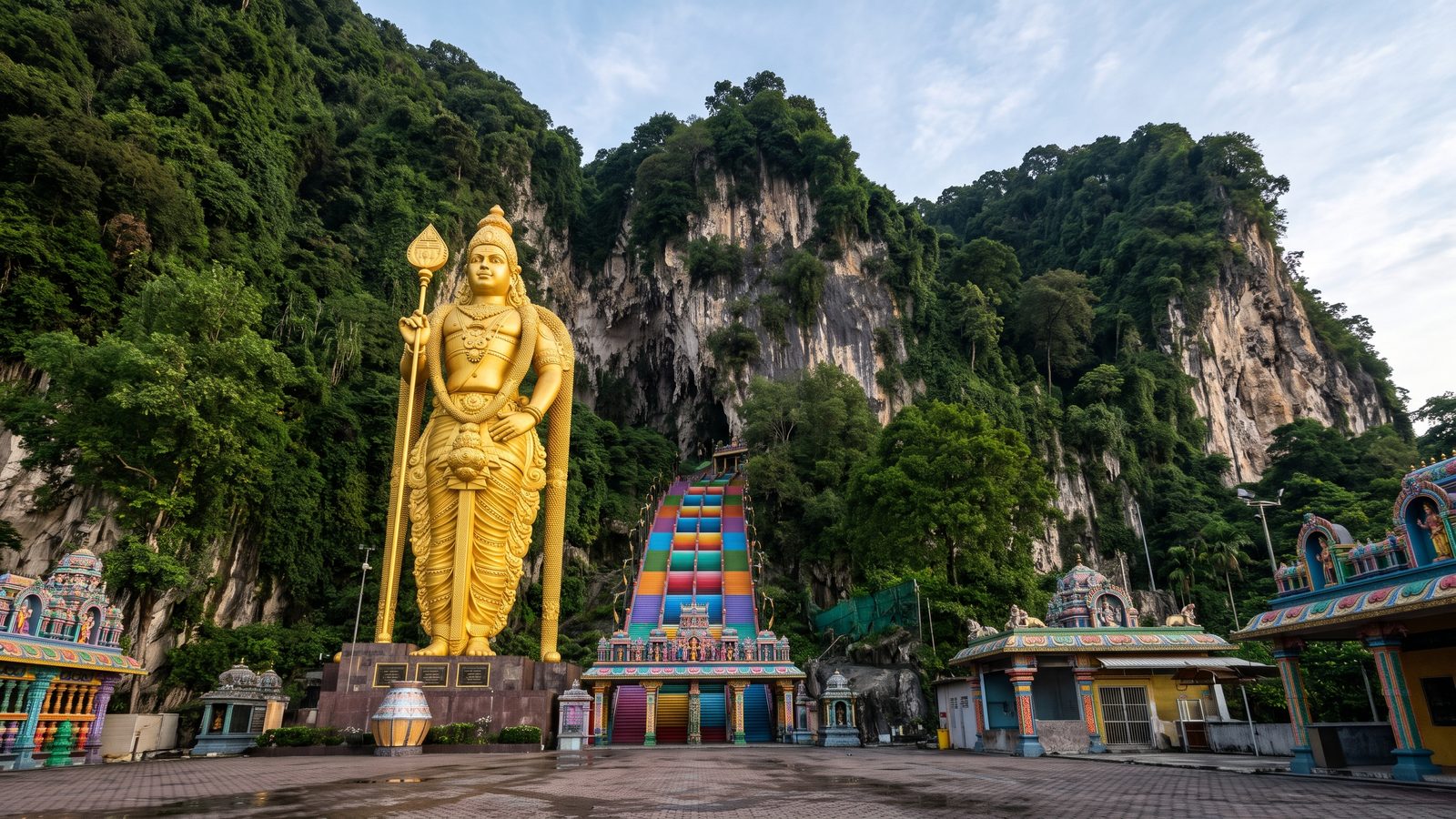
Welcome to Batu Caves, a towering limestone hill over 400 million years old that stands as one of Malaysia's most sacred Hindu sites. As you approach, you are greeted by the magnificent golden statue of Lord Murugan standing dramatically at the entrance. Your journey takes you up 272 vibrant, rainbow-painted steps into colossal subterranean chambers where ancient geology and profound spiritual traditions meet.
This self-guided audio tour walks you through breathtaking limestone formations, sacred shrines, and centuries of rich cultural history. Whether admiring the geological marvels or reflecting on the spiritual journey, prepare to be captivated by the awe-inspiring atmosphere of this world-famous pilgrimage site.
Listen to a sample
The opening of this tour, exactly as AllTours narrates it on site.
What you'll hear on this tour
Stop 1. The Golden Sentinel of Murugan
You stand before the colossal golden statue of Lord Murugan, guarding the cave entrance. Soaring 42.7 meters high, this is Malaysia's tallest Lord Murugan effigy and the second tallest globally. As you gaze up at his radiant figure, imagine the craftsmanship required: fifteen sculptors spent over three years building it with concrete, steel, and 300 liters of imported Thai gold paint. Unveiled in 2006, this Hindu deity of war, wisdom, and victory holds his iconic spear, or vel, symbolizing divine protection and the triumph of good over evil. His imposing presence sets a spiritual tone as you prepare to enter the caverns.
Stop 2. The 272 Steps to Divinity
You look up at the vibrant staircase stretching toward the cavernous entrance. These 272 concrete steps form a living artery for pilgrims, replacing earlier wooden structures to make the ascent accessible yet meaningful. In 2018, the staircase transformed into a colorful rainbow, elevating your climb into a celebratory, iconic journey. As you conquer each step, you deliberately shed worldly concerns and rise toward the divine sanctuary above. Notice the varying gradients that mirror spiritual trials, alongside agile macaques foraging nearby. With every meter gained, the urban skyline recedes behind you, building quiet anticipation for the subterranean wonders that await inside.
Stop 3. The Cathedral Cave and Dark Wilderness
You step into Cathedral Cave, where the colossal limestone chamber immediately humbles you with its vast organic architecture. Look straight up to see a massive natural skylight illuminating ancient rock formations and colorful shrines bathed in soft, ethereal light. Water dripping over millennia has sculpted stalactites and stalagmites into natural altars that inspire devotees. Nearby lies the Dark Cave system, a pristine subterranean wilderness protected as a delicate ecosystem. Home to rare trapdoor spiders and thousands of bats, these cool, hidden chambers preserve delicate flowstones and cave pearls, connecting you directly to Earth's ancient geological past.
Stop 4. Sacred Shrines Inside the Rock
Entering the main Temple Cave, you immediately feel a deep atmosphere of reverence. This massive limestone sanctuary has served as a pivotal Hindu site consecrated to Lord Murugan for over a century. You walk toward the central shrine, which houses his sacred vel, or divine spear, representing protection and righteousness. Smaller altars are nestled directly into the rock walls, honoring various deities across the pantheon. As you listen closely, rhythmic water drops fall from ancient stalactites, a purifying sound believed to cleanse the space. Early worshippers viewed the natural ceiling skylight as a direct blessing connecting earth to the divine.
Stop 5. Spiritual Pilgrimage and Living Faith
As you ascend the steps, you participate in a symbolic spiritual pilgrimage reflecting Hindu devotion. At the top, Lord Murugan—son of Shiva and Parvati—stands as a beacon of divine power and wisdom. Inside, colorful scripture murals depict ancient epics and moral lessons to guide devotees toward moksha, or spiritual liberation. During the annual Thaipusam festival, this sacred site becomes a fervent focal point as worshippers carry heavy kavadi structures in acts of penance and thanksgiving. Every shrine and mural you observe reflects a vibrant, living tradition of sacrifice, divine protection, and deep spiritual discipline.
Stop 6. A Living Geological Canvas
You feel cool subterranean air envelop you as you admire limestone karsts formed over 400 million years by water and time. Look around at delicate stalactites hanging like frozen tears and stalagmites rising from the floor, continuously shaped by mineral drips. Listen carefully to hear the faint chirps of resident bat colonies whose guano sustains unique cave-dwelling insects. Outside, lush tropical rainforest clings to steep grey cliffs, featuring resilient ferns and mosses rooted in tiny crevices. Mischievous macaques leap across the ancient rock formations, demonstrating how natural wildlife and tropical jungle thrive around this geological marvel.
Planning your visit
- Best time to go
- Early morning (7:30 AM – 9:00 AM) to avoid high heat, heavy crowds, and direct afternoon sun on the stairs.
- Approximate duration
- about 1.5 to 2 hours
- Where to start
- At the base of the main rainbow stairs, directly in front of the colossal golden Lord Murugan statue.
Access and conditions change seasonally — check the official site before you go.
Frequently asked questions
Is Batu Caves worth visiting?
Yes, Batu Caves is one of Malaysia's most iconic landmarks, offering a striking blend of 400-million-year-old natural limestone geology and vibrant Hindu culture.
How long do you need at Batu Caves?
Most visitors spend about 1.5 to 2 hours exploring the main Temple Cave, climbing the 272 steps, and admiring the shrines and golden Murugan statue.
What is the history behind Batu Caves?
Formed over 400 million years ago, the limestone caves were used as shelters by indigenous people and late-19th-century Chinese settlers before becoming a consecrated Hindu temple dedicated to Lord Murugan in the 1890s.
Keep exploring
Header image is an AI-generated illustration of Batu Caves. AllTours.ai is an AI audio tour guide — point your camera at any landmark and hear its story.