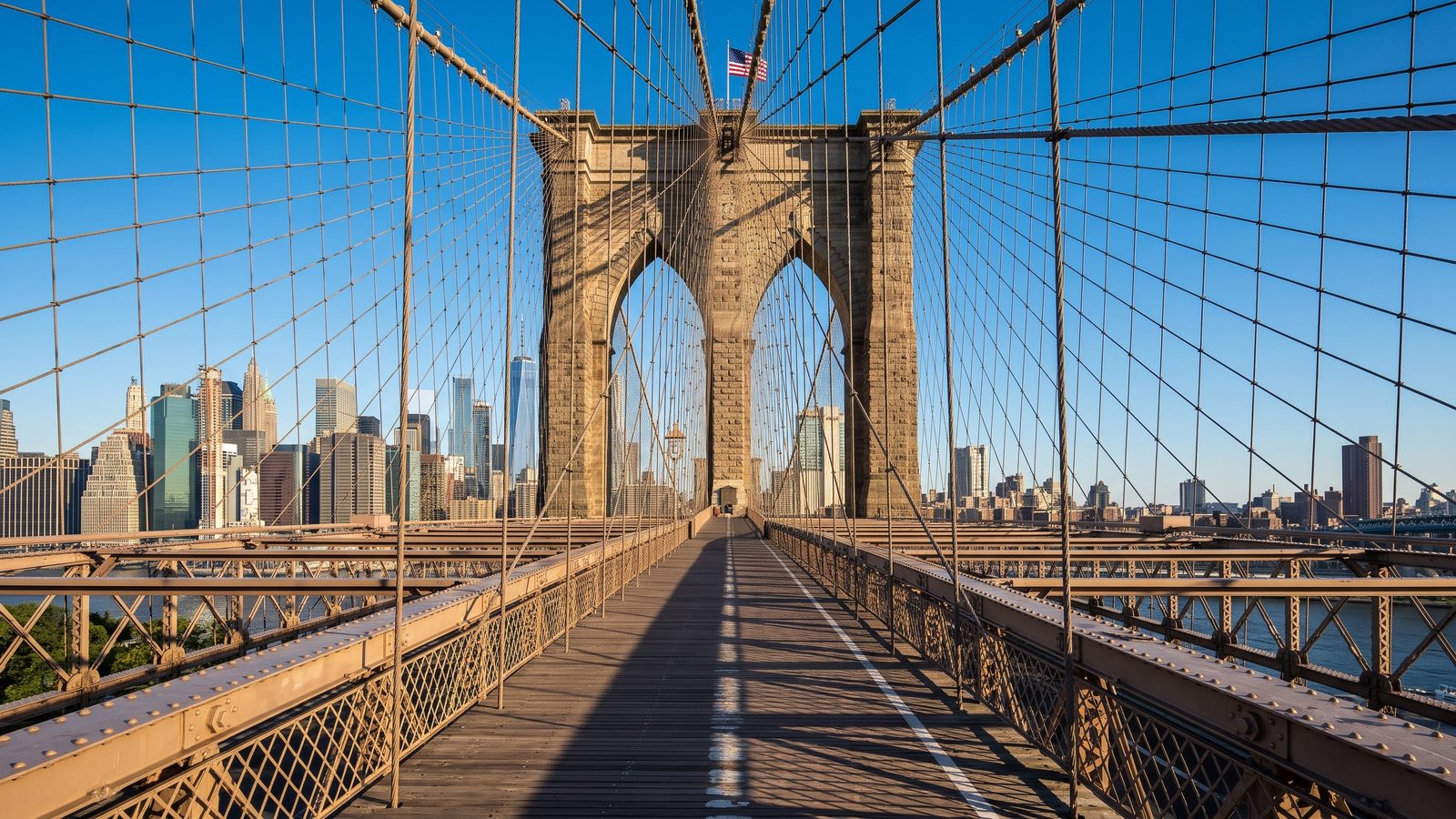
Step onto the elevated wooden promenade of the Brooklyn Bridge, an enduring masterpiece of 19th-century engineering that redefined the New York City skyline. As you cross high above the East River, you are walking through a saga of visionary ambition, heroic sacrifice, and artistic inspiration. Spanning between Manhattan's financial towers and Brooklyn's historic waterfront, this iconic landmark offers an unforgettable vantage point over America's greatest metropolis.
This self-guided audio tour reveals the dramatic human story behind the bridge's construction, its revolutionary steel cable design, and its status as a timeless muse. Plug in your headphones, soak in the panoramic vistas, and feel the pulse of the city beneath your feet.
What you'll hear on this tour
Stop 1. A Family's Heroic Sacrifice
You are walking on a span forged from tragedy and extraordinary determination. In the mid-19th century, engineer John A. Roebling conceived this impossible bridge, but a ferry accident and fatal tetanus claimed his life just as work began. His son, Washington, took command, braving compressed-air timber caissons deep beneath the East River. When Washington contracted the debilitating illness known as 'the bends' and became bedridden in Brooklyn Heights, his wife, Emily Warren Roebling, stepped forward. For over a decade, Emily mastered engineering concepts to manage construction on-site. Completed in 1883 after 14 grueling years and 27 lives lost, this structure stands today as a testament to their family's unwavering perseverance.
Stop 2. Gothic Arches and Elevated Views
Look up at the monumental Gothic Revival towers framing your walk like massive cathedral gateways. Crafted from solid granite, their pointed arches blend timeless European aesthetics with 19th-century industrial innovation. Above you, main steel cables—each a massive bundle containing thousands of individual wires—arc gracefully between the towers to suspend the roadway. Notice the diagonal cable stays radiating outward, creating an ingenious hybrid design that gives the bridge unmatched rigidity against severe winds. Beneath your feet, the elevated promenade deliberately separates you from the noisy traffic below. John Roebling designed this high wooden walkway specifically for pedestrians, offering a calm vantage point to contemplate the soaring architecture and expansive urban views around you.
Stop 3. Revolutionary Steel and Caisson Feats
Beneath your feet and soaring overhead lies a groundbreaking feat of structural engineering. You are crossing the first suspension bridge to utilize steel for its massive cables. Each of the four main cables stretches over a mile, meticulously spun from more than 5,000 individual steel wires to maximize strength while reducing weight. Notice how the diagonal stay cables distribute heavy loads directly to the towers, preventing excessive swaying. Beneath the river, workers excavated bedrock inside pneumatic caissons—huge timber boxes submerged under high pressure. The granite towers transfer these colossal forces deep into the earth, holding the entire structure in delicate equilibrium high above the East River.
Stop 4. Panorama of Two Boroughs
Gaze out across the East River to take in one of the world's most dynamic urban landscapes. To your left, the skyscrapers of Manhattan's Financial District pierce the sky, anchored by the soaring spire of One World Trade Center. Sweeping your eyes across the skyline, you see pre-war Art Deco classics standing alongside sleek modern towers, capturing generations of architectural history. Looking toward the Brooklyn shore, historic brick warehouses in DUMBO highlight the borough's creative transformation. From this elevated path, you witness an ongoing conversation between Manhattan's financial engine and Brooklyn's artistic energy, framed perfectly by the iconic waters that once kept them apart.
Stop 5. The Great American Muse
Beyond its structural purpose, this bridge constantly invites you to view the city through an artist's lens. Painter Joseph Stella captured its soaring lines and industrial energy in dynamic, modern canvases. Georgia O'Keeffe transformed its granite arches and web of cables into powerful, abstract studies of urban geometry. Pioneer photographer Alfred Stieglitz framed its steel lacework against shifting skies, capturing the soul of early 20th-century progress. Today, filmmakers use its dramatic silhouette for iconic movie scenes, while street artists find inspiration around its brick underpasses. As you walk, you participate in a long artistic tradition, discovering why this bridge remains an enduring symbol of American innovation and creativity.
Stop 6. A Global Symbol of NYC
As you cross this historic span, you feel the weight of its global reputation. The Brooklyn Bridge is more than a roadway; it is a universal visual shorthand for New York City itself. Its pointed Gothic arches and intricate web of steel cables are instantly recognized around the world, representing human ambition and pioneering spirit. Bathed in cinematic light, this silhouette has defined countless artworks, photographs, and films over the decades. Walking here, you experience an enduring beacon of connection designed to bridge physical divides and inspire progress. You are part of an ongoing tradition of travelers who come to admire this breathtaking triumph of human effort.
Planning your visit
- Best time to go
- Early morning at sunrise for minimal crowds and golden light on the Manhattan skyline, or late afternoon leading into sunset.
- Approximate duration
- About 1 to 1.5 hours
- Where to start
- Manhattan pedestrian entrance near Brooklyn Bridge-City Hall station or the DUMBO pedestrian entrance in Brooklyn.
Access and conditions change seasonally — check the official site before you go.
Frequently asked questions
Is Brooklyn Bridge worth visiting?
Yes, walking across the Brooklyn Bridge is one of New York City's top experiences. It offers iconic panoramic views of the Manhattan skyline, historic Gothic architecture, and a dedicated elevated pedestrian walkway free from vehicular traffic.
How long do you need at Brooklyn Bridge?
Plan for about 45 minutes to 1.5 hours to walk across the bridge at a comfortable pace, take photographs, and listen to the audio tour.
Who built the Brooklyn Bridge?
The bridge was designed by engineer John A. Roebling. After his death, his son Washington Roebling took over, and Washington's wife, Emily Warren Roebling, managed site operations for over a decade until completion in 1883.
Keep exploring
Header image is an AI-generated illustration of Brooklyn Bridge. AllTours.ai is an AI audio tour guide — point your camera at any landmark and hear its story.