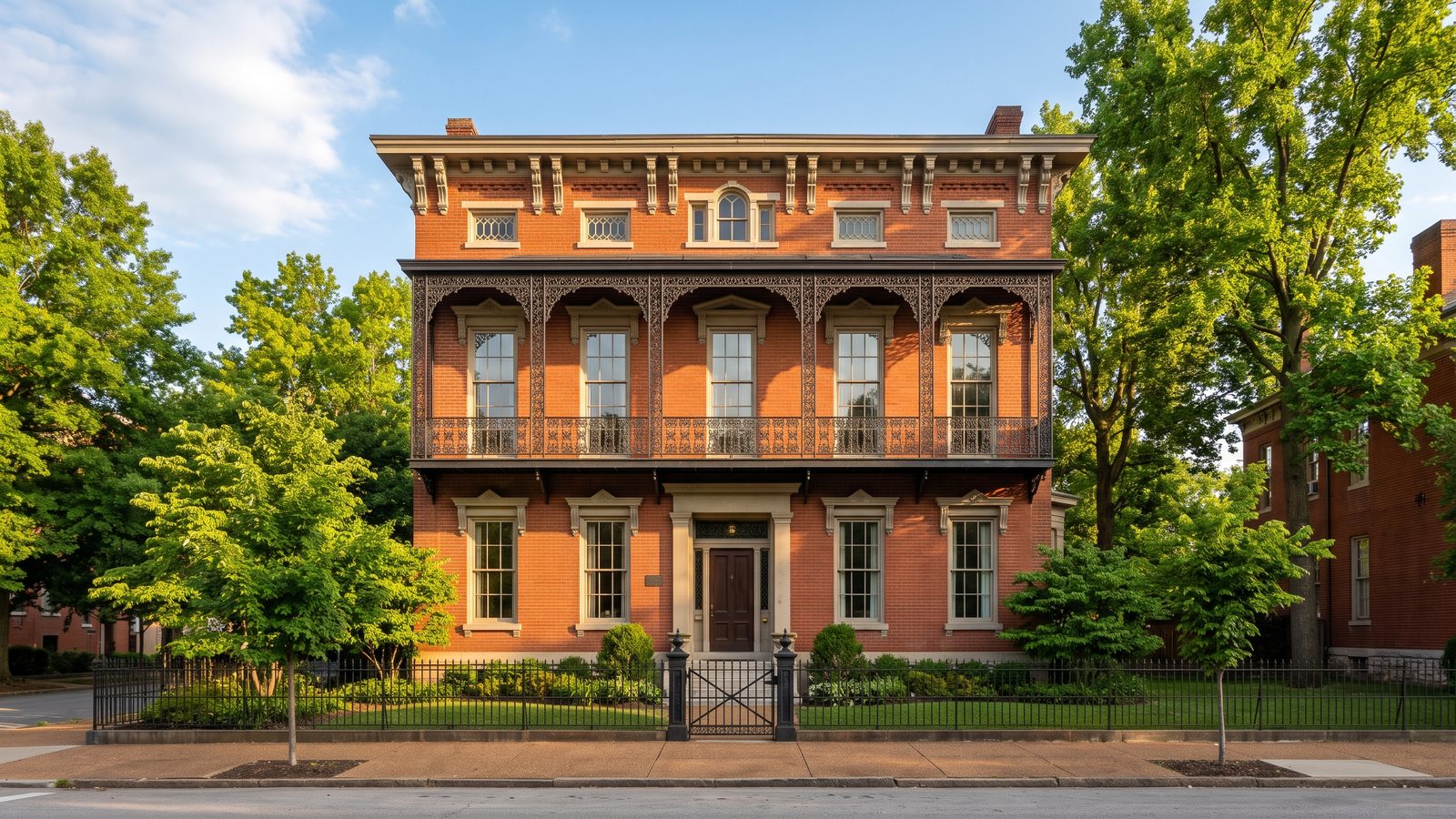
Step into one of America's most remarkable 19th-century city house museums in St. Louis, Missouri. Built in 1851 for prominent fur trader Robert Campbell, this magnificent residence offers an authentic glimpse into the opulent daily life of a wealthy Victorian family. Preserved for nearly a century by the Campbell family, the house retains an astonishing 90 percent of its original furnishings, personal effects, and decorative arts inside its restored rooms.
As you wander through the grand parlor, quiet bedrooms, and manicured grounds, you will experience the living history of St. Louis's Gilded Age. Discover how architectural grandeur, intricate craftsmanship, and strict social customs shaped daily life in this extraordinary urban sanctuary.
Listen to a sample
The opening of this tour, exactly as AllTours narrates it on site.
What you'll hear on this tour
Stop 1. Step Inside an Intact Victorian Time Capsule
You stand inside a remarkably preserved 1851 time capsule built for Robert Campbell, a prominent fur trader who became one of St. Louis's wealthiest citizens. Unlike many historic homes, this residence remained in the Campbell family for nearly a century, retaining 90 percent of its original furnishings and personal possessions. As you move through these historic rooms, you observe everything from the opulent grand parlor to delicate children's toys. This incredible level of authentic detail offers you an intimate glimpse into the daily life of an elite Victorian family, making it one of the most significant 19th-century house museums in North America.
Stop 2. Rescuing and Restoring a St. Louis Treasure
You are experiencing a landmark whose public preservation began in 1941 when the National Society of the Colonial Dames of America in the State of Missouri stepped in to save it from demolition. The organization undertook a monumental restoration effort, meticulously studying original house inventories and historical photographs to recreate the authentic atmosphere of the Campbell family's life during the 1880s. Because over 90 percent of the items displayed belong to the original family, you walk through rooms that look virtually identical to how they appeared generations ago. Every display illuminates the social and political events that unfolded within these walls.
Stop 3. Etiquette, Density, and Victorian Parlor Culture
Look around the parlor and notice how every corner is intentionally filled with dense, elaborate furnishings. In Victorian society, empty space was considered unrefined, and the parlor served as a family's public face for formal social calls. You can see heavy dark woods, somber high-end textiles, and layered window treatments balancing privacy with ornate richness. Above you, modern gasoliers highlight the era's embrace of technological progress over traditional candle lighting. Every seating arrangement and decorative object reflects strict etiquette protocols and domestic values designed to project high social standing and refined taste to arriving guests.
Stop 4. Greek Revival Elegance and St. Louis Craftsmanship
Step back to admire the refined façade of this mid-19th-century townhouse, blending Greek Revival symmetry with early Italianate influences. Notice the precisely laid red brickwork, crafted from local St. Louis clay, anchored by robust stone lintels and window sills. Tall, narrow windows allow natural light to filter deep into the interior, reflecting the architectural preferences of the period. On the second floor, examine the intricate scrollwork of the elaborate cast-iron balcony. This ornamental detail highlights both the family's substantial wealth and the thriving artisan industry of 19th-century St. Louis, framed by an understated cornice.
Stop 5. A Secluded Urban Oasis of Heirloom Blooms
Step into the restored gardens, a carefully curated outdoor living space designed for both beauty and utility. You notice formal geometric plant beds arranged to be admired from upper-story drawing-room windows or enjoyed during afternoon strolls. Towering brick enclosure walls surround the yard, creating a sheltered microclimate that protects delicate heirloom plants like roses, lush hydrangeas, and fragrant honeysuckle from harsh urban conditions. Imagine the Campbell family relaxing here, hosting intimate outdoor tea gatherings, or harvesting fresh culinary herbs and vegetables directly for the kitchen. This vibrant garden demonstrates how Victorian urban dwellers maintained a serene connection to nature.
Stop 6. Living Legacy of 19th-Century Urban Grandeur
You are standing inside a rare architectural survivor that embodies the early growth and cultural legacy of St. Louis. As a Greek Revival home transformed into a public museum, this site preserves the material heritage of a prominent 19th-century family. Every restored column, classic cornice, and personal artifact tells a story about the changing social customs, architectural aspirations, and everyday experiences of the period. By maintaining these original possessions within their historic setting, the museum offers you an authentic connection to the human history behind the city's development, ensuring the rich tapestry of Victorian urban life remains vibrant today.
Planning your visit
- Best time to go
- Morning or early afternoon for optimal light on the brick exterior and pleasant garden walks.
- Approximate duration
- About 1 to 1.5 hours
- Where to start
- Begin outside the main exterior façade on Lucas Avenue to appreciate the architectural features before entering.
Access and conditions change seasonally — check the official site before you go.
Frequently asked questions
Is Campbell House Museum worth visiting?
Yes, Campbell House Museum is widely considered worth visiting because it retains over 90 percent of its original 19th-century furnishings, making it one of America's most authentic Victorian time capsules.
How long do you need at Campbell House Museum?
Most visitors spend between 1 hour and 1.5 hours exploring the home's detailed Victorian interiors, historic parlor, and surrounding formal gardens.
Who originally lived in the Campbell House Museum?
The house was built in 1851 for Robert Campbell, a prominent fur trader and wealthy St. Louis citizen, whose family occupied the residence for nearly a century.
Keep exploring
Header image is an AI-generated illustration of Campbell House Museum. AllTours.ai is an AI audio tour guide — point your camera at any landmark and hear its story.