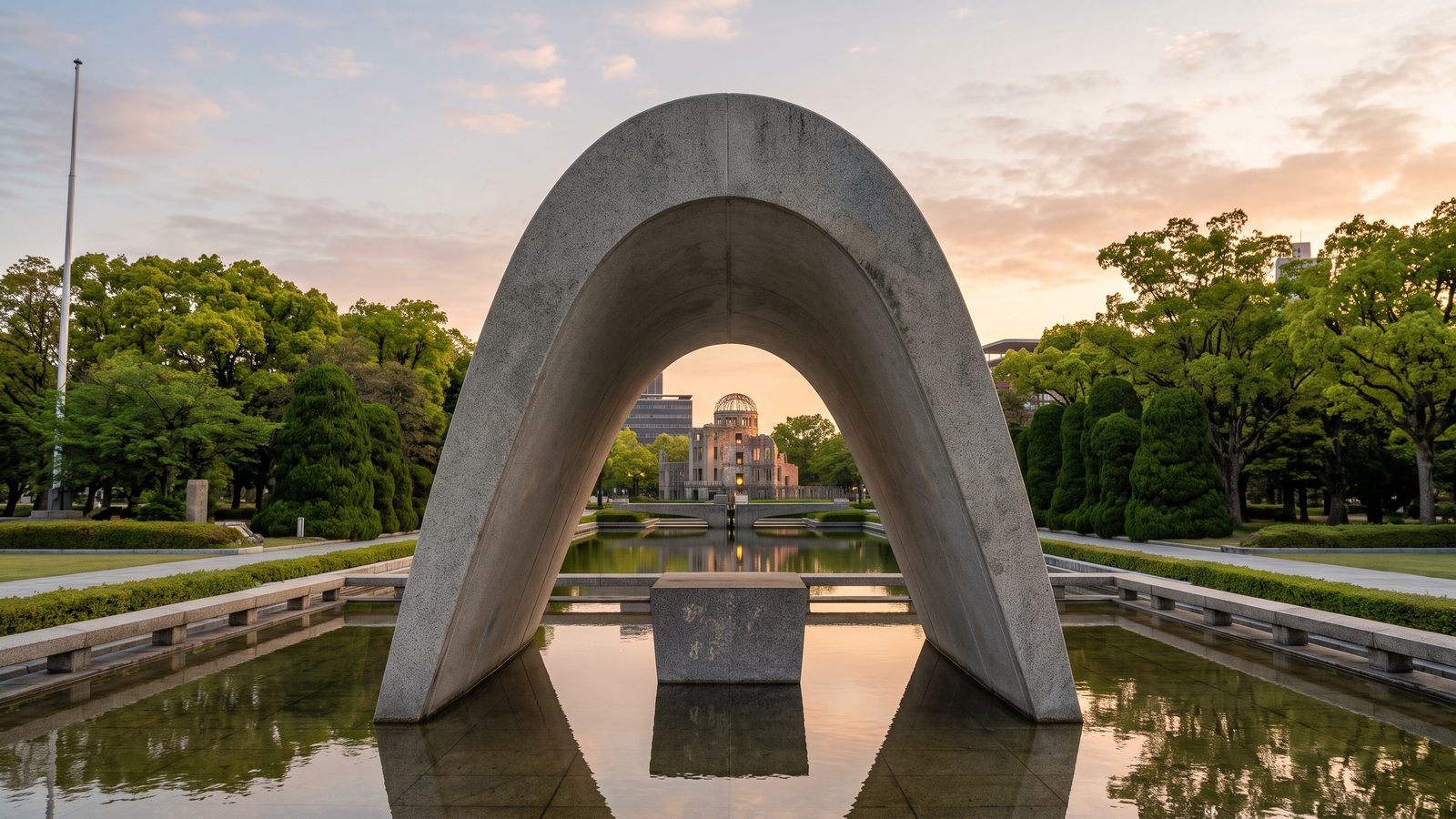
Stand before the Cenotaph for the A-bomb Victims in Hiroshima Peace Memorial Park, a profound monument dedicated to honoring those lost in the 1945 atomic bombing. Designed by visionary architect Kenzo Tange in 1952, its sweeping arch shelters the register of victims while offering a silent, powerful plea to the world. As you explore this sacred space, you discover how grief transformed into a permanent global commitment to peace.
This audio tour guides you through the symbolism, history, and quiet landscape surrounding the cenotaph. Discover the deep meaning behind the iconic inscription, gaze along the aligned visual axis toward the A-Bomb Dome, and pause by the Pond of Peace to reflect on humanity's shared path forward.
Listen to a sample
The opening of this tour, exactly as AllTours narrates it on site.
What you'll hear on this tour
Stop 1. The Arch Framing Past and Future
You stand before the iconic Cenotaph, a striking saddle-shaped arch designed by architect Kenzo Tange. As your eyes take in its sweeping curved form, you notice how it echoes ancient Japanese haniwa houses, intentionally crafted to serve as a protective roof over the souls of the departed. From this exact spot, look through the shelter of the concrete canopy. Notice how its precise architectural alignment frames the Flame of Peace and the distant A-Bomb Dome in a single, poignant visual axis. Beneath this shelter sits a solemn stone chest containing the growing register of victims' names, while the etched inscription inside makes a universal vow to ensure humanity never repeats this tragedy.
Stop 2. A Promise Born From Ashes
You step into a history forged seven years after the atomic bombing of August 6, 1945. Constructed in 1952, this monument marks Hiroshima's historic pivot from immediate post-war survival to collective remembrance and a fervent demand for peace. Designed by architect Kenzo Tange, the saddle arch reflects traditional haniwa tomb structures, symbolically offering eternal guardianship to the spirits of the fallen. You read the inscription penned by Dr. Tadayoshi Saika, which enshrines the city's commitment never to repeat the evil. Every year on August 6th, this exact location hosts a global gathering, turning a catastrophic past into a lasting beacon for a nuclear-free world.
Stop 3. Mirror of Solace and Thought
You walk along the edge of the tranquil Pond of Peace, known as Reflection. The perfectly still surface of this water feature acts as a profound mirror, capturing the sky above along with clear reflections of the Cenotaph and the Flame of Peace. This expanse of water symbolically quenches the desperate thirst endured by victims following the blast, offering quiet solace to their memory. As you gaze into the pool, you see your own reflection blended with the surrounding monuments, prompting a quiet moment of personal introspection. Subtle breezes create light ripples, reminding you how Hiroshima's message of peace gently ripples outward across the globe.
Stop 4. A Global Covenant for Peace
You pause beside the inscription that declares humanity's pledge to never repeat the evil of nuclear destruction. Here, Hiroshima's immense historic tragedy transforms into the world's most earnest voice for global disarmament and reconciliation. As you listen, consider how this message radiates worldwide, inspiring anti-nuclear movements and fostering international dialogue. Each year during the Peace Memorial Ceremony, the Mayor's Peace Declaration echoes across continents from this very spot, urging all nations to dismantle their nuclear arsenals. By standing at this monument today, you participate in a continuous, living movement that reframes security not around weapons, but around a shared human determination for lasting harmony.
Stop 5. Sanctuary on Ground Zero
You look out across the expansive open lawns of Hiroshima Peace Memorial Park. Architect Kenzo Tange intentionally reshaped the former Nakajima district—the bustling heart of the city obliterated at ground zero—into this vast, quiet sanctuary. As you walk through these open spaces, notice how the unencumbered grounds evoke the emptiness left by the blast while simultaneously making room for hope and renewal. Carefully planted trees and shrubs demonstrate nature's quiet resilience, showing how life returns even after total destruction. Nearby, the gentle waters of the Ota River flow past, offering a calm rhythm that guides your journey through memory and contemplation.
Stop 6. Shelter for the Lost Souls
You move closer to the heart of the memorial, where the concrete arch bows over a sacred stone chest. Inside this chest rests the official register of every recognized victim of the atomic bomb, a list that continues to grow as new names are identified. The protective shape of the arch draws on ancient burial traditions, connecting modern remembrance to long-standing ancestral reverence for those who have passed. Looking beneath the shelter, you feel how personal grief blends into a shared public vow. Visitors from every corner of the earth come here to offer silent prayers, laying their quiet sorrows inside a collective commitment to non-violence.
Planning your visit
- Best time to go
- Early morning or late afternoon for quiet reflection, avoiding crowds, and enjoying soft light over the Pond of Peace.
- Approximate duration
- About 30 to 45 minutes
- Where to start
- Begin at the front of the Cenotaph facing north towards the Pond of Peace and the A-Bomb Dome.
Access and conditions change seasonally — check the official site before you go.
Frequently asked questions
Is Cenotaph for the A-bomb Victims worth visiting?
Yes. As the central monument of Hiroshima Peace Memorial Park, the Cenotaph offers a deeply moving focal point connecting history, architectural symbolism, and a global message of peace.
How long do you need at Cenotaph for the A-bomb Victims?
Most visitors spend about 30 to 45 minutes at the Cenotaph and the adjacent Pond of Peace, though exploring the broader Peace Memorial Park can take 1 to 2 hours.
What is the history behind the Cenotaph for the A-bomb Victims?
Designed by Kenzo Tange and erected in 1952, the Cenotaph was built seven years after the 1945 atomic bombing to shelter the souls of victims and serve as a permanent vow never to repeat the tragedy.
Keep exploring
Header image is an AI-generated illustration of Cenotaph for the A-bomb Victims. AllTours.ai is an AI audio tour guide — point your camera at any landmark and hear its story.