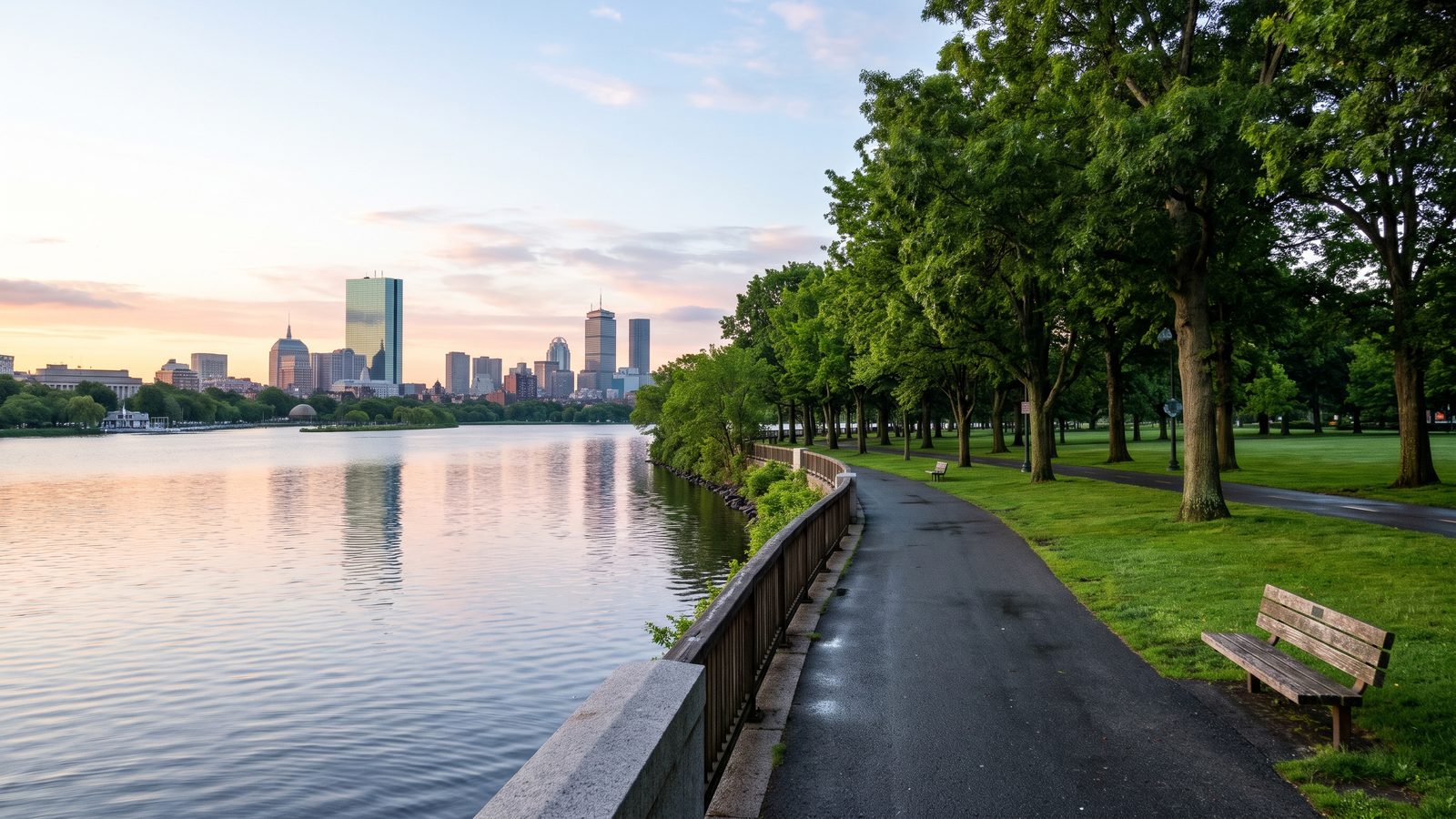
Welcome to the Charles River Esplanade, a magnificent green sanctuary along the water in Boston, Massachusetts. Originally conceived by Frederick Law Olmsted and sculpted by Charles Eliot, this urban parkland transformed former tidal mudflats into Boston's cherished public backyard. As you walk along its gently curving pathways, you will encounter historic landmarks like the Hatch Memorial Shell, dynamic aquatic wildlife, and sweeping vistas across the water.
This self-guided audio tour invites you to explore the river's dramatic engineering transformation, vibrant natural ecosystems, and iconic skyline views. Whether watching rowing shells slice through the basin or relaxing under weeping willows, enjoy a peaceful escape right at the city's edge.
Listen to a sample
The opening of this tour, exactly as AllTours narrates it on site.
What you'll hear on this tour
Stop 1. Boston's Historic Riverfront Park
Look out across the magnificent stretch of green along the water—the Charles River Esplanade. Conceived in the late nineteenth century by Frederick Law Olmsted, this parkland takes shape after the damming of the river in 1910 transforms tidal flats into a tranquil basin. Today, you stand in Boston's beloved backyard. As you stroll the winding paths, watch sailboats glide across the water and spot the iconic Hatch Memorial Shell. This dynamic park hosts legendary Fourth of July fireworks and concerts, while every October, the world-famous Head of the Charles Regatta fills the river with international rowing competitors. It is a true convergence of history and recreation.
Stop 2. Panoramic Skyline Vistas Across the Water
Gaze across the gentle curve of the Charles River as Boston's skyline unfurls before you. You are observing a living timeline where historic brick facades from Beacon Hill yield to modern glass high-rises in the Financial District. Notice prominent silhouettes like the slender spire of the Prudential Tower reflecting sunlight and clouds above. As you look across the water, see how engineers and architects conquered challenging marshland to build upward. At dusk, thousands of windows light up like a twinkling jewel box, casting bright reflections across the dark water and echoing the vibrant intellectual energy of the city.
Stop 3. The Tamed Waters and Estuary Cleanup
Step toward the water to discover a profound story of urban engineering and ecological rebirth. Originally a broad tidal estuary, this river transforms fundamentally after the completion of the Charles River Dam in 1910. The dam tames the fluctuating tides, creating the consistent freshwater basin you see today. Though decades of industrial expansion once earned it a reputation as America's dirtiest urban river, a remarkable multi-decade cleanup restores its waters. Today, you can watch ducks preen, fish dart below, and sculling shells slice through the currents. The river serves as the liquid heart of Boston, hosting major rowing events along its tranquil, reflective surface.
Stop 4. Postcard Views and Historic Bridges
Take in the broad, canvas-like sweep of the Charles River reflecting ever-changing sky tones. Across the water, you can spot the majestic dome of MIT standing watch on the Cambridge bank, framed by lush foliage. Look toward the graceful arches of the Longfellow Bridge, affectionately known as the Salt and Pepper Bridge, which elegantly frames your view of distant city towers. Synchronized scullers slice through the water in a traditional ballet of rowing, while resident swans and geese glide peacefully along the shoreline. Meticulously planned plantings of mature elms and oaks frame every view, creating perfect postcard moments along the tranquil green corridor.
Stop 5. Visionary Landscape of the Urban Wild
Immerse yourself in this carefully sculpted landscape, once a marshy industrial coastline. Visionaries like Charles Eliot, a protégé of Frederick Law Olmsted, design this green ribbon as a crucial public health amenity for urban dwellers. Notice how the paths gently curve rather than following straight lines, deliberately opening up fresh vistas to encourage unhurried exploration. Above you, a living canopy of mature oaks, maples, and elms filters the city's chaotic noise into a soothing hum. Every expansive lawn, bench, and cultivated garden creates an intentional stage for community life and tranquil escape, demonstrating how thoughtful urban design enhances human well-being.
Stop 6. Estuary Wildlife and Vibrant Canopies
Drift beyond the paved paths to explore the dynamic natural ecosystem surrounding you. Where upstream freshwater meets tidal influences, a unique brackish environment thrives. Look closely near the water's edge to spot a Great Blue Heron standing patiently like a statuesque sentinel, or a sleek Cormorant diving for fish. Along the riverbanks, majestic weeping willows sweep low toward the water, while sturdy oaks and maples shift from spring greens to autumn hues. Carefully cultivated gardens buzz with bees and butterflies, providing essential urban habitats and showcasing a wild, delicate sanctuary nestled right within the city limits.
Planning your visit
- Best time to go
- Spring through autumn, especially late afternoon for golden hour skyline views and reflections on the river.
- Approximate duration
- About 1 to 1.5 hours
- Where to start
- Hatch Memorial Shell on the Charles River Esplanade, Boston, MA.
Access and conditions change seasonally — check the official site before you go.
Frequently asked questions
Is Charles River Esplanade worth visiting?
Yes, the Charles River Esplanade is one of Boston's premier public parks. It offers beautiful views of the city skyline, scenic walking and running paths, historic bridges, and iconic performance venues like the Hatch Memorial Shell.
How long do you need at Charles River Esplanade?
Most visitors spend 1 to 2 hours walking along the river paths and enjoying the scenery, though you can easily spend half a day relaxing on the lawns or watching rowing crews on the water.
What is the history of the Charles River Esplanade?
Conceived by Frederick Law Olmsted and designed by Charles Eliot in the late 19th century, the Esplanade was built over former tidal mudflats following the construction of the Charles River Dam in 1910.
Keep exploring
Header image is an AI-generated illustration of Charles River Esplanade. AllTours.ai is an AI audio tour guide — point your camera at any landmark and hear its story.