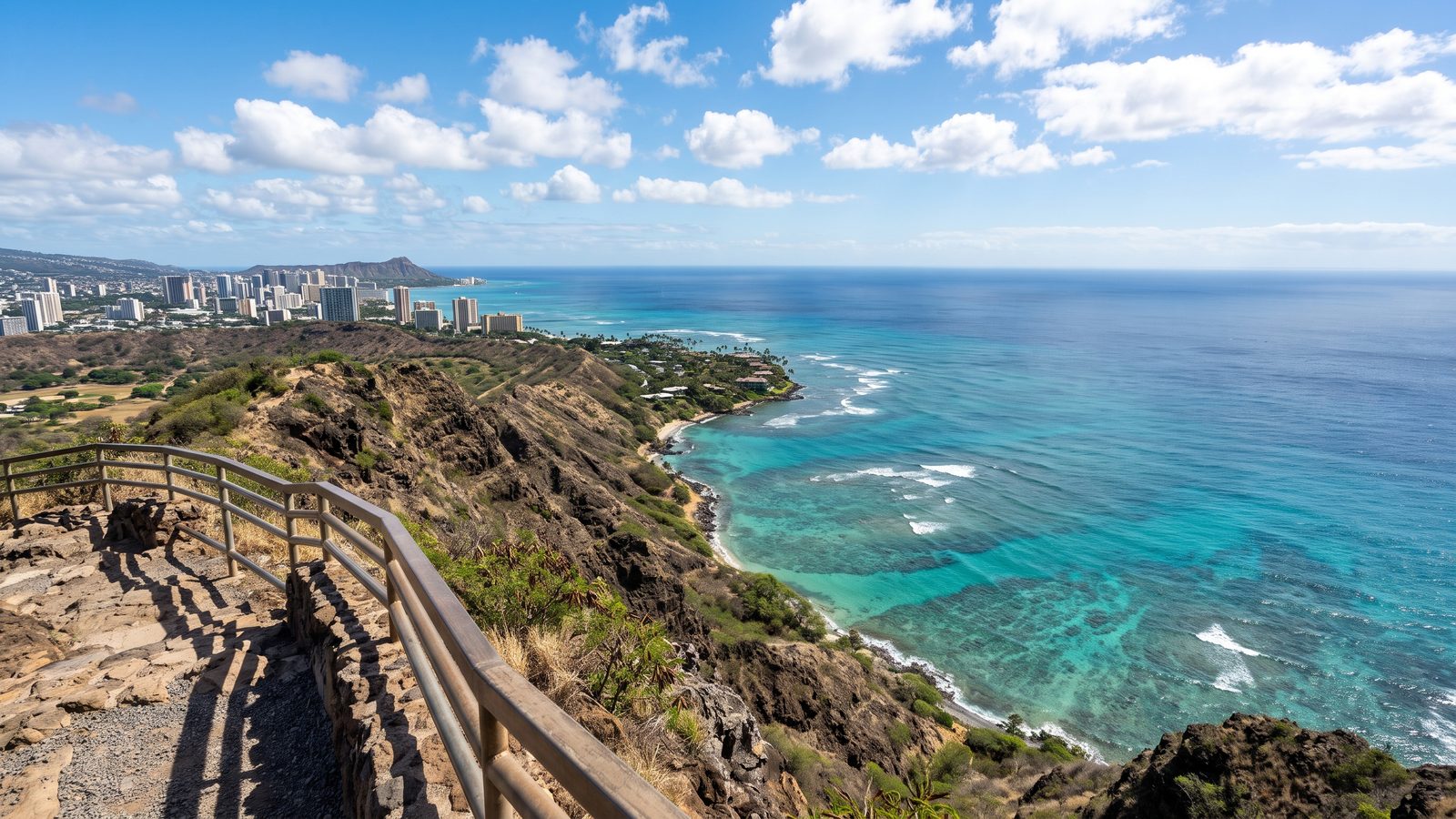
Standing atop the rim of Diamond Head—known anciently as Lēʻahi—you look out over one of the most famous coastal vistas in the Pacific Ocean. This dramatic volcanic tuff cone formed during a brief, explosive eruption hundreds of thousands of years ago. Today, it stands as a proud sentinel over Honolulu, seamlessly blending deep Hawaiian spiritual history, wartime military defensive relics, and extraordinary natural beauty.
This self-guided audio tour guides you through the volcanic forces, seafaring traditions, and coastal defenses that shaped the crater. Listen to stories of native ecology and sweeping ocean panoramas as you explore this timeless landmark at your own pace.
What you'll hear on this tour
Stop 1. Panoramic Views of the Pacific
As you stand at the lookout, sweep your gaze across a breathtaking panorama where turquoise waters shift into deep sapphire blue along the Hawaiian Trench. Beneath you, rugged contours trace ancient lava flows that once poured from Lēʻahi crater, now softened by lush greenery. Looking out toward the horizon, you spot the shimmering outlines of outer islands floating across the vast Pacific archipelago. The sunlight constantly shifts this canvas, transforming coastal shallows into brilliant jewel tones. You are witnessing a living landscape sculpted by millions of years of volcanic fire and restless tides. Take a moment to soak in this endless ocean horizon.
Stop 2. Sacred Peak and Military Fortress
You stand on Lēʻahi, the ancient crater named for its resemblance to the brow of a tuna. Long before modern paths existed, native Hawaiians used this elevated vantage point to observe sea conditions and hold sacred ceremonies. As you look around, imagine late 18th-century Western explorers arriving offshore, spotted immediately from these commanding heights. By the early 20th century, the United States transformed the summit into a strategic coastal defense installation. Today, you walk past concrete bunkers built and manned during World War II. These military remnants offer a quiet reminder of global conflicts that reached even these remote Pacific shores.
Stop 3. Trekking Through Volcanic History
Feel the dark volcanic ash beneath your feet as you tread along this historic trail. As you ascend the switchbacks built into the crater wall, spectacular ocean vistas unfold with every step. You pass hardy native plants clinging to the rock face, adapted to this harsh volcanic environment. Along the way, you enter dim tunnels cut directly into the hillside, cool spaces where soldiers once patrolled during wartime postings. Every bend in the trail offers a fresh perspective on the contrast between bright Pacific blue and lush greenery. Enjoy this rewarding climb through living geology and rich history.
Stop 4. Where Lava Rock Meets Coral Reefs
Look down at the dramatic shoreline where relentless Pacific waves carve intricate patterns into ancient lava rock. You can easily spot the distinct line where bright turquoise shallows give way to deep ocean blue. This line marks the edge of the protective coral reef, a thriving underwater world teeming with marine life. Sunlight glints off the shallow coral gardens below, casting vibrant reflections across the water. As you watch the surf break along the shore, picture ancient Polynesian voyagers navigating these precise currents and swells in double-hulled canoes, reading the ocean's subtle shifts to make landfall safely.
Stop 5. Resilient Native Flora and Avian Life
Feel the cool trade winds carrying the faint, earthy fragrance of yellow ʻilima blossoms growing along the volcanic slopes. As you examine the vegetation, you observe resilient naupaka bushes with silvery-green leaves, uniquely adapted to withstand salty ocean spray. Listen closely and you might hear the bright call of the ʻapapane, a crimson Hawaiian honeycreeper flitting between the branches. The dark, fertile volcanic ash underfoot nourishes these rare native species, forming a delicate microclimate found nowhere else on Earth. You are standing inside a thriving, self-contained ecosystem that flourishes on ancient crater slopes.
Stop 6. Voyagers, Harbors, and Modern Canoes
From this high vantage point, you appreciate Oahu’s deep connection to ocean travel. Imagine ancient Polynesian voyagers using Lēʻahi's distinctive silhouette as a primary navigational landmark while guiding double-hulled canoes across the open sea. Look out across the water to spot modern outrigger canoes slicing gracefully through the waves, honoring those timeless seafaring traditions. Below, the sheltered waters of the bay have long welcomed diverse vessels, from early trade ships to fishing boats and naval defense craft. The ocean before you remains a bustling highway, linking past maritime heritage with present island life.
Planning your visit
- Best time to go
- Early morning for cooler trail temperatures, gentle lighting, and fewer crowds.
- Approximate duration
- About 1.5 to 2 hours
- Where to start
- Diamond Head State Monument trailhead, located inside the crater basin.
Access and conditions change seasonally — check the official site before you go.
Frequently asked questions
Is Diamond Head Lookout worth visiting?
Yes, Diamond Head Lookout offers unmatched panoramic views of Honolulu, Waikiki, and the Pacific Ocean, alongside fascinating Hawaiian history and WWII defensive bunkers.
How long do you need at Diamond Head Lookout?
Most visitors spend about 1.5 to 2 hours walking the historic trail, exploring the tunnel and bunkers, and enjoying the scenic summit views.
What is the history of Diamond Head?
Known natively as Lēʻahi ('brow of the tuna'), the crater was a sacred Hawaiian lookout point before being fortified as a U.S. military coastal defense post in the early 20th century.
Keep exploring
Header image is an AI-generated illustration of Diamond Head Lookout. AllTours.ai is an AI audio tour guide — point your camera at any landmark and hear its story.