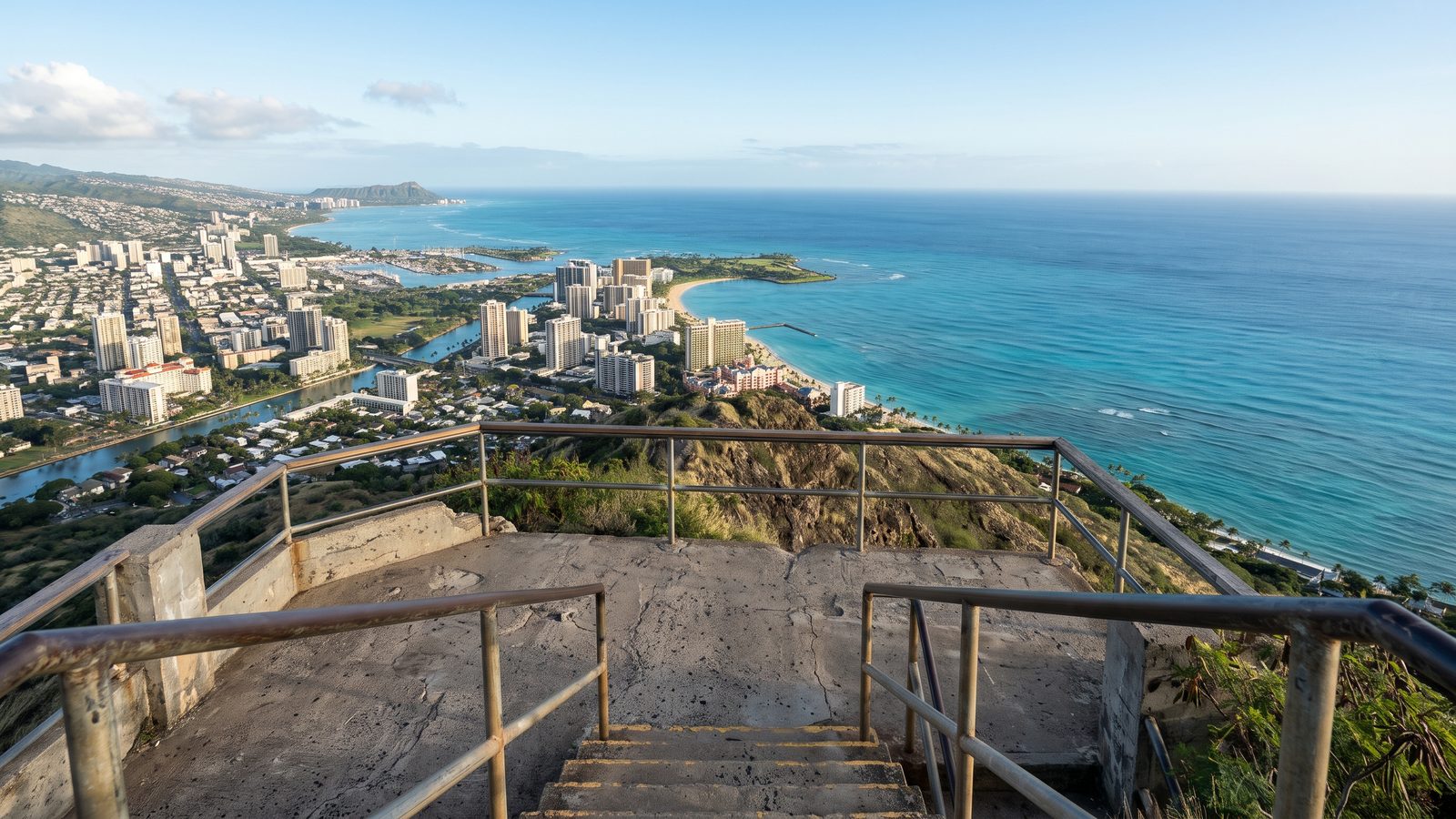
Diamond Head Summit Trail leads you up the interior slopes of Leʻahi, Oahu’s iconic volcanic tuff crater. Rising dramatically above the shoreline of Honolulu, this landmark combines rich Hawaiian cultural heritage with fascinating early 20th-century military history. As you ascend its historic paths, switchbacks, and tunnels, you step inside a coastal defense system engineered directly into ancient rock, culminating in breathtaking vistas of Waikiki Beach and the Pacific Ocean.
This self-guided audio tour reveals the geological forces, native dryland ecosystem, and strategic fortifications that shape Diamond Head. Whether observing military bunkers, identifying resilient native plants, or admiring sweeping island panoramas, your journey to the summit offers an unforgettable perspective on Oahu’s natural beauty and defense legacy.
What you'll hear on this tour
Stop 1. Stepping Through History to the Summit
You begin your journey along a gently winding paved path inside the crater before transitioning to dirt switchbacks that test your stamina. The trail leads you to a 225-foot tunnel bored into solid basalt, offering a cool passage to the outer slope. As you emerge, you tackle 99 steep concrete steps followed by a final climb of 76 steps and a tight spiral staircase inside an historic military bunker. Traversing these stairs, you retrace the steps of military lookouts who once scanned the Pacific horizon. Every steep step brings you closer to sweeping summit views, transforming physical effort into an unforgettable encounter with Hawaiian history.
Stop 2. Panoramas of Waikiki and Beyond
Standing atop the rim, you take in an unmatched visual tapestry spanning the south shore of Oahu. Your eyes follow the iconic curve of Waikiki Beach, where high-rise hotels fringe golden sands and distant surfers ride gentle ocean swells. Look to your left to admire the lush, green Koʻolau Range with its deeply carved rain ridges stretching toward misty clouds. Looking straight out, the vast Pacific Ocean extends toward an endless horizon, reminding you of the ancient Polynesian navigators who once navigated these waters. To the east, the distinct cone of Koko Head completes this breathtaking geological landscape, giving you a living map of the island's beauty.
Stop 3. From Sacred Leʻahi to Military Fortress
You stand on ground deeply revered by ancient Hawaiians, who named this volcanic peak Leʻahi for its resemblance to the brow of a tuna fish. In the 19th century, British sailors mistook sparkling calcite crystals in the rock for diamonds, inspiring its modern moniker. Recognizing its supreme strategic vantage point over Pearl Harbor and Honolulu, the U.S. military acquired the crater in 1908 and constructed extensive coastal defenses between 1910 and 1915. Engineers tunneled through solid rock and built concealed observation posts into the rim, creating a fortress to defend against naval threats through both World Wars until its decommissioning in 1976.
Stop 4. Defensive Fortifications Carved in Basalt
As you explore the summit installations, you encounter a masterclass in early 20th-century military engineering. Utilitarian fire control stations and observation bunkers seamlessly integrate into the crater's rugged volcanic slopes. Notice the massive concrete walls, built several feet thick and reinforced with heavy-gauge rebar to withstand heavy shelling and ocean brine. The central access tunnel cuts cleanly through dark basalt rock, showcasing functional resilience without unnecessary ornament. From precise embrasures and observation slits to narrow spiral staircases inside the command posts, every element reflects a deliberate design focused on defensive strategy, structural durability, and maximum tactical efficiency within this ancient natural landmark.
Stop 5. Resilience in a Volcanic Dryland
Along the dry trail, you walk across coarse volcanic tuff formed from compressed ash during prehistoric eruptions. This arid crater environment presents extreme growing conditions where only hardy native plants survive. Look closely for waxy naupaka leaves and the delicate yellow blossoms of ʻilima, Hawaii's state flower, clinging tenaciously to sun-baked rock faces despite fierce ocean breezes. Deeply rooted kiawe trees stabilize the loose slopes, illustrating a delicate ecological balance between native and introduced species. Constant trade winds sculpt the surrounding scrub brush, creating a unique coastal dryland ecosystem that offers a striking contrast to the lush rainforests found elsewhere on the island of Oahu.
Stop 6. Framing the Golden Hour Horizon
You reach prime vantage points where camera lenses easily capture dramatic island vistas. For stunning results, frame your shots during the golden hour around sunrise or sunset, when soft warm light illuminates the coastline and makes ocean waters gleam. Position yourself at the historic fire control station to compose wide-angle photographs featuring the curving shore of Waikiki alongside deep ocean blues. Turn your camera inward to capture the textured layers of the ancient caldera or look back down the steep historic staircases. Adjusting your camera for bright Hawaiian sun or adding a polarizing filter helps highlight colors while preserving every detail of your trek.
Planning your visit
- Best time to go
- Early morning near sunrise for cooler hiking temperatures and soft lighting, or late afternoon during golden hour.
- Approximate duration
- About 1.5 to 2 hours
- Where to start
- Diamond Head State Monument crater floor trailhead near the visitor center.
Access and conditions change seasonally — check the official site before you go.
Frequently asked questions
Is Diamond Head Summit Trail worth visiting?
Yes, Diamond Head Summit Trail offers an incredible combination of rich military history, unique volcanic geology, and unmatched panoramic views of Waikiki and Oahu's coastline.
How long do you need at Diamond Head Summit Trail?
Most visitors spend between 1.5 and 2 hours completing the round-trip hike, exploring the historic summit bunkers, and admiring the vistas.
What is the history of Diamond Head?
Originally named Leʻahi by ancient Hawaiians, the peak was renamed Diamond Head by 19th-century sailors who mistook calcite crystals for diamonds. The U.S. military fortified the crater in 1908 with coastal defense bunkers and tunnels, operating until decommissioning in 1976 when it became a State Monument.
Keep exploring
Header image is an AI-generated illustration of Diamond Head Summit Trail. AllTours.ai is an AI audio tour guide — point your camera at any landmark and hear its story.