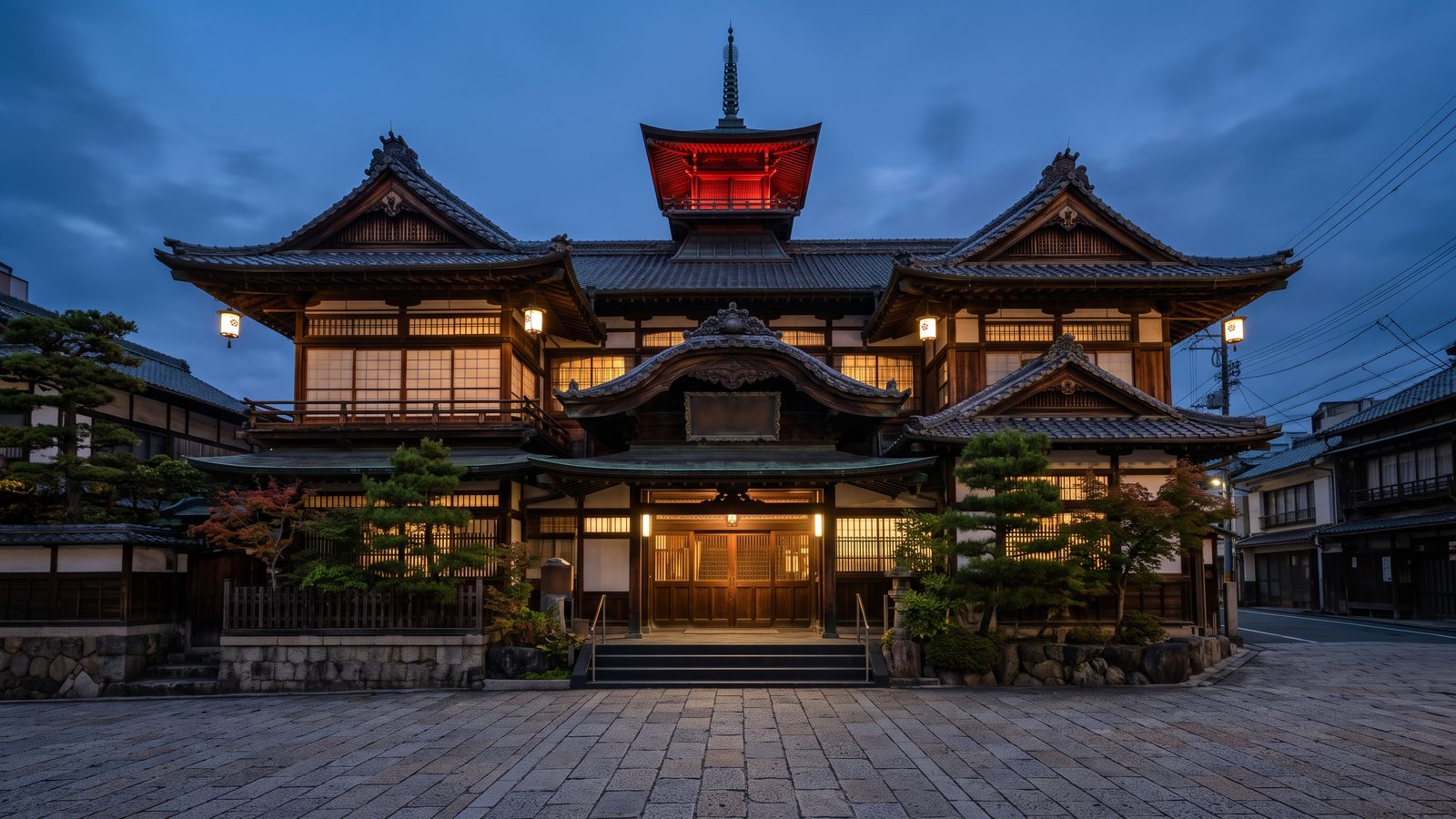
Step into a realm of myth and history at Dogo Onsen Honkan in Matsuyama, Ehime. Built in 1894 on waters enjoyed for over 3,000 years, this wooden marvel inspired Studio Ghibli’s Spirited Away. As you wander past its traditional multi-tiered rooflines and iconic watchtower, you follow in the footsteps of ancient emperors, mythical gods, and generations of bathers who sought healing in these sacred alkaline springs.
This self-guided audio tour reveals the craftsmanship, folklore, and bathing customs that define Japan’s most famous bathhouse. Discover intricate timber joinery, imperial rest chambers, and legendary tales of white herons while experiencing the timeless art of Japanese bath culture at your own peaceful pace.
Listen to a sample
The opening of this tour, exactly as AllTours narrates it on site.
What you'll hear on this tour
Stop 1. The Healing Heron and Divine Footprints
You stand at the origin of Dogo’s mystical allure, where ancient folklore meets sacred hot spring waters. Legendary stories recall a wounded white heron that dipped its injured leg into these very springs daily until it achieved a complete recovery. This miraculous healing cemented public faith in the restorative power of Dogo's waters. Further in, you discover the Tama-no-Ishi, or Spirit Stone. Legend tells that the deity Sukunahikona fell ill while traveling with Prince Ōkuninushi. After being immersed in the thermal bath, Sukunahikona recovered and danced upon this stone, leaving faint footprints that forever bind this ancient bathhouse to divine mythology.
Stop 2. Nail-Free Joinery and Watchtower Gables
As you examine the multi-layered exterior of Dogo Onsen Main Building, you witness a masterpiece of late Meiji-era public bathhouse design. You look up at the Shinrokaku watchtower rising like a pagoda above the complex, housing the botchan drum that sounds the hour each day. You notice the precise kigumi timber joinery crafted seamlessly throughout the structure without a single nail. Stepped rooflines connect distinct wings, leading your eye toward the exclusive Yushinden imperial space. Built from precious hinoki cypress with elevated entrances and fine shoji screens, this sprawling wooden marvel balances dedicated functionality with harmonious traditional aesthetics.
Stop 3. Wavy Motifs and Studio Ghibli Inspirations
You explore the rich artistic tapestry woven throughout the bathhouse exterior and interior. In the reserved Yushinden wing, you spot the Nami ni Usagi (Waves and Rabbits) relief carved into ceiling panels, symbolizing good fortune and swiftness. You admire the sweeping karahafu gables whose undulating curves mimic flowing fabric, demonstrating the incredible skill of Meiji woodcraft. Notice how delicate lattice work, carved details, and soft light filtering through shoji screens harmonize across every room. These atmospheric visual elements directly inspired director Hayao Miyazaki when creating the fantastical spirit world featured in Studio Ghibli's animated masterpiece Spirited Away.
Stop 4. Imperial Legacy and Mayor Kinpachi's Vision
You stand where emperors and nobles bathed for over a millennium. Imperial records show Prince Shotoku visited these hot springs in the seventh century, drawn by their healing reputation long before Kyoto became the capital. Late in the nineteenth century, Mayor Sakamoto Kinpachi envisioned transforming Dogo's modest bathhouses into a grand symbol of national pride during the Meiji era's rapid modernization. He insisted on traditional Japanese woodworking techniques executed on an unprecedented scale. By creating a magnificent public bathhouse fit for both royalty and common citizens, his ambitious project preserved ancient hot spring heritage while stepping boldly into a new era.
Stop 5. Communal Baths and Imperial Splendor
You prepare to step into the soothing waters of Dogo Onsen. Inside Kami-no-Yu, the open 'Bath of the Gods,' high ceilings trap gathering steam while naturally alkaline water gently wraps around your body. For a quieter retreat, Tama-no-Yu, the 'Bath of the Spirits,' provides an intimate environment ideal for quiet contemplation. You can also admire the legacy of Yushinden, a private imperial bath chamber crafted from polished stone and fine wood carvings exclusively for the Emperor's family. As you soak, the restorative warmth eases your muscles, introducing you to an ancient bathing tradition preserved across generations.
Stop 6. Tatami Rest, Hojicha, and Courtyard Quiet
After your bath, you step into a tranquil ryotei resting room to continue the traditional wellness ritual. You put on a soft yukata robe, feeling its breathable fabric against your warm skin. As you sit down on cool, fragrant tatami mats, diffused sunlight streams softly through elegant shoji paper screens. You sip freshly brewed local tea, like warming hojicha or sencha, extending the soothing heat from your bath deep inside. Gazing out toward the quiet inner courtyard filled with moss and stone, you feel mental tension melt away in this serene space designed for stillness and sensory renewal.
Planning your visit
- Best time to go
- Early morning or dusk to hear the Botchan drum sound from the watchtower.
- Approximate duration
- about 1 to 1.5 hours
- Where to start
- Main entrance plaza in front of the Dogo Onsen Honkan building.
Access and conditions change seasonally — check the official site before you go.
Frequently asked questions
Is Dogo Onsen Main Building worth visiting?
Yes, Dogo Onsen Main Building is one of Japan's most historic hot springs, renowned for its 1894 Meiji-era wooden architecture, imperial heritage, and for inspiring Studio Ghibli's Spirited Away.
How long do you need at Dogo Onsen Main Building?
Plan for about 1 to 1.5 hours to tour the building, appreciate its historic architecture, learn about its folklore, and enjoy a traditional bath and post-bath relaxation.
What is the history of Dogo Onsen Main Building?
With hot spring roots stretching back 3,000 years, Dogo Onsen hosted imperial visitors like Prince Shotoku in the 7th century. The current wooden Honkan structure was built in 1894 under Mayor Sakamoto Kinpachi.
Keep exploring
Header image is an AI-generated illustration of Dogo Onsen Main Building. AllTours.ai is an AI audio tour guide — point your camera at any landmark and hear its story.