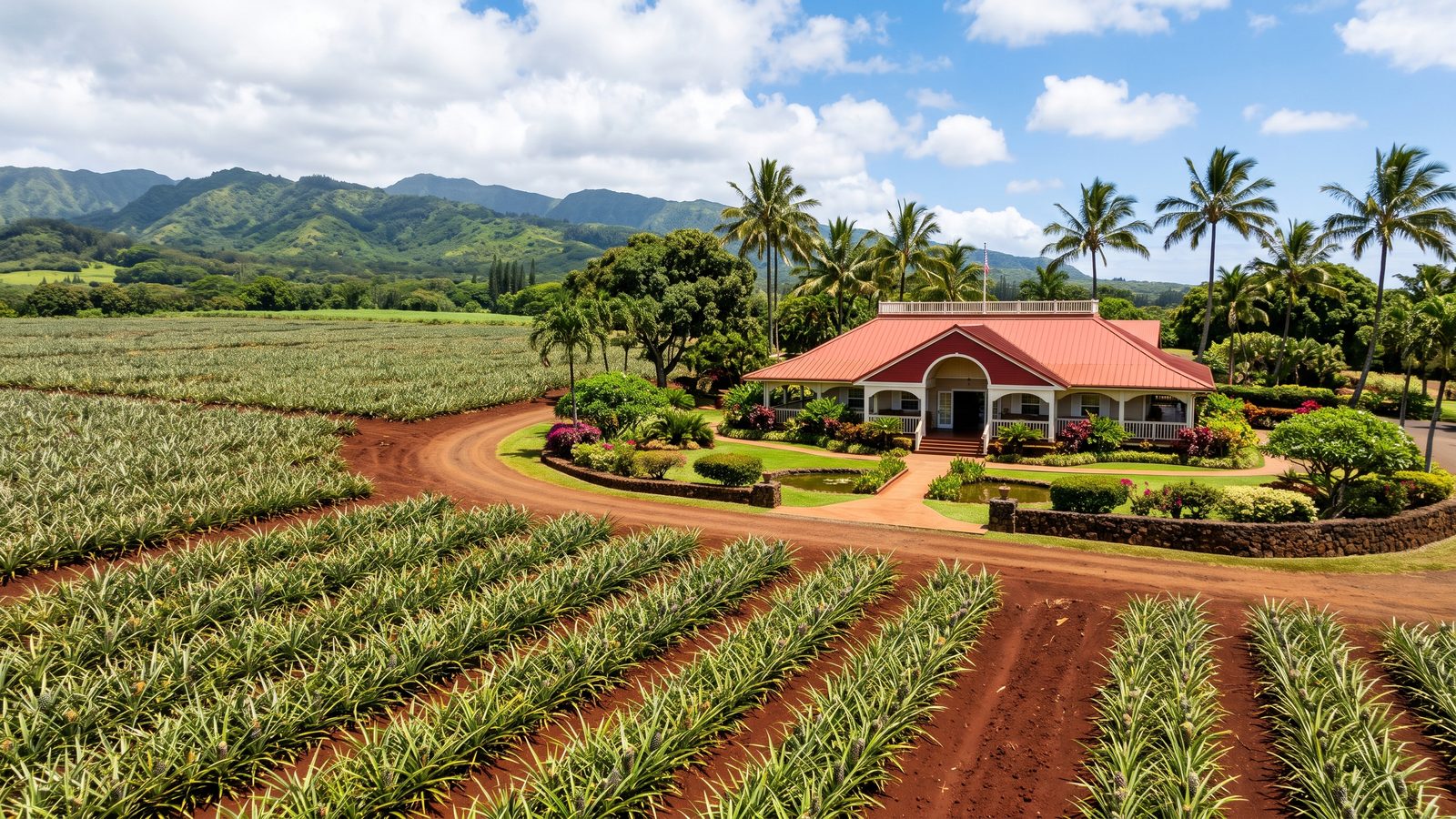
You stand upon Oahu's central plain, a dramatic expanse of fertile red soil framed by the Waianae and Koolau mountain ranges. Long before pineapples covered these fields, this land held deep sacred value for Hawaiian royalty. Today, the legendary estate invites you to walk through the rich agricultural story of Hawaii, tracing how a humble tropical fruit grew into an iconic global phenomenon right under the Pacific sun.
This self-guided audio tour walks you through the plantation's historic main house, vibrant botanical displays, and culinary delights. Explore the visionary legacy of the Dole family while discovering the fascinating cultural history, lush island greenery, and iconic tastes that define this celebrated Wahiawa landmark.
What you'll hear on this tour
Stop 1. The Golden Jewel of Hawaii
You stand surrounded by spiky crowns of golden fruit, the celebrated emblem of these tropical islands. Though synonymous with Hawaii today, the pineapple (*Ananas comosus*) actually originates from South America. Long before reaching Oahu, these rare delicacies symbolized luxury and lavish hospitality across European dining halls. You observe the fruit's unique growth cycle, noticing how its top crown of leaves plays a crucial role in nourishing future sweet yields. As you gaze across the vast fields, you reflect on how this single crop once dominated global production, transforming local agriculture and permanently weaving itself into the rich cultural identity of the Hawaiian islands.
Stop 2. Iconic Flavors and Tropical Treats
You step up to taste the legendary culinary creations that put this plantation on the global food map. You sample the famous Dole Whip®, a smooth, creamy, dairy-free frozen treat born right on these grounds that captures the refreshing essence of island sunshine. Beyond this world-renowned dessert, you explore intense pineapple ice cream and taste fresh-cut slices bursting with pure natural sweetness. You sip fresh pineapple juice, a bright elixir bottled straight from the surrounding fields. Every bite and sip reminds you of the ingenious culinary heritage that transformed raw tropical fruit into irresistible treats celebrated around the globe.
Stop 3. Royal Lands to Pineapple Empire
You walk across fertile earth that once served as an essential retreat for Hawaiian royalty, where King Kamehameha III established a royal agricultural farm in the 1840s. You trace the dramatic transformation that occurred in 1900 when an ambitious young entrepreneur named James Dole purchased 61 acres to plant his initial pineapple crop. By 1922, his Hawaiian Pineapple Company was producing an astonishing 25 million cans of pineapple each year. Standing on this historic soil, you appreciate how vision and labor converted these royal fields into the bustling epicenter of a global agricultural industry.
Stop 4. Vibrant Botanical Treasures
You step into a curated garden blooming with vibrant Polynesian heritage and tropical plant life. Magnificent hibiscus flowers showcase brilliant colors, recalling early Pacific voyagers who carried botanical treasures across vast ocean routes. Neat rows of pineapple plants display their spiky crowns, serving as traditional symbols of warmth and island hospitality. You admire the striking architectural shapes of bromeliads resting alongside lush greenery, creating tiny self-contained worlds within the landscape. As you wander through this living collection, you discover an educational haven that celebrates Hawaii’s rich agricultural ecosystem and the generosity of its fertile island soil.
Stop 5. Classic Island Plantation Style
You examine the main plantation house, a striking example of turn-of-the-century island architecture. You step onto the spacious, welcoming lanai, crafted specifically to catch gentle island breezes and offer cool relief from the tropical sun. You observe the steeply pitched roof designed to shed heavy rainfall efficiently, along with sturdy wooden framing that highlights period craftsmanship. High ceilings, large windows, and an open floor plan work together to maximize natural ventilation and light throughout the interior. Painted in soft muted earth tones, the building sits gracefully within its surroundings, honoring the natural environment.
Stop 6. Island Craftsmanship and Keepsakes
You wander through bustling plantation shops that echo the historic spirit of early company stores where workers once gathered essential supplies. Browse through colorful displays of official Dole Whip® merchandise, bringing home fun reminders of your favorite frozen treat. As you explore the shelves, you discover authentic Hawaiian crafts created by skilled local artisans who preserve island traditions through their handiwork. Every carefully crafted treasure offers a meaningful link to local culture and history, allowing you to take home a genuine piece of Hawaii's creative soul alongside your plantation memories.
Planning your visit
- Best time to go
- Mornings shortly after opening to avoid afternoon crowds and heat.
- Approximate duration
- about 1 to 2 hours
- Where to start
- Outside the main Dole Plantation visitor center near the entrance plaza.
Access and conditions change seasonally — check the official site before you go.
Frequently asked questions
Is Dole Plantation worth visiting?
Yes, Dole Plantation is worth visiting for its rich agricultural history, beautiful garden displays, family-friendly outdoor activities, and the chance to taste fresh pineapple treats and authentic Dole Whip® right at its historic source.
How long do you need at Dole Plantation?
Most visitors spend between 1 and 2 hours exploring the main grounds, historic displays, shops, and enjoying tropical treats.
What is the history behind Dole Plantation?
Originally land farmed under King Kamehameha III in the 1840s, James Dole purchased 61 acres here in 1900. His Hawaiian Pineapple Company grew into a global empire, producing 25 million cans annually by 1922.
Keep exploring
Header image is an AI-generated illustration of Dole Plantation. AllTours.ai is an AI audio tour guide — point your camera at any landmark and hear its story.