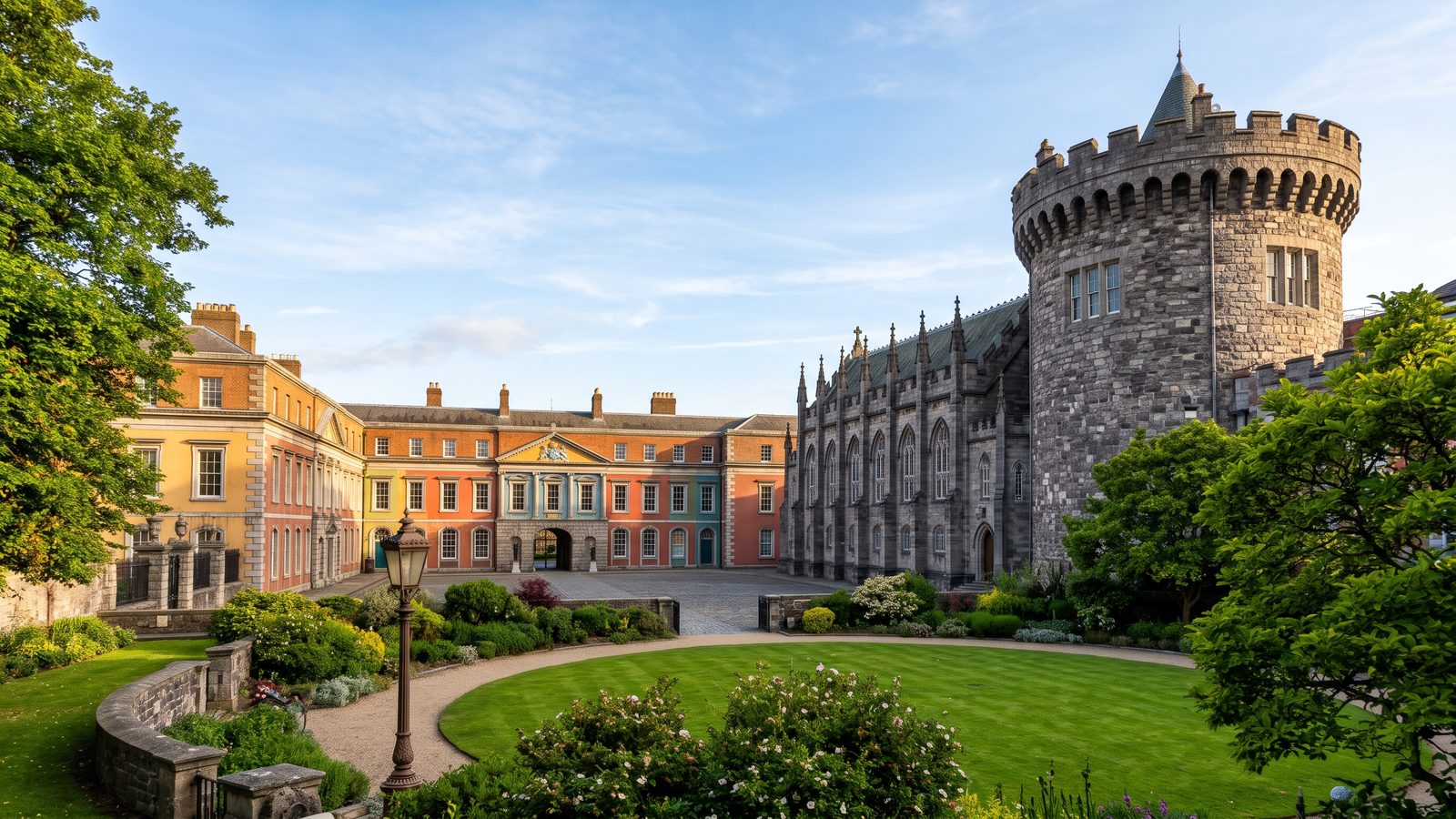
Welcome to Dublin Castle, a site that has anchored Irish power for over eight centuries. Originally built in 1204 under King John of England as a Norman fortress, it served as the central hub of British administration until 1922. Today, as you stroll through these historic grounds, you transition from ancient Viking roots to elegant Georgian architecture, standing where Ireland's national sovereignty was forged and celebrated.
This self-guided audio tour leads you through grand State Apartments, historic towers, and tranquil gardens. You will discover how a medieval stronghold transformed into a monument of modern Irish independence, exploring the art, history, and hidden archaeological depths that define this iconic landmark.
Listen to a sample
The opening of this tour, exactly as AllTours narrates it on site.
What you'll hear on this tour
Stop 1. From Norman Fortress to Sovereign State
You stand on land originally chosen as a Viking stronghold overlooking Dubh Linn, the dark pool that names the city. Decreed by King John in 1204 as a defensive bastion, court of justice, and royal treasury, this fortress served as the nerve center of British rule for over seven centuries. Here, viceroys dictated policy while political intrigue unfolded, including Fenian plots and the 1916 Easter Rising. The site's defining moment arrives on January 16, 1922, when the last British Viceroy hands the keys to Michael Collins, handing control to the Irish Free State. As you walk these grounds, each stone whispers tales of conquest, resistance, and sovereignty.
Stop 2. A Palimpsest of Changing Architectural Styles
Look around you to see centuries of evolving power written in stone. You begin at the Record Tower, the castle's oldest surviving structure, featuring thick 13th-century Norman limestone walls built for sieges. Contrast this medieval keep with the Palladian symmetry of the 18th-century State Apartments, where viceregal grandeur showcases refined cut stone, grand staircases, and elaborate plasterwork. Next, your gaze meets the Chapel Royal, designed by Francis Johnston in the early 19th century. Its Gothic Revival style boasts intricate fan vaulting and stained-glass windows, blending medieval aesthetic inspiration with precise contemporary craftsmanship. Together, these contrasting buildings reveal the shift from defensive fortress to elegant palace.
Stop 3. Dubh Linn and the Celtic Serpent
You step into the peaceful Dubh Linn Garden, standing directly above the historic black pool that gives Dublin its name. Here, the River Poddle once met the Liffey, creating a vital mooring spot for Viking longships over a thousand years ago. As you wander the green lawn, notice the magnificent serpent mosaic coiling across the grass. Laid in 1986 from varied stones, this sweeping Celtic artwork symbolizes the life-giving waters and ancient rivers that shaped early Dublin. Framed by surrounding stone walls, the garden offers you a tranquil space to reflect on the city's aquatic origins and Viking past.
Stop 4. Illuminated Masterworks and Viceregal Portraits
Beyond political history, you enter a realm of global artistic treasure. In the Chester Beatty Library, you encounter illuminated Ottoman Qur'ans glittering with lapis lazuli and gold, alongside delicate Japanese woodblock prints, ancient Egyptian papyri, and rare European prints. Moving into the State Apartments, grand Viceregal portraits line St. Patrick's Hall, showcasing masterly brushwork that reveals the character and authority of past rulers. Overhead, intricate plasterwork ceilings display sculptural artistry crafted by skilled 18th-century artisans. Each artistic detail transforms functional rooms into a living gallery, blending global narratives with viceregal elegance.
Stop 5. Regalia, Documents, and Viking Discoveries
Inside the museum spaces, you explore curated artifacts that reveal the human stories of Dublin Castle. You observe glittering ceremonial maces and silver-gilt regalia that once defined the viceregal court's grandeur and authority. Preserved historical documents detail pivotal moments between British administration and Ireland's evolving identity. Below this viceregal luxury, archaeological finds pull you back to the site's foundational layers. You examine medieval pottery shards, tools, and everyday items left by early Viking and Norman inhabitants. These objects connect you directly to both the highest leaders of state power and the ordinary people who first built upon this strategic mound.
Stop 6. Unlocking Hidden Layers and the Undercroft
As you explore the castle grounds, guided storytelling brings the stone walls to life. You walk through the lavish State Apartments as experts highlight subtle symbols within the 18th-century plasterwork and detail the historic legacy of visiting viceroys. Your journey takes you into the archaeological Undercroft, where you descend to stand on the ground of the original Viking settlement. Here, you trace ancient city walls and locate the historic dark pool. Listening to stories of medieval defensive strategies, you gain an intimate understanding of how this fortress transformed into a modern symbol of Irish independence.
Planning your visit
- Best time to go
- Mornings or late afternoons on weekdays offer a quieter experience in the courtyard and gardens.
- Approximate duration
- About 1 to 2 hours
- Where to start
- Upper Castle Yard, near the entrance to the State Apartments and Record Tower.
Access and conditions change seasonally — check the official site before you go.
Frequently asked questions
Is Dublin Castle worth visiting?
Yes, Dublin Castle is well worth visiting for anyone interested in Irish history, architecture, and culture. It spans over 800 years of history, featuring a 13th-century Norman tower, Georgian State Apartments, and Viking archaeological roots.
How long do you need at Dublin Castle?
Most visitors spend between 1 and 2 hours exploring the State Apartments, the Record Tower, the Dubh Linn Garden, and the museum collections.
When was Dublin Castle handed over to the Irish State?
Dublin Castle was formally handed over by the last British Viceroy to Michael Collins on January 16, 1922, marking the end of British rule and the birth of the Irish Free State.
Keep exploring
Header image is an AI-generated illustration of Dublin Castle. AllTours.ai is an AI audio tour guide — point your camera at any landmark and hear its story.