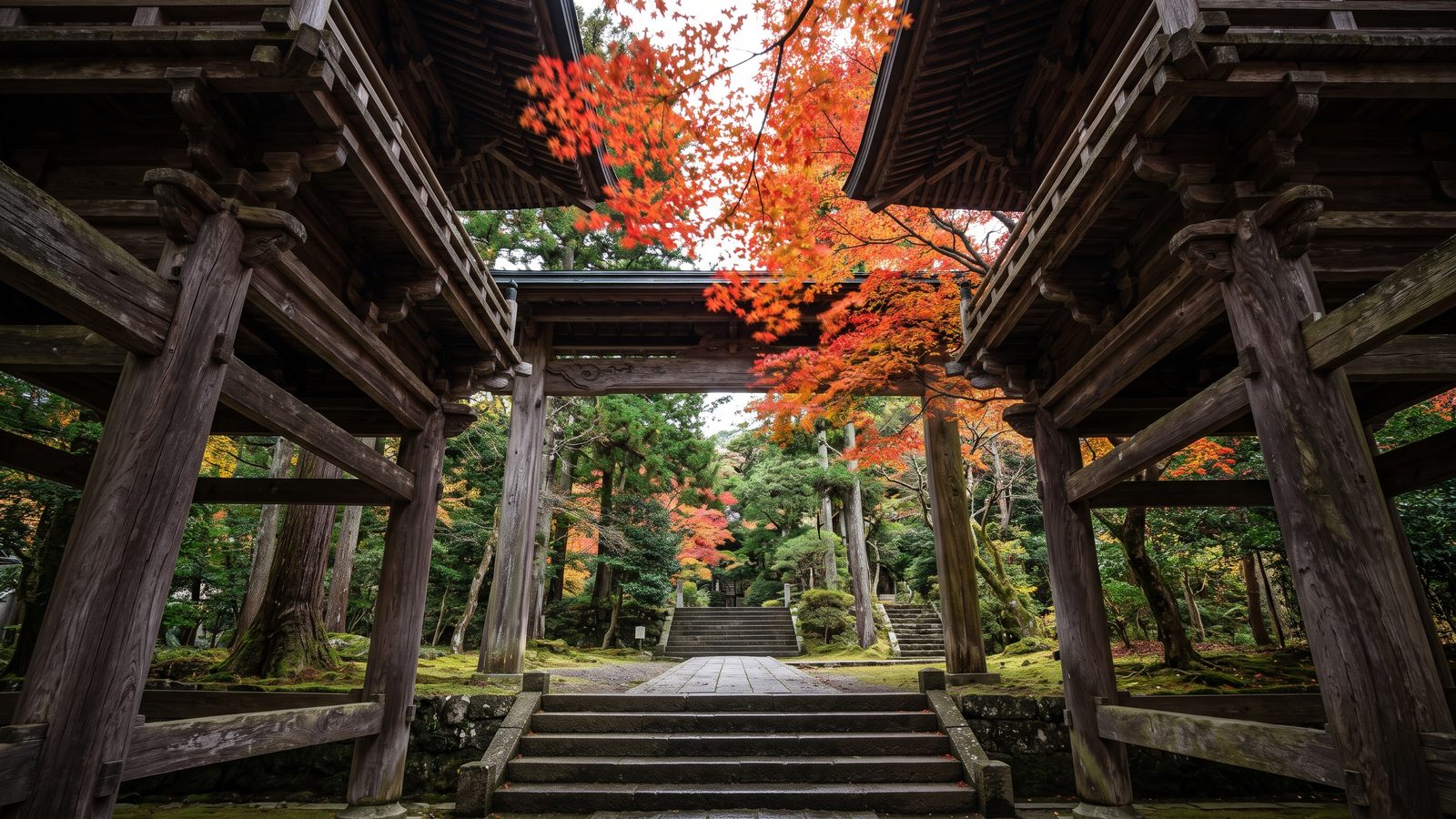
Welcome to Engaku-ji Temple, one of Kamakura's most prestigious Rinzai Zen temples nestled amidst the serene hills of Kanagawa. Founded in 1282 by the regent Hojo Tokimune, this sacred sanctuary offers a peaceful retreat into Japan's profound spiritual heritage. As you wander through its ancient gates and tranquil grounds, this self-guided audio tour reveals the rich history, classic architecture, and contemplative beauty that have inspired generations of seekers and travelers.
Step onto the weathered pathways and let the soothing atmosphere envelope you. From majestic halls housing sacred Buddha statues to delicate Zen rock gardens and national treasures, you are about to experience a living legacy where nature, faith, and timeless culture harmoniously converge in absolute quietude.
Listen to a sample
The opening of this tour, exactly as AllTours narrates it on site.
What you'll hear on this tour
Stop 1. The Timber Elegance of Shariden Hall
You stand before the exquisite Shariden, a designated National Treasure that exemplifies the pure elegance of Song Dynasty architecture in Japan. You observe its graceful irimoya-zukuri gabled roof sweeping upward toward the canopy. Beneath, the distinctive curved karahafu entrance gable welcomes your gaze, showcasing delicate joinery assembled without a single nail. This intricate wooden construction embodies structural harmony, inviting quiet contemplation. Within this sacred hall rests a revered relic of the Buddha himself. As you admire the soft textures of weathered timber and flowing lines, you feel the refined aesthetic of Zen design seamlessly merging with the surrounding forest.
Stop 2. The Mindful Path of Rinzai Zen
Here, you encounter the core teachings of Rinzai Zen, a tradition introduced to these grounds by the monk Mugaku Sogen. You learn how practitioners seek satori, or sudden enlightenment, through the intense contemplation of koans—paradoxical riddles crafted to break through rational thought. As you look out over the peaceful grounds, you imagine the quiet intensity of zazen, seated meditation, where followers cultivate direct, intuitive insight into reality rather than relying on intellectual theory. The profound stillness surrounding you reflects this commitment to inner stillness and sudden awakening. You feel invited to set aside daily distractions and embrace immediate present-minded awareness.
Stop 3. A Sacred Compassion Born from War
You step into the historical origin of Engaku-ji, founded in 1282 by the regent Hojo Tokimune. In the aftermath of the harrowing Mongol invasions, Tokimune established this sanctuary with a remarkable spirit of universal compassion. You realize that he dedicated the temple to honor the souls of everyone who perished in the conflict, praying equally for the fallen Japanese defenders and the invading Mongol soldiers. This extraordinary act of spiritual healing cemented Engaku-ji's profound legacy. Through centuries of political shifts, wars, and natural disasters, this resilient sanctuary continues to stand as an enduring testament to peace amidst turmoil.
Stop 4. Scenery Sculpted for Deep Reflection
You pause at the edge of Engaku-ji's serene Zen garden, where every element invites quiet reflection. You notice how the carefully raked white gravel forms delicate ripples, evoking a boundless ocean stretching into the distance. Strategic moss-covered rocks emerge from the stone sea, representing sacred islands and soaring mountain peaks across a miniature landscape. Weathered stones and carefully sculpted pine branches express the deep spirit of wabi-sabi, finding profound beauty in impermanence and simplicity. As you gaze across this meditative vista, your mind settles, allowing the gentle interplay of nature and design to evoke a deep feeling of tranquility.
Stop 5. Inside the Heart of Butsuden
You enter the Butsuden, the central Buddha Hall, where a profound silence instantly envelops you. Above, the magnificent timber roof shelters the sacred wooden statue of Shaka Nyorai, the historical Buddha, who presides over the hall with timeless composure. You feel the sanctity of a space that serves as the beating heart of Engaku-ji. For over seven centuries, the air here has been consecrated by endless sutra chants and the silent breathing of meditating monks. As you stand in this quiet hall, the echoes of devotion resonate around you, offering a rare moment for introspection and inner peace.
Stop 6. Living Ethos of Wabi-Sabi Culture
Standing within these ancient precincts, you appreciate how the Zen philosophy nurtured here deeply transformed Japanese cultural traditions. You trace its enduring influence in the disciplined grace of the tea ceremony, the mindful arrangement of ikebana floral art, and the spiritual focus underpinning traditional martial arts. At the center of it all lies wabi-sabi—an aesthetic philosophy that finds beauty in simplicity, rustic imperfection, and the transient nature of life. As you absorb the rustic wooden textures and balanced simplicity surrounding you, you understand how Engaku-ji helped shape the artistic and spiritual soul of Japanese culture.
Planning your visit
- Best time to go
- Early morning on weekdays offers the quietest atmosphere, especially during autumn for vibrant maple foliage or spring for lush greenery.
- Approximate duration
- about 1 to 1.5 hours
- Where to start
- Kita-Kamakura Station exit, entering directly through the grand Sanmon Gate at Engaku-ji.
Access and conditions change seasonally — check the official site before you go.
Frequently asked questions
Is Engaku-ji Temple worth visiting?
Yes, Engaku-ji is one of Kamakura's premier Five Great Zen Temples. It features magnificent wooden architecture, National Treasures like the Shariden, tranquil rock gardens, and a rich history dating back to 1282.
How long do you need at Engaku-ji Temple?
Most visitors spend about 1 to 1.5 hours exploring the main halls, National Treasure buildings, gardens, and forested pathways at a relaxed pace.
Why was Engaku-ji Temple founded?
Engaku-ji was founded in 1282 by Hojo Tokimune following the Mongol invasions of Japan. It was established to honor the fallen souls of both Japanese defenders and invading Mongol soldiers.
Keep exploring
Header image is an AI-generated illustration of Engaku-ji Temple. AllTours.ai is an AI audio tour guide — point your camera at any landmark and hear its story.