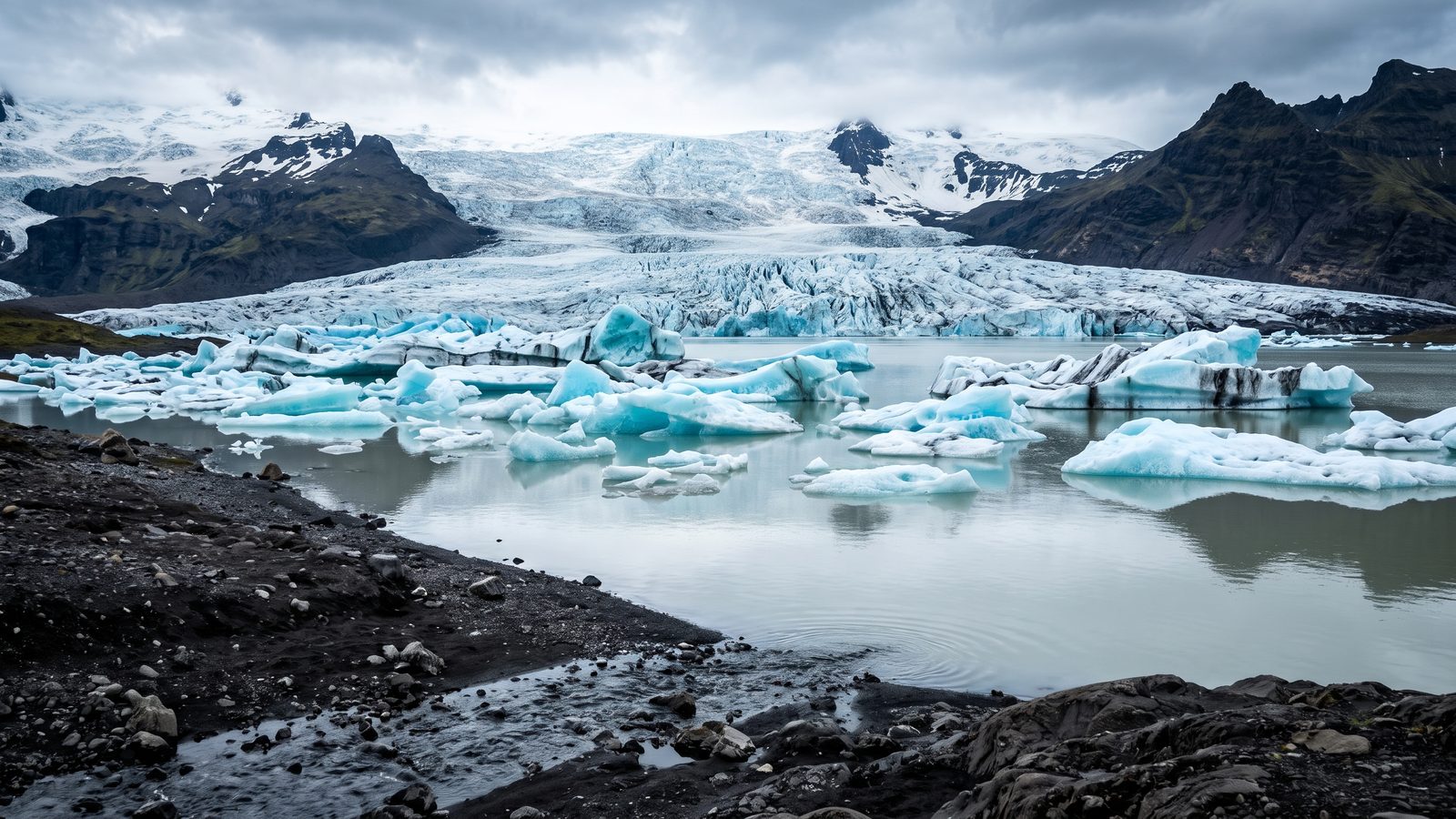
Welcome to Fjallsárlón Glacier Lagoon, an extraordinary theater of ice and water nestled beneath the vast Vatnajökull ice cap in Southern Iceland. Here, massive icebergs calve directly from the crawling glacier, drifting silently across calm, sediment-rich meltwater before you. As you walk along the dark volcanic shores, this self-guided audio tour reveals the dynamic geological forces, wildlife, and ancient frozen history shaping this ever-changing Arctic paradise.
Experience raw natural power as towering ice monoliths crackle, shift, and reflect vivid aquamarine hues. Whether watching seals bask on floating ice floes or tracing streaks of centuries-old volcanic ash, you are standing at the frontier of Europe's grandest glacial landscape, where every passing moment carves a new masterpiece.
Listen to a sample
The opening of this tour, exactly as AllTours narrates it on site.
What you'll hear on this tour
Stop 1. Sculpted Wonders of Compressed Time
You look out across a slow-motion sculpture garden carved by time and immense glacial pressure. Each iceberg drifting before you is a distinct masterpiece torn from the mighty Vatnajökull glacier, carrying whispers of ancient snowfalls. Notice how some bergs glisten with glassy smoothness while others display jagged, crystalline facets that catch the light. The striking deep blue colors emerge where intense weight squeezes out air bubbles, allowing light to penetrate deep into the frozen core. Look closely and you can spot dark streaks of volcanic ash embedded in the monoliths—remnants of centuries-old eruptions frozen mid-air. Surrounded by profound silence broken only by lapping water, you experience raw, untamed Arctic beauty.
Stop 2. Navigating a Labyrinth of Ice
You feel the crisp Arctic spray kiss your face as a Zodiac boat slices through the frigid lagoon. Steering through a maze of ancient icebergs, you stand surrounded by towering frozen cathedrals sculpted by relentless wind and water. You are not merely observing this landscape; you are fully immersed inside its primal pulse. Listen carefully across the open water—the sudden thunderous crack of an iceberg calving echoes like a visceral roar, reminding you of nature's formidable power. As you navigate the calm channels, look for native seals basking lazily on floating ice floes, sharing a quiet moment with you inside this untamed and exhilarating frozen wilderness.
Stop 3. Capturing Light and Crystalline Textures
Raise your camera to capture an ever-changing canvas where light and texture interact unlike anywhere else on Earth. As you adjust your angle, zoom in on macro details that reveal intricate crystalline structures and air bubbles trapped during ancient snowfalls. Watch how changing sunlight shifts the internal refraction of the icebergs from pale aquamarine to deep sapphire hues. You can experiment with low camera angles on the dark volcanic sand shoreline, creating a dramatic contrast that makes luminous blue ice pop in your frame. When long exposures transform choppy water into a smooth plane or capture the Northern Lights dancing overhead, these ghostly ice silhouettes turn into unforgettable visual art.
Stop 4. Forces of Fire and Ice
You stand at the edge of a dynamic geological basin shaped by ice, volcanic heat, and relentless time. The towering icebergs floating here originate from the receding glacial tongues of the Vatnajökull system, where massive pressure compresses snow over centuries into dense, bubble-free ice. This density absorbs longer light wavelengths, creating the brilliant deep blues you see today. The lagoon itself is a young landscape, formed recently as glacial retreat carved out a deep basin filled by freshwater runoff. Dark veins embedded inside floating icebergs preserve ancient layers of volcanic ash, recording historic eruptions and showing you a living testament to ongoing erosion and climate shift.
Stop 5. The Quiet Pulse of Glacial Melt
Feel the crisp, cold air against your skin as you connect directly with the immense glacial forces surrounding you. The water beneath the icebergs carries fine microscopic rock dust ground down by sliding glaciers, giving the lagoon its iconic milky texture in contrast to pristine ice. As floating bergs melt, they release ancient sediment to reshape the lagoon floor beneath. Listen closely to the subtle sounds of persistent erosion—the gentle grinding of ice against ice and soft splashes when fragments break away into the water. You witness quiet, continuous natural processes reshaping this fragile environment every second, carving a dynamic Arctic sanctuary.
Stop 6. Footsteps of Naturalists and Pioneers
Imagine stepping back in time as an early naturalist or pioneer venturing into this uncharted icy frontier. Long before modern boats navigated these waters, early Icelanders relied on acute senses and resilience, driven by the spirit of the ancient sagas to explore harsh landscapes. During the nineteenth and twentieth centuries, courageous cartographers documented the advance and retreat of massive glaciers, laying crucial groundwork for modern climate science. As you stand overlooking the water, you follow in the footsteps of those early searchers who mapped these dynamic borders, connecting with a deep history of human curiosity and scientific discovery at the edge of the living Arctic.
Planning your visit
- Best time to go
- May to September for boat tours and milder weather; winter months for Northern Lights views.
- Approximate duration
- About 1 to 2 hours
- Where to start
- The main visitor parking area near the Fjallsárlón service center and Frost Restaurant.
Access and conditions change seasonally — check the official site before you go.
Frequently asked questions
Is Fjallsárlón Glacier Lagoon worth visiting?
Yes, Fjallsárlón offers a more intimate, quieter alternative to neighboring Jökulsárlón, allowing visitors to get closer to icebergs and see the dramatic glacier wall backdrop up close.
How long do you need at Fjallsárlón Glacier Lagoon?
Most visitors spend 1 to 2 hours taking in the views, walking along the shoreline trail, and photographing the ice, or up to 2.5 hours if participating in a Zodiac boat tour.
How was Fjallsárlón Glacier Lagoon formed?
Fjallsárlón formed as an outlet glacier of Vatnajökull began receding, carving a deep land basin that rapidly filled with glacial meltwater, floating ice fragments, and fine rock sediment.
Keep exploring
Header image is an AI-generated illustration of Fjallsárlón Glacier Lagoon. AllTours.ai is an AI audio tour guide — point your camera at any landmark and hear its story.