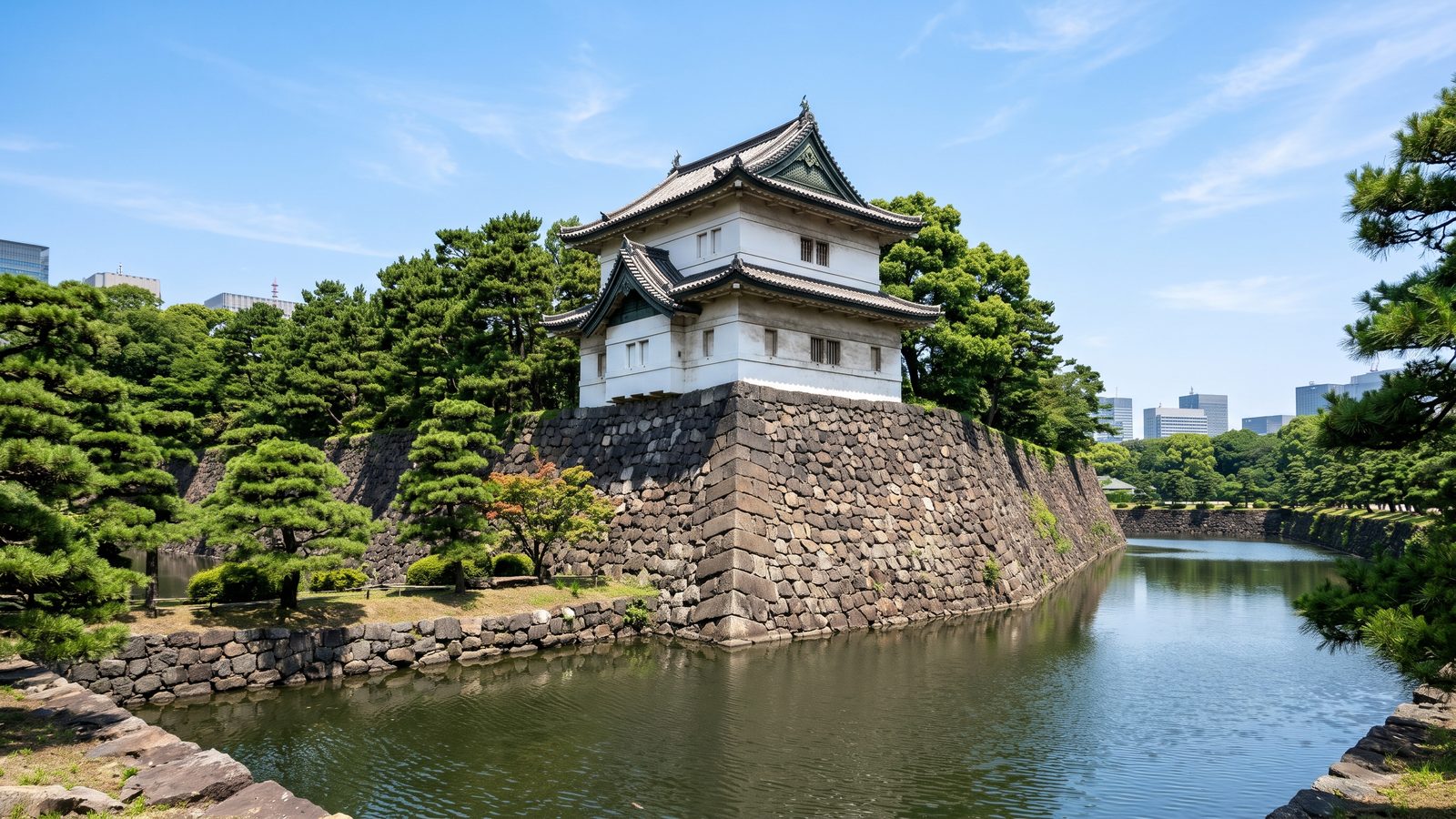
Welcome to Fujimi Yagura, the legendary 'Mt. Fuji View Turret' nestled inside Tokyo's Imperial Palace grounds. As one of the few original structures remaining from ancient Edo Castle, this magnificent three-story watchtower offers a direct window into Japan's samurai past. Here, powerful shoguns once stood looking out toward Mount Fuji's sacred peak, surrounded by impenetrable stone walls and pristine plaster defenses that have remarkably endured through centuries of history.
As you explore the surrounding palace grounds, this self-guided tour highlights historic stonework, classic strolling gardens, and glimpses of the modern Imperial Palace. Step back into feudal Japan to discover the unique architecture, cultural symbolism, and enduring sentinel history of Tokugawa Ieyasu’s original castle grounds.
Listen to a sample
The opening of this tour, exactly as AllTours narrates it on site.
What you'll hear on this tour
Stop 1. The Shogun's Mount Fuji Panorama
You stand before the landmark that takes its name from the magnificent silhouette of Mount Fuji. As you look out from this strategic spot, imagine Tokugawa shoguns gazing across old Tokyo toward the sacred snow-capped peak. This rare urban alignment offers an incredible framing of Japan’s most famous mountain, framed perfectly by the historic palace grounds. As light shifts across the sky from sunrise to sunset, Mount Fuji’s sacred peak changes colors against the horizon. It is easy to see why this breathtaking visual spectacle served as both a practical vantage point and a profound symbol of natural majesty and shogunal prestige throughout centuries of history.
Stop 2. Mastery of Edo Defensive Design
Look closely at the multi-tiered structure before you, built in the classic sanjū yagura style. While it rises three stories high, master builders cleverly designed the exterior to appear as only two levels. Notice the massive ishigaki stone foundation supporting the sturdy timber framework, demonstrating the brilliant stonemasonry of Edo castle engineers. Pristine white shirakabe plaster coats the walls, punctuated by narrow mushamado windows designed for archers and defenders. Topped with elegant multi-tiered roof tiles, this design seamlessly blends defensive capability with timeless aesthetic harmony, standing strong against the elements for centuries.
Stop 3. Surviving the Fires of Time
You are looking at a true historical survivor—one of only three original turrets remaining from sprawling Edo Castle. Rebuilt after the devastating Great Meireki Fire of 1657, this formidable watchtower originally guarded the castle's vital western approach. Over the decades, it witnessed the full reign of the Tokugawa shogunate, serving as a frontline military stronghold before eventually transitioning into a revered viewing platform for the Imperial family. As you trace its stones, you connect with over three centuries of dramatic Japanese history, standing on ground that evolved from a feudal fortress into the heart of modern Tokyo.
Stop 4. Kacho-Fugetsu and Mountain Sacredness
Standing here, you can feel Japan's deep cultural reverence for Mount Fuji and the natural world. Fujimi Yagura was more than a military tower; it served as a dedicated sanctuary for kacho-fugetsu, the traditional art of appreciating natural beauty. This direct visual connection between the shogunal seat and the sacred mountain symbolized harmony between temporal authority and the spiritual landscape of Japan. This iconic view inspired generations of poets and ukiyo-e woodblock artists, cementing the snowy peak into the core of national identity. Here, art, nature, and imperial prestige intertw seamlessly.
Stop 5. Strolling Through Imperial Landscape Design
Step down toward the East Garden, where the meticulously designed landscape of Ninomaru Garden reveals itself. You walk alongside a peaceful pond, surrounded by carefully sculpted stones and artfully pruned pine trees that showcase traditional kaiyu-shiki strolling garden aesthetics. Every seasonal bloom and calculated placement of water and stone forms a living tapestry of Japanese garden craft. As you follow paths once trodden by shoguns and emperors, the quiet serenity of this imperial landscape provides a soothing counterpoint to the bustling modern metropolis surrounding the palace grounds.
Stop 6. Glimpsing the Modern Kyuden Palace
Looking past the historic stone keep, you catch sight of the modern Imperial Palace, known as the Kyūden. This low-profile architectural complex gracefully respects traditional Japanese forms while serving as the active working location where the Emperor conducts official state duties. Within its walls lie the State Room and various magnificent audience halls hosting solemn imperial ceremonies. Standing here allows you to observe the seamless link between Japan's ancient feudal past and its ongoing modern imperial traditions, bringing centuries of history right into the present day.
Planning your visit
- Best time to go
- Morning or late afternoon on a clear day for optimal visibility towards Mount Fuji and lighter garden crowds.
- Approximate duration
- About 45 to 60 minutes
- Where to start
- Imperial Palace East Gardens entrance (Ote-mon Gate).
Access and conditions change seasonally — check the official site before you go.
Frequently asked questions
Is Fujimi Yagura worth visiting?
Yes, Fujimi Yagura is one of only three surviving original turrets from the historic Edo Castle. Located within Tokyo's Imperial Palace East Gardens, it offers visitors a rare look at authentic 17th-century castle architecture and imperial history.
How long do you need at Fujimi Yagura?
Most visitors spend about 45 to 60 minutes exploring Fujimi Yagura and the surrounding Ninomaru East Gardens.
What is the history of Fujimi Yagura?
Originally built during the Tokugawa shogunate by Tokugawa Ieyasu, Fujimi Yagura was rebuilt after the 1657 Great Meireki Fire. It served as a key defensive watchtower for Edo Castle before becoming an imperial viewing platform.
Keep exploring
Header image is an AI-generated illustration of Fujimi Yagura. AllTours.ai is an AI audio tour guide — point your camera at any landmark and hear its story.