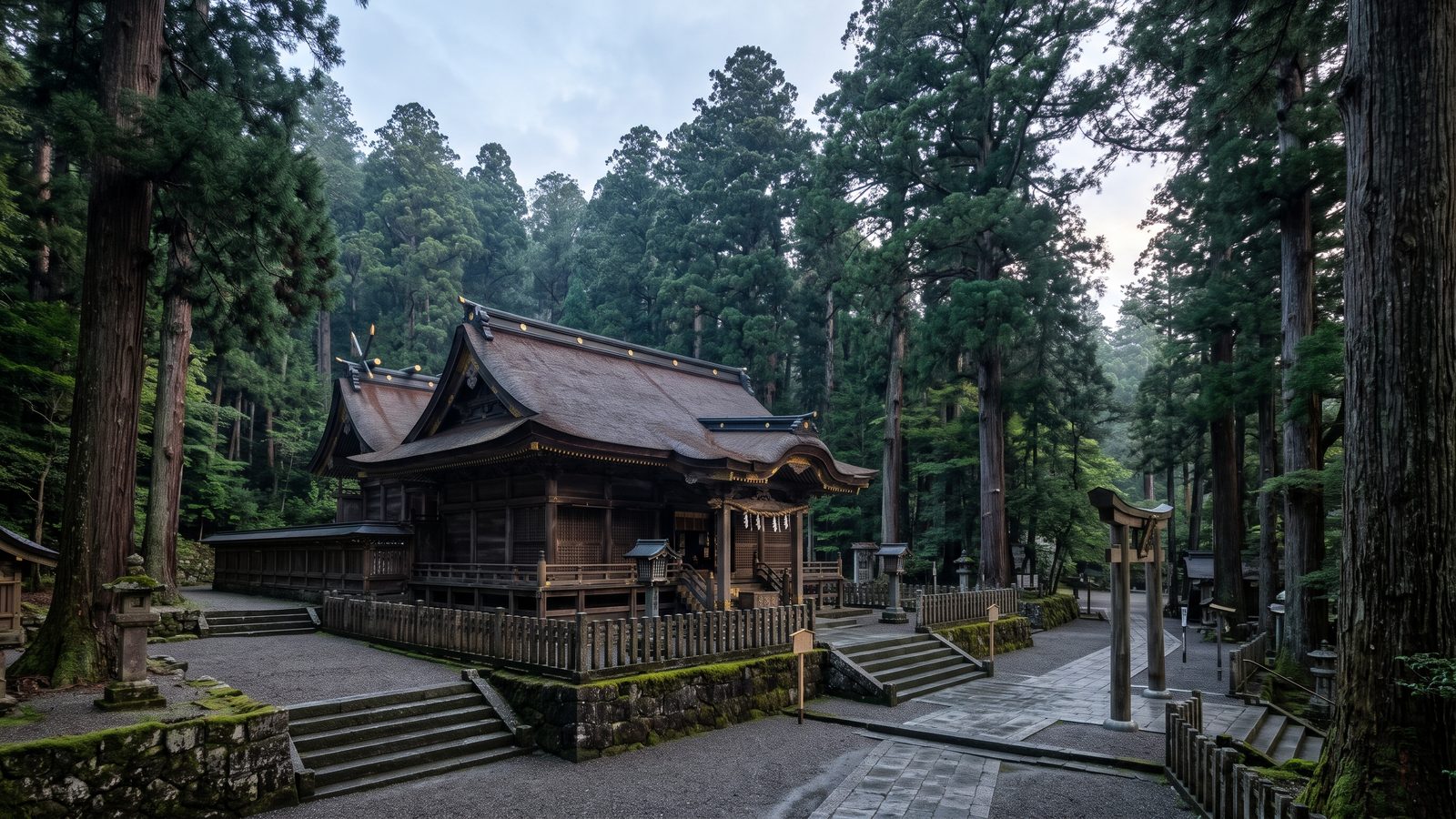
Step onto sacred ground consecrated in 782 AD by the monk Shōdō Shōnin, centuries before the glittering mausoleums of Nikko arrived. Futarasan Shrine stands as the ancient spiritual heart of the region, dedicated to the divine spirits of Mount Nantai, Mount Nyohō, and Mount Tarō. As you wander through cedar groves and historic halls, you encounter a timeless atmosphere of mountain worship deeply tied to Japan's Shugendo traditions.
This self-guided audio tour leads you through the shrine's rich legacy, from Edo-period cypress architecture to legendary sword-scarred ghost lanterns and purifying mountain springs. Immerse yourself in living Shinto rituals, tranquil cedar groves, and the ancient mountain sanctuary that anchors Nikko's UNESCO World Heritage landscape.
What you'll hear on this tour
Stop 1. The Sacred Heart and Ghost Lantern
You stand before Futarasan Shrine, Nikko's ancient spiritual core established by the monk Shōdō Shōnin in 782. Here, you honor the kami of Mount Nantai, Mount Nyohō, and Mount Tarō—Ōkuninushi, Tagorihime, and Ajisukitakahikone. As you explore the main complex, marvel at the serene simplicity of the Honden and Haiden, both designated Important Cultural Properties. Nearby, you discover the eerie Bakemono Tōrō, or Ghost Lantern. Local legend says this bronze lantern turned into a terrifying monster at night, prompting anxious samurai to strike it with their swords. Look closely at its dark, weathered surface to spot the deep samurai sword scars that recall Nikko's mystical past.
Stop 2. Twelve Centuries of Mountain Worship
You tread on ground consecrated over twelve hundred years ago, long before the elaborate mausoleums of Nikko arose. Established in 782 AD by the revered ascetic monk Shōdō Shōnin, this sacred site marked the origin of Nikko's spiritual prominence. You walk among remnants of ancient mountain worship deeply rooted in Shugendo practices, where three sacred peaks—Nantai, Nyohō, and Tarō—receive profound veneration. Although founded in the Heian period, the elegant wooden structures around you date primarily to 1619, rebuilt under the patronage of Tokugawa Hidetada shortly after his father Ieyasu passed away. As you look around, you sense an enduring legacy of continuous devotion that has withstood centuries of weather and change.
Stop 3. Elegance of Unpainted Cypress
As your gaze sweeps across the main sanctuary, you notice a subdued elegance typical of early Edo period shrine architecture. The complex masterfully employs the Gongen-zukuri style, seamlessly joining the honden main hall and haiden worship hall with a central heiden corridor. You see unpainted hinoki cypress wood everywhere, its natural grain celebrating pure reverence without heavy lacquers. Look up at the multi-layered roof crafted from hiwadabuki cypress bark, built to endure harsh mountain weather. Beyond the towering stone torii at the precinct entrance, notice the delicate carvings of auspicious creatures on the Karamon gate. Nearby, the famous vermilion Shinkyō bridge acts as a breathtaking architectural prelude to this sanctuary.
Stop 4. Ancient Cedars and Sacred Springs
You step beneath a massive canopy of ancient sugi cedars, some filtering the mountain air for over five hundred years. Take a moment to admire the famous Parent-and-Child Cedar, a magnificent pair of intertwined trunks symbolizing deep family harmony and life cycles. Nearby, you hear the soothing trickle of Sake-no-Izumi, a sacred spring whose pure waters yield wisdom and longevity to those who visit. Feel the overwhelming presence of Mount Nantai, Mount Nyohō, and Mount Tarō encompassing the sanctuary. This sacred shrine does not simply rest inside nature; it exists as an organic extension of the surrounding wilderness, where every rock, tree, and stream radiates divine energy.
Stop 5. Sacred Ropes and Shugendo Paths
You breathe in the serene, cool mountain air as you delve deeper into Futarasan's spiritual heart. Here, the three grand peaks are worshipped not merely as physical landmarks, but as living deities containing profound divine power. You trace the legacy of Shugendo ascetics who underwent rigorous mountain training to achieve spiritual enlightenment by merging with nature. Look for sacred shimenawa straw ropes wrapped around ancient trees, marking the distinct presence of resident kami. Pilgrims gather at the sacred Sake-no-Izumi spring to purify their spirits with its life-giving waters. Around every corner, you feel an abiding tranquility and an ancient tradition of seeking blessings for travel, safe childbirth, and lasting relationships.
Stop 6. Living Traditions and Sacred Rituals
You witness the daily rhythm of Shinto traditions alive within the shrine grounds. Watch as visitors perform temizu at the purification trough, washing their hands and mouth to cleanse their spirit before stepping toward the sanctuary. Nearby, you see wooden ema tablets covered in personal handwritten prayers for academic success, safety, and good fortune. Every spring, this serene setting transforms during the Yayoi Matsuri festival, when locals parade vibrant hanayatai floats through the streets to pray for a bountiful harvest. These living customs demonstrate how Nikko's sacred peaks continue to shape local identity, blending daily reverence for nature with centuries of communal devotion and traditional craftsmanship.
Planning your visit
- Best time to go
- Early morning or autumn, when cool mountain mist envelopes the ancient cedars and fall foliage highlights the shrine grounds.
- Approximate duration
- About 45 to 60 minutes
- Where to start
- The main stone torii entrance, just beyond the approach path near the Shinkyō Bridge.
Access and conditions change seasonally — check the official site before you go.
Frequently asked questions
Is Futarasan Shrine worth visiting?
Yes. As Nikko's oldest shrine complex, Futarasan Shrine offers a tranquil, authentic atmosphere focused on mountain worship and nature, providing a peaceful contrast to the heavily decorated Tōshō-gū nearby.
How long do you need at Futarasan Shrine?
Most visitors spend between 45 minutes to an hour exploring the main grounds, admiring the unpainted cypress halls, sacred cedars, and historical artifacts like the Ghost Lantern.
What is the history of Futarasan Shrine?
Founded in 782 AD by the monk Shōdō Shōnin, Futarasan Shrine established Nikko as a sacred site for mountain worship long before the shogunate era. Its current main structures date to a 1619 rebuilding by Tokugawa Hidetada.
Keep exploring
Header image is an AI-generated illustration of Futarasan Shrine. AllTours.ai is an AI audio tour guide — point your camera at any landmark and hear its story.