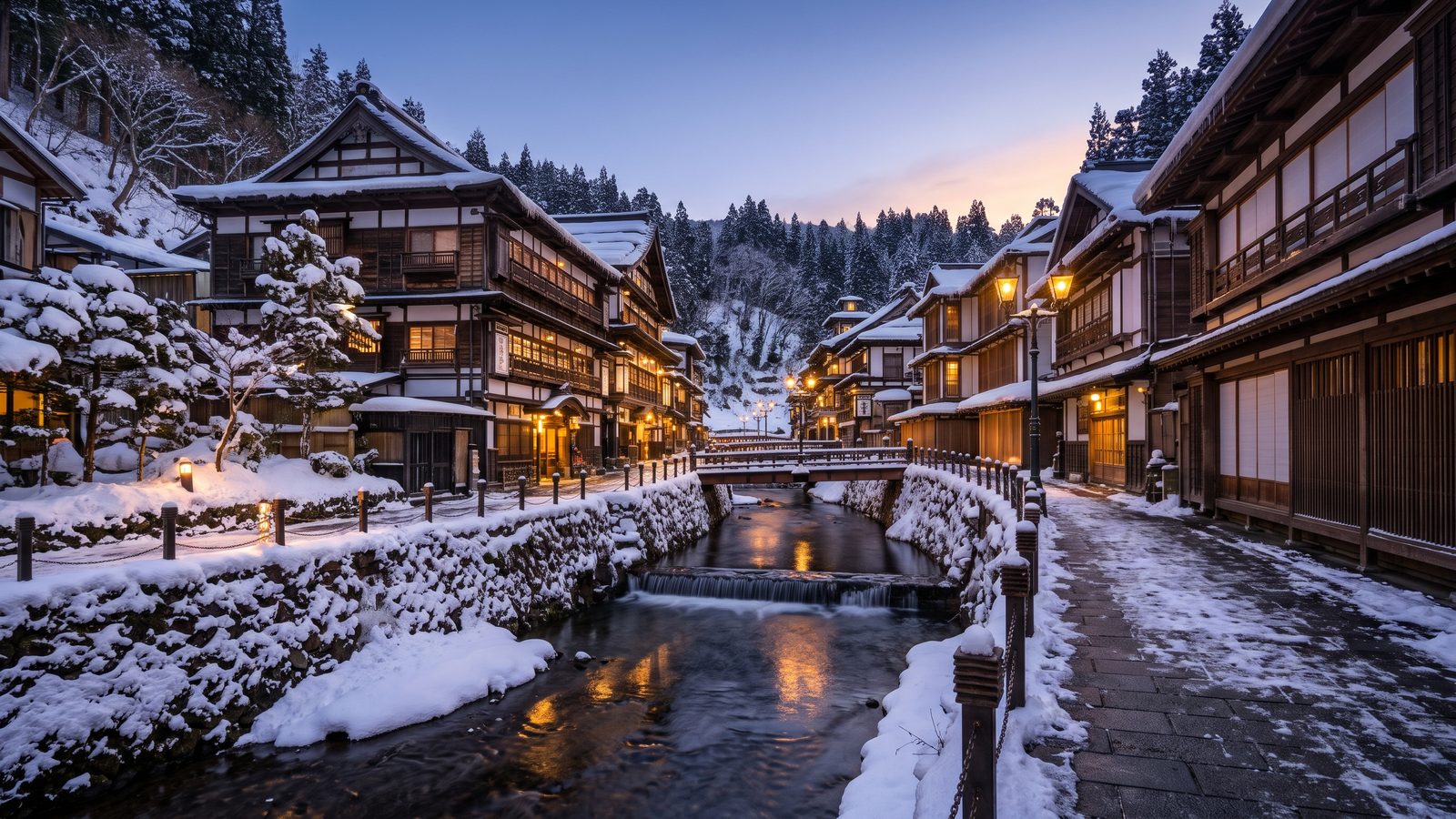
Nestled deep within a mountain gorge in Yamagata Prefecture, Ginzan Onsen offers an enchanted retreat frozen in time. Once a thriving silver mining center during the Edo period, this pedestrian-friendly town rebuilt itself into an iconic hot spring getaway after a devastating fire in 1913. Today, gas lamps light up multi-story wooden ryokan spanning the Ginzan River, evoking the nostalgic charm of Japan's romantic Taisho era.
Whether you come to soak in thermal spring waters, savor exquisite Yamagata beef and local soba, or admire snowy timber facades, Ginzan Onsen captivates every traveler. Walk along the gentle riverbank, listen to distant waterfalls, and experience the timeless magic of this picturesque mountain enclave.
Listen to a sample
The opening of this tour, exactly as AllTours narrates it on site.
What you'll hear on this tour
Stop 1. Craftsmanship of the Taisho Roman Era
As you gaze across the river, you behold multi-story wooden ryokan showcasing the elegant Taisho Romance architectural style. Built three to four stories high with cypress and cedar frames anchored on stone, these structures easily withstand heavy mountain snows. You notice intricate kosshi latticework on the windows, ingeniously filtering natural light while protecting guest privacy inside. Deep overhanging nokishita eaves deflect winter snowfall and summer heat, while covered balconies feature delicate Art Deco influences on their railings. This masterclass in traditional Japanese woodworking fused with Western romantic details creates a dreamlike atmosphere as you stroll along the waters.
Stop 2. From Silver Mine to Onsen Refuge
You trace the town's origins back to the Nobesawa Silver Mine, once one of Japan's most productive Edo-period mines. When silver veins depleted in the mid-Edo period, the settlement pivoted toward its thermal waters, transforming from an industrial hub into a secluded onsen retreat. After a catastrophic fire swept through in 1913, locals rebuilt the multi-story wooden ryokan between 1915 and 1925, giving birth to the romantic Taisho architecture you see today. Years later, the legendary 1983 NHK drama Oshin featured these streets, cementing Ginzan Onsen in the national imagination and drawing visitors to its historic riverfront.
Stop 3. A Cinematic Valley of Fire and Ice
You stand enveloped by steep, densely forested cliffs that squeeze tightly around the narrow river valley, creating a remarkably intimate and secluded atmosphere. In winter, fresh snowfall blankets every dark timber frame, turning the gorge into a living, monochrome woodblock print. During autumn, these same slopes ignite in a brilliant firestorm of amber, crimson, and russet leaves behind the subtle elegance of the historic inns. As twilight arrives, a warm, golden glow spills from wooden windows onto the river below, balancing man-made comfort against the wild surrounding mountain wilderness.
Stop 4. River Strolls and Mountain Explorations
Dressed in a cozy yukata provided by your inn, you step onto the car-free street to explore communal bathhouses like the wooden Shirogane-yu or modern Kajika-yu. You walk upriver to Shirogane-no-Taki waterfall, where mineral-rich water cascades over rocks, especially striking when frozen in winter or framed by autumn foliage. Continuing along the path, you enter a preserved tunnel section of the old Nobesawa Silver Mine to feel the chilly underground air. At dusk, you join fellow travelers on bridges, capturing photographs of warm gas lamps illuminating the serene riverfront.
Stop 5. Flavors of Yamagata's Mountains and Streams
As evening lights flicker outside, you sit down to an authentic multi-course kaiseki dinner showcasing local delicacies. You savor highly prized Yamagata beef, celebrated for its exquisite marbling and rich flavor, served alongside handmade buckwheat soba noodles crafted from neighboring fields. In autumn, you taste comforting imoni, a hearty taro and meat stew deeply rooted in regional culture. Freshly foraged sansai mountain vegetables arrive as delicate tempura or subtle simmered side dishes. Pairing these seasonal creations with local sake brewed from pure mountain water completes your rich culinary journey through the valley.
Stop 6. Geothermal Waters and Ancient Forests
You feel cool, crisp mist rising from the Ginzan River, flowing straight from the Ou Mountains to carve a dramatic volcanic gorge. Deep, earthy scents drift from ancient Japanese cedars and beech trees that cloak the surrounding cliffsides. You hear the thunderous roar of Shirogane-no-Taki, the Silver Waterfall, cascading over mossy cliffs downriver. Heated by deep geothermal energy beneath the earth, this pure, mineral-rich water surges up to feed the town's legendary healing baths. Every natural element, from the rushing waters to the towering peaks, works in harmony to sustain this tranquil sanctuary.
Planning your visit
- Best time to go
- Winter (December to February) for iconic snowy vistas and evening gas-lamp illuminations, or Autumn (October to November) for vibrant foliage.
- Approximate duration
- about 2 to 3 hours
- Where to start
- The entrance bridge at the lower end of the main pedestrian street near Shirogane-yu bathhouse.
Access and conditions change seasonally — check the official site before you go.
Frequently asked questions
Is Ginzan Onsen worth visiting?
Yes, Ginzan Onsen is widely considered one of Japan's most scenic hot spring villages, famous for its beautifully preserved Taisho-era multi-story ryokan, pedestrian riverwalk, and romantic gas lighting.
How long do you need at Ginzan Onsen?
A day visit of 2 to 3 hours is enough to walk the main street, soak in a public bath, and visit the silver mine tunnel. However, staying overnight at a ryokan offers the best experience with evening illuminations and kaiseki dining.
What is the historical significance of Ginzan Onsen?
Originally founded as the Nobesawa Silver Mine in the early Edo period, the town transitioned into a hot spring resort after silver reserves depleted. It was rebuilt in the 1920s in the Taisho Roman architectural style following a major fire in 1913.
Keep exploring
Header image is an AI-generated illustration of Ginzan Onsen. AllTours.ai is an AI audio tour guide — point your camera at any landmark and hear its story.