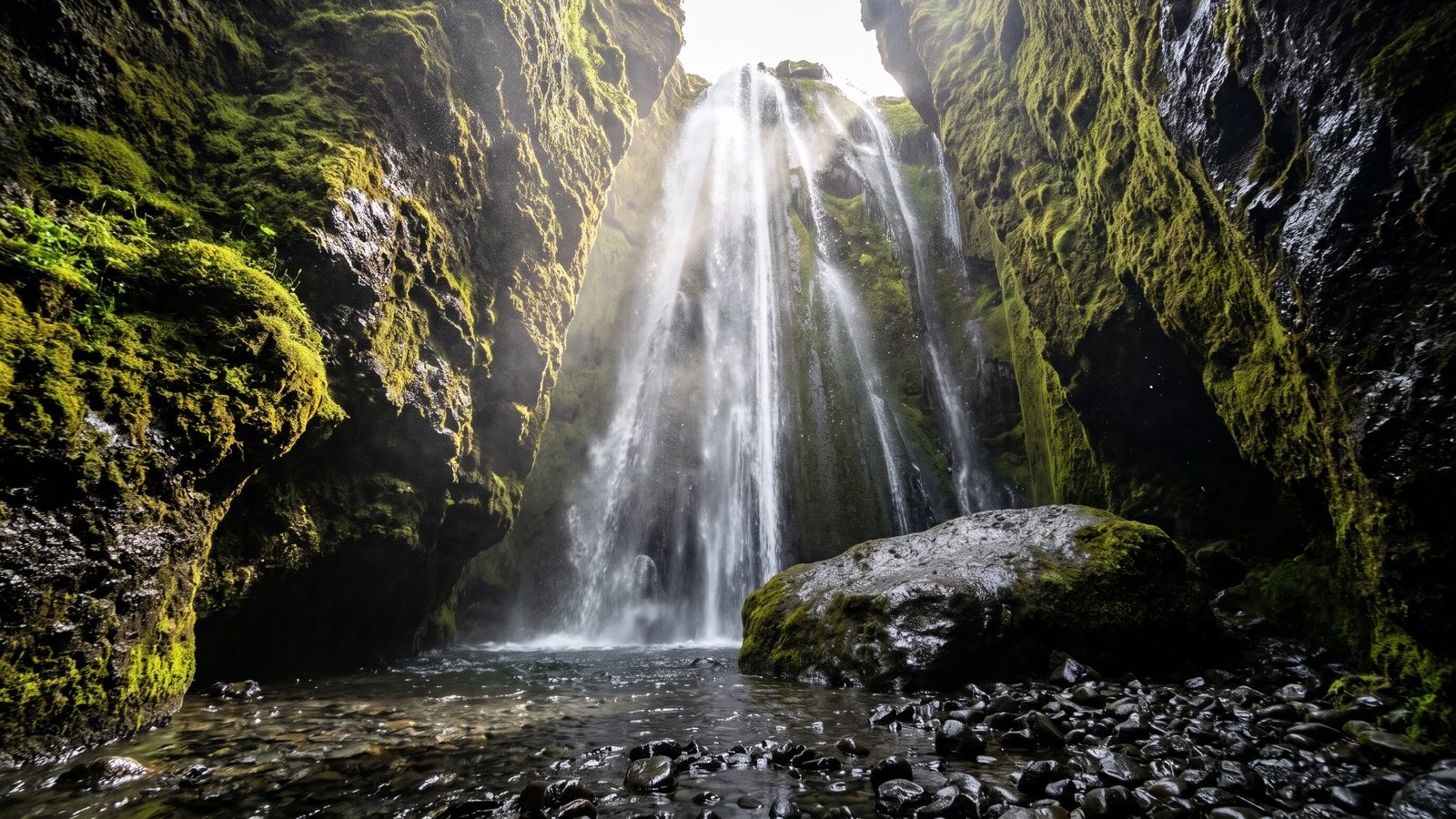
Welcome to Gljúfrabúi Waterfall in South Iceland, a majestic cascade hidden within ancient basalt cliffs shaped by fierce volcanic power and glacial melt. As water descends in ribbons through the rock, you stand before a landscape forged over millennia by elemental forces. Experience the raw beauty and constant roar of this untamed cascade, where earth's ancient history comes alive through dramatic rock formations, misty spray, and resilient green mosses.
With this self-guided audio tour, you will uncover the geology, history, and adventurous spirit surrounding Gljúfrabúi. Listen closely as you explore the hidden canyon, discover expert photography techniques for capturing silken water against dark basalt, and connect with the timeless power of Iceland's wild natural heritage.
Listen to a sample
The opening of this tour, exactly as AllTours narrates it on site.
What you'll hear on this tour
Stop 1. Feel the Thrill of Untamed Forces
You stand before Gljúfrabúi, feeling the raw thrill of a landscape that calls to your inner adventurer. Imagine rappelling down these sheer basalt cliffs as the thunderous roar of tumbling water echoes around you and cool mist sprays your skin. Hidden caves, carved into the volcanic rock over eons of water flow, whisper secrets of past explorers seeking shelter within shadowed depths. Below, powerful currents churn and boil in deep pools, challenging daring kayakers navigating the turbulent energy. During heavy rainfall, brave visitors even traverse the slippery, moss-draped rocks jutting precariously near the main cascade plunge, testing their balance and courage against nature's unbridled force.
Stop 2. Capture Silken Waters and Basalt Textures
You lift your camera to capture Gljúfrabúi, noticing how fine mist softens the dark basalt edges and creates a painterly canvas. To achieve that dreamy, silken water look, you set a longer exposure of a second or more on a tripod to smooth out the plunging cascade. Sunlight catches floating spray, turning individual droplets into tiny, shimmering diamonds that you freeze using a fast shutter speed. As you experiment with framing, focusing on a single dramatic plume against the shadow of a cliff face tells a compelling story. The rough, ancient texture of basalt provides a striking contrast to fluid motion, offering endless creative inspiration.
Stop 3. Witness a Living Sculptural Dreamscape
As you stand before the cascade, you feel the immense power of Gljúfrabúi carving through the landscape. Sheer, dark basalt walls rise around you, layered like ancient history books revealing stacked volcanic eruptions from ages past. Water constantly etches deep channels into the stone, exposing veins of light reddish minerals that shimmer when sunlight hits the rock face. This cascading stream operates as a living sculpture, creating ethereal halos of mist that hang in the air and transform the gorge into a dreamscape. Vibrant green mosses and hardy alpine flowers cling tenaciously to damp surfaces, demonstrating the remarkable resilience of life amidst elemental force.
Stop 4. Listen to the Harmony of Fire and Mist
You feel the cool mist rising from the tumbling cascade, each droplet fed by pure glacial meltwater shaping the basalt rock. This persistent erosion exposes mineral deposits across the rock faces, bestowing an iridescent sheen upon the water under bright sunlight. Beneath the booming cascade, you hear the subtle whispers of the wind forming a natural symphony that carries the fresh scent of damp earth and wild mosses. These hardy pioneer plants anchor their roots into narrow crevices along the cliff face, celebrating a quiet victory of life over stone as they flourish within the perpetual dampness created by the roaring falls.
Stop 5. Trace the Legacy of Fire and Ice
You look at a landscape defined by resilience, forged in dramatic geological upheaval and refined across eons. You imagine the intense volcanic eras that created this basalt, picturing molten rock erupting, flowing, and cooling into layered geological structures. Glacial meltwater then began its slow, unyielding work, patiently carving through hardened rock over millennia to form the canyon you see today. This creation was born from the raw clash of fire and ice rather than a gentle process. Every fissure and contour carved into the stone whispers tales of these ancient, dramatic events, offering you a glimpse into deep geological time.
Stop 6. Follow in the Footsteps of Early Explorers
You connect with the spirit of exploration embodied by this rushing water, reflecting on early settlers who gazed upon the cascade with wonder. For them, this water represented a mystery—an invitation to venture upstream, navigate treacherous basalt ledges, and trace glacial origins through sheer courage and ingenuity. Picture those early explorers carefully planting their boots on slippery rock, scanning the horizon to chart an untamed landscape. Standing here today, you walk in the footsteps of countless adventurers whose dreams of discovery echo in the thundering spray. Their innate drive to explore what lies beyond continues to inspire everyone who visits this hidden wonder.
Planning your visit
- Best time to go
- Summer to early autumn for safer footing and lush green moss, preferably early morning or late afternoon to avoid crowds.
- Approximate duration
- about 30 to 45 minutes
- Where to start
- The main parking area near Seljalandsfoss waterfall along Route 1 in Hvolsvöllur.
Access and conditions change seasonally — check the official site before you go.
Frequently asked questions
Is Gljúfrabúi Waterfall worth visiting?
Yes, Gljúfrabúi is widely considered one of Iceland's most unique hidden gems. Nestled inside a narrow basalt canyon near Seljalandsfoss, it offers an immersive, magical experience as you step inside the gorge to view the cascading glacial water surrounded by mossy cliff walls.
How long do you need at Gljúfrabúi Waterfall?
Most visitors spend about 30 to 45 minutes exploring Gljúfrabúi. This provides ample time to walk through the canyon entrance, admire the hidden waterfall, listen to the audio narration, and take photos.
How was Gljúfrabúi Waterfall formed?
Gljúfrabúi was forged by ancient volcanic eruptions that deposited layers of dark basalt rock, which were subsequently carved out over millennia by relentless glacial meltwater erosion.
Keep exploring
Header image is an AI-generated illustration of Gljúfrabúi Waterfall. AllTours.ai is an AI audio tour guide — point your camera at any landmark and hear its story.