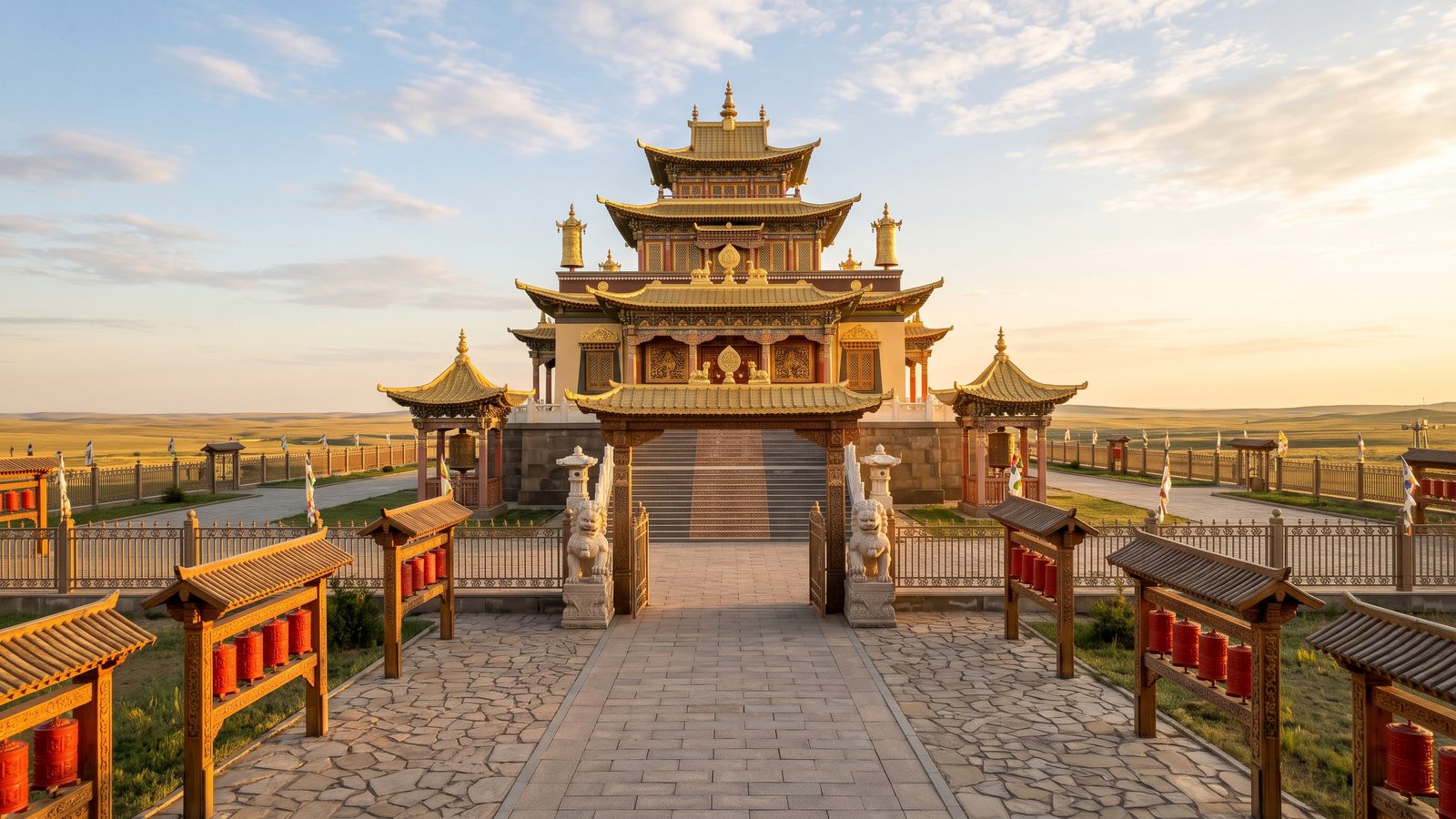
Welcome to the Golden Abode of Buddha Shakyamuni in Elista, Kalmykia, a magnificent center of Tibetan Buddhism rising from the Kalmyk steppe. This sacred complex stands as a living monument to spiritual devotion, housing precious Buddhist relics, ancient scriptures, and breathtaking artwork. As you walk through its grand gates, you enter a vibrant center for Buddhist study, meditation, and cultural heritage in Europe.
Our audio tour guides you around the glittering temple complex, highlighting its hand-gilded rooflines, sacred prayer wheels, and intricate thangkas. Experience the serene atmosphere, observe traditional practices like kora circumambulation, and immerse yourself in centuries of living Buddhist wisdom.
Listen to a sample
The opening of this tour, exactly as AllTours narrates it on site.
What you'll hear on this tour
Stop 1. Tiered Roofs and Gilded Craftsmanship
As you draw closer, your eyes immediately catch the tiered roofline of classic Tibetan Buddhist architecture. Thousands of hand-beaten gilded copper tiles adorn each level, shimmering with an ethereal glow that symbolizes the ascending path to enlightenment. Notice how the sturdy stone walls subtly taper inward as they rise—a clever engineering design for seismic stability that also creates an illusion of immense height. You can admire the wooden eaves painted with geometric patterns, as well as the main entrance portal featuring multi-layered carvings of mythical snow lions, dragons, and the Dharma wheel. Craftspeople assembled these intricate wooden structures using traditional mortise-and-tenon joinery entirely without nails, while smaller windows carefully filter incoming light.
Stop 2. Living Traditions and Sacred Chants
You step into a rich cultural tapestry where centuries of devotion shape daily life. As you walk, listen to the rhythmic chanting of sacred mantras emanating from prayer halls, a vibrational practice that purifies the environment. You see vibrant hand-painted thangkas adorning the walls, displaying mandalas, deities, and scenes from Buddha's life that serve as visual guides for meditation. You observe local families gathering for blessings and pilgrims performing kora—circumambulating the main stupa clockwise in a symbolic act of reverence and merit accumulation. Before the altars, flickering butter lamps cast a warm glow, representing the light of wisdom dispelling ignorance across this active spiritual community.
Stop 3. The Sacred Heart of the Complex
You stand before the temple, the central nucleus of this entire sacred complex. Look up at the tiered Himalayan roof, where golden finials point toward the sky, symbolizing the soul's ascent through spiritual planes toward enlightenment. Legend tells us that the main prayer hall surrounds a naturally occurring rock formation believed to radiate protective energies. Along the eaves, you can study detailed wooden carvings depicting Jataka tales—ancient parables of Buddha's past lives. As you venture inside, the air greets you with the rich scent of juniper incense and the gentle flickering of butter lamps, illuminating sacred thangkas that guide practitioners into profound inner stillness.
Stop 4. Teachings of the Eightfold Path
Standing in this sacred space, you feel the enduring resonance of Siddhartha Gautama’s teachings. The resplendent golden hue around you represents the purity and ultimate wisdom achieved through the Eightfold Path. As you look upon the serene posture of the Buddha statues, you are invited to reflect on the Four Noble Truths and the impermanence of existence. Here, practitioners seek liberation from suffering and the path to Nirvana. You see pilgrims circumambulating the hall, a meditative practice that honors the cyclical nature of life and the continuous journey toward awakening. Every quiet detail encourages you to practice mindfulness and cultivate deep inner peace.
Stop 5. Cultivating Stillness and Mindful Awareness
You encounter a profound stillness within the Golden Abode, built upon a meditation lineage tracing back to Buddha Shakyamuni beneath the Bodhi tree. In these quiet spaces, practitioners engage in shamatha-vipassana, calming the mind to cultivate deep insight and wisdom. As you pause, you can use your own deliberate breaths as anchors to the present moment, mirroring generations of meditators who sought to transcend suffering and awaken boundless compassion. Softly glowing butter lamps and the serene expressions of sculpted deities subtly support this contemplative journey. The sacred atmosphere invites you to step out of daily noise and participate directly in mindful awareness.
Stop 6. A Sanctuary of Peaceful Devotion
Entering the main hall, you are embraced by a quiet reverence and a palpable spiritual energy. Your eyes rest upon the magnificent image of Buddha Shakyamuni, bathed in warm golden light, an inspiring focal point for personal introspection. Around you, devotees perform silent prostrations, expressing deep humility and their aspiration for enlightenment. The subtle scent of incense drifts through the air, blending with the faint murmur of sacred mantras. This sanctuary operates as a living conduit for the Dharma, where ancient teachings are actively practiced. You are invited to share in this quiet sanctuary and feel the collective search for peace and wisdom.
Planning your visit
- Best time to go
- Morning hours during spring or autumn for comfortable weather and quiet reflection during daily prayers.
- Approximate duration
- About 1.5 to 2 hours
- Where to start
- Main entrance gates on the south side of the temple complex in Elista.
Access and conditions change seasonally — check the official site before you go.
Frequently asked questions
Is Golden Abode of Buddha Shakyamuni worth visiting?
Yes, as the largest Buddhist temple in Europe and the spiritual heart of Kalmykia, it offers extraordinary Tibetan-style architecture, giant Buddha statues, vibrant thangka murals, and a rare glimpse into traditional Kalmyk culture.
How long do you need at Golden Abode of Buddha Shakyamuni?
Most visitors spend between 1.5 to 2 hours exploring the surrounding grounds, spinning the prayer wheels, admiring the architecture, and quietly exploring the main prayer hall.
What is the cultural significance of the Golden Abode of Buddha Shakyamuni?
It serves as the central Buddhist temple (khurul) of the Kalmyk people—Europe's only traditionally Buddhist nation—acting as an active place of worship, meditation center, and preserver of sacred scriptures and arts.
Keep exploring
Header image is an AI-generated illustration of Golden Abode of Buddha Shakyamuni. AllTours.ai is an AI audio tour guide — point your camera at any landmark and hear its story.