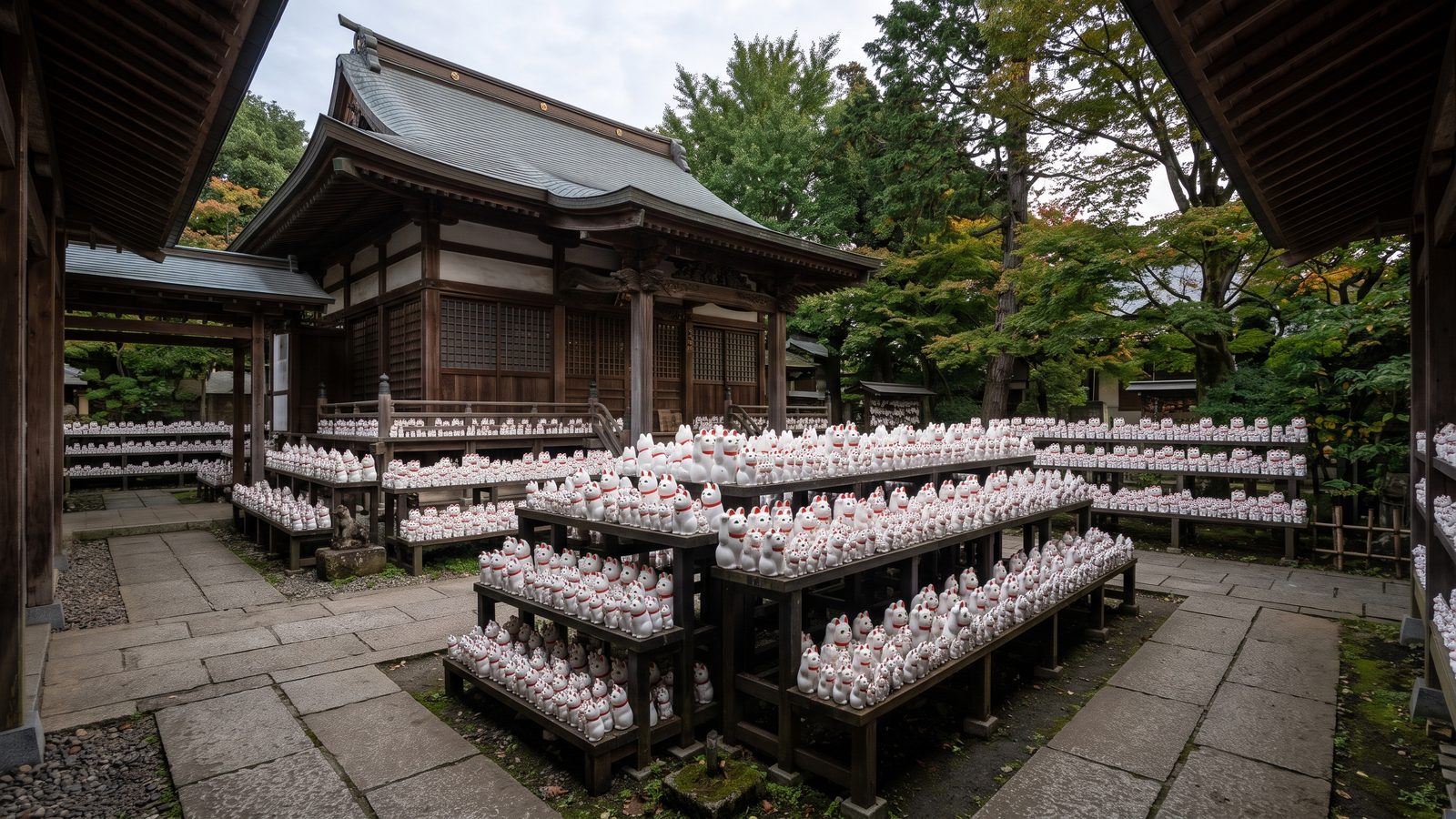
Welcome to Gotokuji Temple, a tranquil sanctuary hidden in Tokyo's Setagaya ward and the legendary birthplace of the Maneki-neko, Japan's famous beckoning cat. As you explore these sacred grounds, you step into a story of samurai history, miraculous escapes, and centuries-old spiritual traditions. With this self-guided audio tour, you will uncover the remarkable folklore and tranquil gardens that make this site truly unique.
Walk peaceful paths lined with ancient trees, admire traditional Edo-period architecture, and marvel at thousands of white cat statues placed by grateful visitors. Let the peaceful atmosphere guide you as you discover the story of Lord Ii Naotaka and the temple's enduring legacy of fortune and gratitude.
Listen to a sample
The opening of this tour, exactly as AllTours narrates it on site.
What you'll hear on this tour
Stop 1. Thousands of Lucky Beckoning Cats
You stand surrounded by thousands of white maneki-neko statues, their raised right paws inviting good fortune and prosperity into your life. Each figurine is a tangible tribute left by a visitor in gratitude for a wish granted. Legend says a feudal lord was saved from a sudden lightning strike when a temple cat beckoned him into shelter during a storm. As you look closer at these charming statues, you notice none of them hold coins. This intentional detail underscores the temple’s core philosophy: focusing on spiritual blessings, peace, and heartfelt gratitude rather than material wealth.
Stop 2. Rituals of Gratitude and Good Fortune
You witness a living Japanese tradition as you explore the grounds of Gotokuji. Unlike typical places where visitors pray solely for future luck, people return here to offer a cat statue after their wishes come true. This sacred act transforms the shrine into a sanctuary of collective thankfulness. You feel the deep connection between daily life, ancient folklore, and spiritual reverence as you observe these rows of cat figurines. It is a powerful reminder that true fortune is rooted in acknowledging past blessings, keeping centuries of local custom vibrant and active in modern Tokyo.
Stop 3. From Humble Hermitage to Samurai Haven
You step back in time to 1615, during the early Edo period, when this historic site began as a modest hermitage known as Kōtoku-in. Everything changes when daimyo Ii Naotaka seeks refuge here during a sudden, fierce storm. Deeply moved by his experience and miraculous escape, the powerful Ii clan of Hikone adopts the sanctuary as their official family temple. They bestow enduring patronage and rename the site Gotokuji, permanently cementing its legacy in Japanese history. As you walk the serene grounds, you walk in the footsteps of samurai lords who protected and sustained this sanctuary.
Stop 4. The Sacred Main Hall of Kannon
You approach the magnificent main hall, admiring its elegant Edo-period architectural details that have endured through centuries. Stepping near its hallowed threshold, you sense the quiet presence of Kannon Bodhisattva, the deity of mercy and compassion who offers solace to all who enter. This sacred hall served as a primary place of worship for the influential Ii clan for generations, directly linking you to their historic legacy. As you stand before the hall, you connect with centuries of devoted prayers, feeling the profound spiritual energy that continues to define the sacred heart of Gotokuji Temple today.
Stop 5. Raked Gravel and Meditative Moss
You wander into the serene temple gardens, where every element encourages quiet reflection. Beneath your feet, meticulously raked gravel symbolizes flowing streams and spiritual purity, creating a calming visual rhythm. Moss-covered stones are positioned with deliberate intention, crafting a harmonious miniature landscape designed for deep contemplation. As a gentle breeze rustles through the surrounding canopy, you feel an immediate wave of peace wash over you. This carefully curated natural sanctuary offers a restorative escape from Tokyo's bustling urban pace, guiding your thoughts inward as you appreciate the tranquil beauty of traditional Japanese garden design.
Stop 6. Whispers of Wind in the Pines
You venture deeper into the temple's inner gardens, discovering a peaceful haven designed for ultimate quietude. Raked gravel paths wind beneath ancient pine trees, inviting you to slow your pace and practice mindful contemplation. Listen closely to the gentle rustling of leaves and the soft whisper of the wind weaving through pine needles, creating a natural, soothing melody. This intentional silence reveals the true spiritual heart of Gotokuji. Surrounded by timeless greenery and mindful upkeep, you experience a profound sense of inner calm, allowing the quiet atmosphere to settle deeply within your spirit as you explore.
Planning your visit
- Best time to go
- Morning on weekdays for fewer crowds and quiet reflection, or autumn when momiji maple leaves turn vibrant red.
- Approximate duration
- About 45 to 60 minutes
- Where to start
- Main entrance gate (Sanmon Gate) leading into the temple grounds.
Access and conditions change seasonally — check the official site before you go.
Frequently asked questions
Is Gotokuji Temple worth visiting?
Yes, Gotokuji Temple is well worth visiting for its unique collection of thousands of Maneki-neko (beckoning cat) statues, peaceful Japanese gardens, and rich connection to Edo-period samurai history.
How long do you need at Gotokuji Temple?
Most visitors spend between 45 minutes to an hour exploring the main hall, viewing the Maneki-neko corner, and walking through the serene gardens.
What is the history behind Gotokuji Temple and the Maneki-neko?
Founded in 1615 as Kōtoku-in, the temple gained fame when a cat beckoned samurai lord Ii Naotaka inside during a thunderstorm, saving him from lightning. Grateful, the Ii clan patronized the temple, making it their family temple and cementing the legend of the beckoning cat.
Keep exploring
Header image is an AI-generated illustration of Gotokuji Temple. AllTours.ai is an AI audio tour guide — point your camera at any landmark and hear its story.