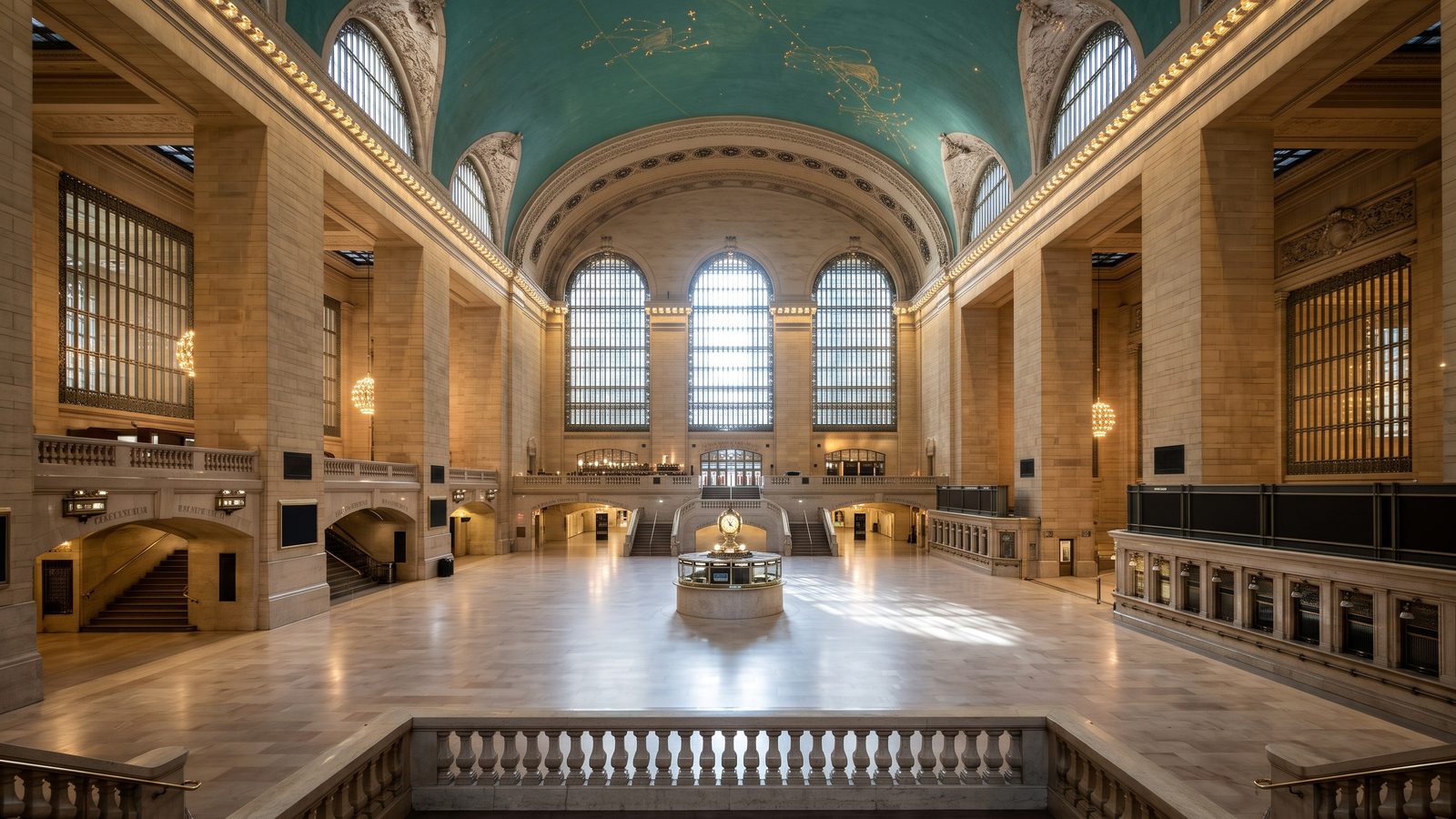
Step inside Grand Central Terminal, a magnificent Beaux-Arts masterpiece standing in the heart of New York City. Opened in 1913, this landmark replaced earlier stations through the vision of the New York Central Railroad. Designed by Reed and Stem alongside Warren and Wetmore, its grand scale and intricate details facilitate travel while telling a story of ambition, connecting millions of daily commuters across past, present, and future.
As you navigate its soaring halls, you discover an architectural wonder filled with artistic treasures, gourmet dining, and hidden historical details. This self-guided audio tour reveals the secrets of a timeless city icon, leading you through its most historic corners and spectacular concourses.
Listen to a sample
The opening of this tour, exactly as AllTours narrates it on site.
What you'll hear on this tour
Stop 1. The Celestial Ceiling and Monumental Sculptures
You gaze upward at the Main Concourse’s celestial ceiling, a cosmic map featuring 2,500 gold-leaf stars. You observe Orion and the Pleiades painted in reverse perspective, looking down from outside the heavens. Near Pisces, you notice a small, dark patch left uncleaned during a 1990s restoration, reminding you of the grime that once covered this masterpiece. Next, you step outside to the 42nd Street facade to admire the monumental Glory of Commerce sculpture by Jules-Félix Coutan. Here, Mercury stands alongside Minerva and Hercules around the world's largest Tiffany glass clock, embodying enterprise, wisdom, and moral force at the terminal's grand entrance.
Stop 2. Beaux-Arts Genius and Innovative Ramps
You explore the brilliant Beaux-Arts architecture designed by Warren & Wetmore and Reed & Stem. As you move through the space, you experience an innovative multi-level track system connected by gently sloping ramps instead of stairs, ensuring effortless crowd movement throughout the terminal. You admire the monumental arches soaring above you, crafted from fine Indiana limestone and granite. Down near the subterranean dining concourse, you observe the exquisite Guastavino tile work framing the historic Oyster Bar. Every structural element reflects architectural genius, engineered specifically to elevate public movement into a grand civic art form.
Stop 3. Historic Flavors at the Oyster Bar
You descend to the lower level to step inside the legendary Grand Central Oyster Bar & Restaurant, operating continuously since 1913. As you enter, you marvel at the distinctive vaulted Guastavino tile ceilings that echo with a century of clinking shells and lively commuter conversations. You take a seat where generations of New Yorkers have gathered before train departures. Here, you savor freshly shucked oysters gathered from across the continent or indulge in a classic pan roast, taking part in a timeless New York culinary tradition right beneath the busy concourses.
Stop 4. Three Generations of Rail Travel
You stand on historic ground that has seen three distinct rail terminals rise and fall. You trace the origin back to Cornelius Vanderbilt's original Grand Central Depot in 1871, built as a monument to his expanding railway empire. You learn how it evolved into Grand Central Station in 1900, only for a tragic 1902 train collision—caused by dense locomotive steam obscuring signals—to force a complete overhaul. That disaster mandated full electrification of the rail lines and spurred the ambitious reconstruction project that ultimately culminated in the magnificent 1913 opening you see today.
Stop 5. The Soaring Main Concourse
You stand in the center of the Main Concourse, taking in a breathtaking cathedral of transit. Your gaze sweeps across the turquoise canvas high above, where 2,500 gold-leaf stars shine in their famously reversed astronomical perspective—a charming historical error you now see firsthand. The immense scale of this light-filled room is designed to inspire awe, surrounding you with elegant stone craftsmanship and bustling commuter energy. Standing in this magnificent space, you instantly feel connected to the millions of travelers who have passed through this historic transportation hub over more than a century.
Stop 6. Gourmet Goods and Historic Boutiques
You walk beyond the active train tracks to discover a bustling retail environment tucked inside the terminal's classic architecture. You enter the vibrant Grand Central Market, where irresistible aromas draw you toward displays of artisanal cheeses, fresh seafood, and gourmet provisions perfect for a NYC picnic. As you wander through the surrounding passageways, you browse unique boutiques offering everything from handcrafted jewelry to specialty New York gifts. Each shop is seamlessly integrated into historic stone corridors, turning a quick shopping trip into an engaging treasure hunt through one of the city's greatest landmarks.
Planning your visit
- Best time to go
- Mid-morning or mid-afternoon on weekdays to avoid peak commuter crowds.
- Approximate duration
- About 1 to 1.5 hours
- Where to start
- Main Concourse near the central information booth clock.
Access and conditions change seasonally — check the official site before you go.
Frequently asked questions
Is Grand Central Terminal worth visiting?
Yes, Grand Central Terminal is a must-visit New York landmark renowned for its Beaux-Arts architecture, celestial ceiling, rich history, and iconic dining options like the Oyster Bar.
How long do you need at Grand Central Terminal?
Most visitors spend 1 to 1.5 hours exploring the Main Concourse, viewing the ceiling and architecture, visiting the market, and exploring the dining options.
Why was Grand Central Terminal rebuilt in 1913?
After a tragic 1902 train collision caused by locomotive smoke obscuring signals, electrification was mandated, spurring the complete rebuild of the earlier station into the 1913 landmark.
Keep exploring
Header image is an AI-generated illustration of Grand Central Terminal. AllTours.ai is an AI audio tour guide — point your camera at any landmark and hear its story.