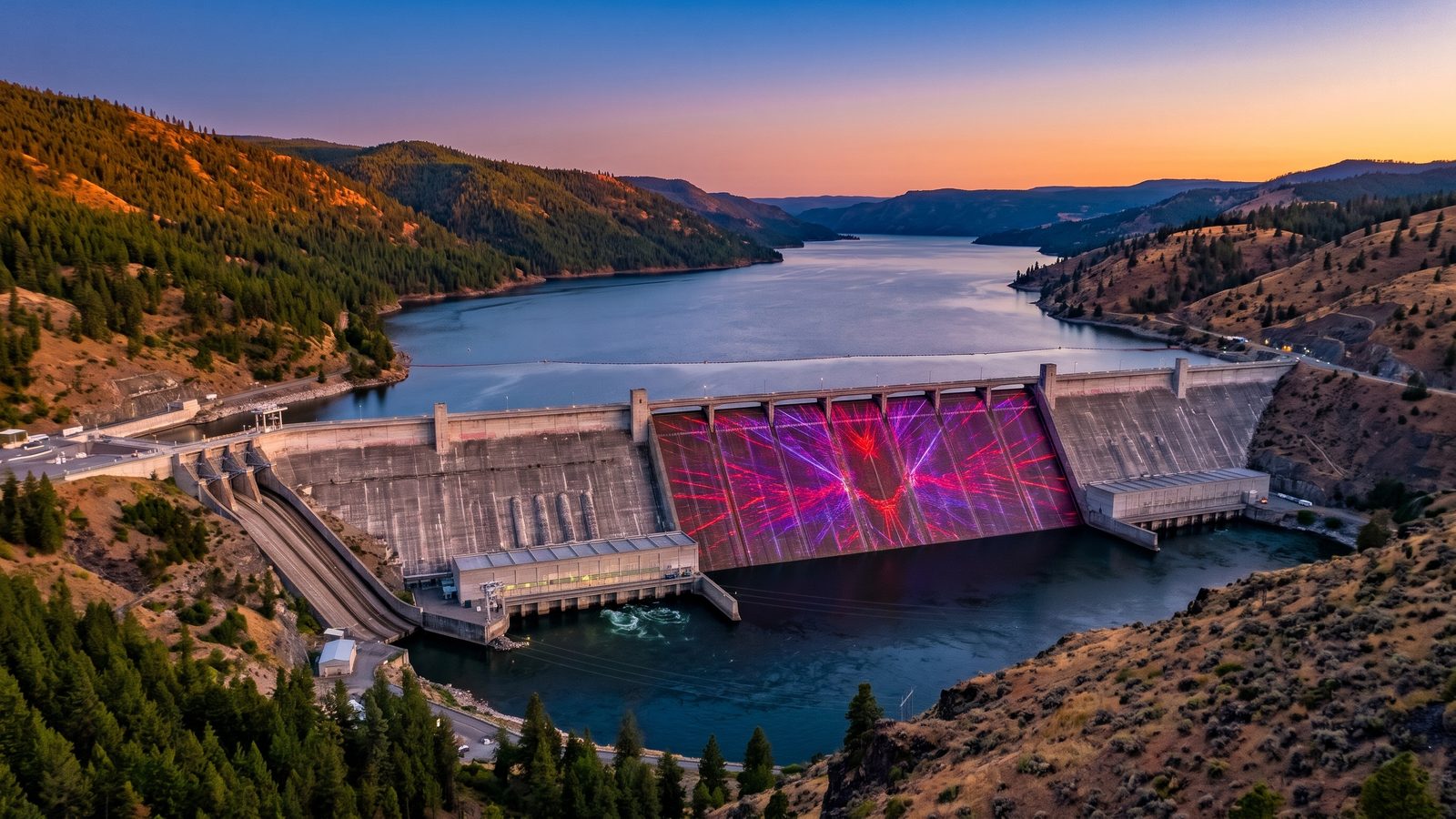
Standing across the mighty Columbia River in Washington State, Grand Coulee Dam remains one of the largest concrete structures ever built. Completed in 1942 as a defining New Deal project, this massive titan converted an arid landscape into a power-generating powerhouse. As you walk along its expanse, you encounter a monumental blend of human ambition, industrial design, and raw hydroelectric force that shaped the American West.
This self-guided audio tour leads you through the dam's remarkable story. From its Depression-era origins and innovative engineering solutions to its sleek Art Deco detailing and surrounding natural beauty, you will discover how this colossal structure continues to power, irrigate, and inspire the Pacific Northwest today.
Listen to a sample
The opening of this tour, exactly as AllTours narrates it on site.
What you'll hear on this tour
Stop 1. Conquering Concrete with Cold Water Pipes
You stand before a massive gravity-arch dam stretching 550 feet high and nearly a mile long. Containing over 12 million cubic yards of concrete, this colossal structure presented unprecedented thermal challenges during construction. As you observe its immense facade, consider how engineers solved the dangerous threat of heat-induced cracking. They embedded a complex network of internal pipes circulating ice-cold water directly through the curing concrete to maintain structural integrity. Downstream, the massive spillway stands ready to handle over a million cubic feet of water per second. Every component, including nearly 2,000 carefully aligned turbines in the powerhouse, reflects a delicate balance of physical forces and meticulous engineering precision.
Stop 2. Harnessing the River's Endless Power
Look out toward the roaring Columbia River as millions of gallons of water rush through giant penstocks. You are witnessing kinetic energy transform into immense electric power. Water cascades downwards, striking massive turbine blades with astonishing force and driving generators through the fundamental principles of electromagnetic induction. Every single generator here converts raw mechanical movement into enough electricity to energize entire modern cities. Generating over 21 billion kilowatt-hours annually, this monumental facility serves as an engine for regional industry, agriculture, and daily life. As you stand near this clean energy giant, you feel the subtle hum of a historical power source driving the Pacific Northwest forward.
Stop 3. Rising from Great Depression Depths
Picture this arid landscape back in 1933 during the grip of the Great Depression. As part of Franklin D. Roosevelt's New Deal public works initiative, thousands of hopeful workers arrive to transform this quiet river valley into a bustling hive of construction. What begins as a modest proposal rapidly evolves into a concrete behemoth requiring unprecedented materials. By its completion in 1942, the dam becomes a vital industrial anchor, supplying critical electricity for factories during World War II and providing vital irrigation across Washington State. Standing here today, you trace the legacy of human resilience, labor, and relentless ambition that built a foundation for national recovery amidst severe economic adversity.
Stop 4. Art Deco Elegance on a Colossal Scale
Take a closer look at the dam’s exterior to appreciate its refined Art Deco architecture. Rather than building a purely utilitarian block, architects designed stepped silhouettes and vertical grooves that create a rhythmic visual sequence along the concrete face. These sleek, minimalist lines draw your eyes upward, echoing the optimism and technological obsession of the 1930s. Look at the powerhouse and curving spillway chute, where smooth geometric surfaces blend industrial purpose with graceful aesthetic appeal. You are looking at a structure where form and function merge seamlessly, proving that colossal civil engineering can double as a timeless work of modern art and architectural ambition.
Stop 5. Lakes, Trails, and Nightly Laser Light
Beyond its industrial duties, the landscape surrounding you offers a playground for outdoor recreation. Nearby, Banks Lake and Lake Roosevelt invite you to kayak across shimmering waters, sail along breezy channels, or cast a fishing line for local bass and walleye. If you prefer land, scenic trails wind across the surrounding hills, offering sweeping views of the dam and reservoir. Summer afternoons bring picnickers to the shoreline, while evenings offer a totally different experience. As darkness falls, gather along the bank to watch vibrant laser light shows projected directly across the dam's massive concrete face, transforming this concrete giant into a colorful canvas of light and sound.
Stop 6. Wild Life along the Mighty Columbia
Look out across the surrounding semi-arid terrain, where rugged hillsides thrive with sagebrush and ponderosa pine. Below you, the mighty Columbia River flows steadily, serving as a critical artery for native wildlife like migrating Chinook salmon fighting upstream to spawn. As you scan the sky, you might spot a red-tailed hawk soaring effortlessly on thermal updrafts, watching for prey along the riverbanks. Springtime transforms this dry landscape into a colorful blanket of blooming lupines and balsamroot wildflowers. Amidst the massive concrete walls and electric infrastructure, you are standing in a dynamic natural ecosystem where resilient flora and fauna adapt and flourish beside the flowing waters.
Planning your visit
- Best time to go
- Late spring to summer, especially in the evening to catch the summer laser light show.
- Approximate duration
- about 2 hours
- Where to start
- Grand Coulee Dam Visitor Center on the west bank of the Columbia River.
Access and conditions change seasonally — check the official site before you go.
Frequently asked questions
Is Grand Coulee Dam worth visiting?
Yes, Grand Coulee Dam is definitely worth visiting as one of the largest concrete structures on Earth and a landmark of American engineering, history, and New Deal architecture.
How long do you need at Grand Coulee Dam?
Most visitors spend 2 to 3 hours exploring the visitor center, taking in viewpoints, following the self-guided tour, and watching the evening laser light show during summer months.
When was the Grand Coulee Dam built?
Construction on the Grand Coulee Dam began in 1933 as part of Franklin D. Roosevelt's New Deal and was fully operational by 1942.
Keep exploring
Header image is an AI-generated illustration of Grand Coulee Dam. AllTours.ai is an AI audio tour guide — point your camera at any landmark and hear its story.