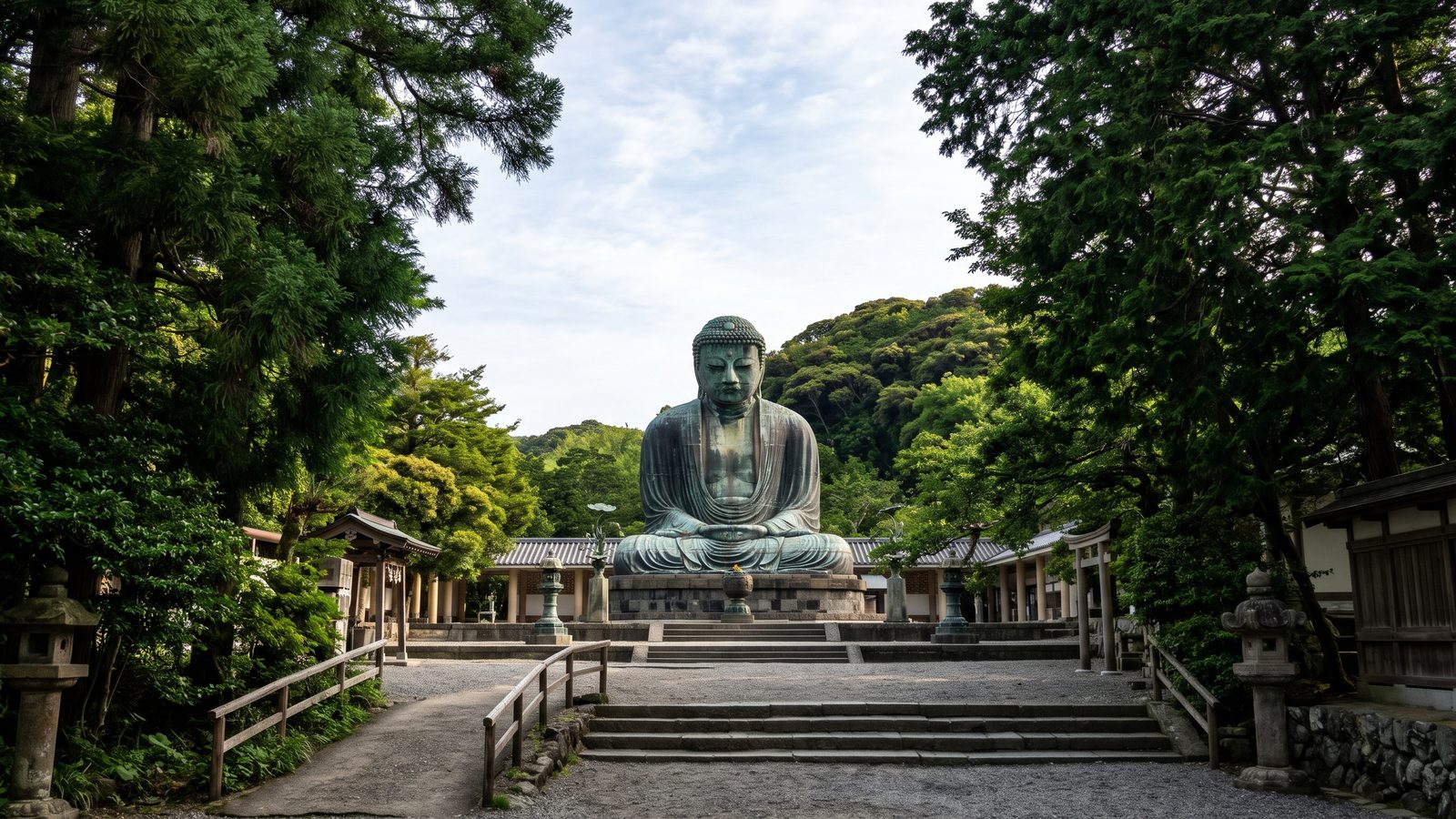
Welcome to Kamakura's majestic Daibutsu, a monumental bronze statue dating back to the 13th century that has endured centuries of history, storms, and natural forces. As you walk among its serene temple grounds, this self-guided audio tour reveals the incredible craftsmanship, spiritual meaning, and fascinating history behind one of Japan's most celebrated sacred symbols, inviting deep contemplation amidst lush natural surroundings.
From stepping inside the hollow bronze interior to wandering through ancient pine gardens shaped by a 15th-century tsunami, you will discover how this monumental sculpture survived the ages. Let the tranquil expression of the Buddha guide your journey through Kamakura's rich cultural heritage.
Listen to a sample
The opening of this tour, exactly as AllTours narrates it on site.
What you'll hear on this tour
Stop 1. Masterpiece of 13th-Century Bronze Casting
As you stand before this colossal bronze monument, notice how it is not a single solid mass, but meticulously cast in individual bronze sections—a remarkable feat of 13th-century engineering. Look at the flowing drapery of its robes, characteristic of the Kamakura period's naturalistic style. Frame your gaze on the serene face, featuring 656 tightly coiled hair knots representing steps toward enlightenment. Above the forehead, the delicate urna symbolises spiritual insight, while the ushnisha atop the head signifies boundless wisdom. Pay attention to the hands resting in the Dhyana mudra gesture of deep meditation. For an unforgettable perspective, step inside the hollow statue to experience its cool interior and admire its ancient construction.
Stop 2. Rising from Faith and Shared Ambition
Consider how this great statue came into existence. After a storm destroyed a previous wooden Buddha in 1247, the Zen priest Joko envisioned an enduring bronze monument to foster peace. Alongside Lady Inada, he led a massive fundraising campaign that united citizens from all walks of life, including the ruling shogunate. Casting began in 1252, requiring immense labor, skilled artisans, and endless molten metal poured into complex molds over several years. When completed, this awe-inspiring Daibutsu stood inside a grand wooden hall, gleaming brilliantly with real gold leaf across the valley. You are witnessing a monument built from collective spiritual faith and extraordinary human ambition that has anchored Japan's heart for generations.
Stop 3. A Sanctuary Born from Tsunami Ruins
Turn your attention to the serene gardens surrounding the Great Buddha. Ancient gnarled Podocarpus pines bow reverently along the paths, set alongside seasonal hydrangeas and azaleas. Originally, this colossal figure stood protected inside an immense wooden temple hall. However, repeated typhoons and a catastrophic 15th-century tsunami swept the building away, leaving the statue exposed to the elements. Rather than rebuilding the shelter, worshippers chose to embrace nature, transforming the site into an expansive open-air temple. As you walk past moss-covered rocks, realize that this garden intentionally blends human design with the natural world, seamlessly connecting the sky, seasons, and surrounding mountain valley into one boundless, meditative space.
Stop 4. Framed by Trees and Mountain Valleys
Follow the winding pathway and watch how the Daibutsu gradually reveals itself, emerging organically against the green hills. Pause near the base where tall cryptomeria trees deliberately frame its crown, lifting your eyes toward the open sky to emphasize its colossal scale. For a dramatic perspective, walk up the gentle slope behind the statue. Looking past its broad bronze shoulders, you can see the Kamakura valley unfolding below, placing the Buddha directly within its historic landscape. Depending on when you visit, delicate cherry blossoms form a spring halo around the statue, while fiery maple leaves frame it in autumn, creating shifting patterns of light and shadow throughout the day.
Stop 5. An Unshakable Expression of Peace
Take a quiet moment to absorb the profound tranquility radiating from the Great Buddha's face. Observe the subtle, gentle curve at the corners of its lips, reflecting tranquil acceptance rather than temporary joy. Its lowered eyelids suggest introspective focus, balancing inner stillness with gentle awareness of the world around it. Notice the deliberate simplicity of the sculpture, free from heavy ornamentation, allowing your mind to settle on its clean, unadorned form. The immense weight of the bronze seems to anchor peace into the landscape itself, transmitting an unshakable calm. As sunlight moves across its time-worn surface, let the worries of daily life fade in its timeless presence.
Stop 6. A Cultural Muse Through the Ages
Beyond its spiritual meaning, this magnificent Daibutsu has shaped Japanese culture for centuries. Its iconic silhouette has inspired generations of poets, authors, and artists reflecting on beauty and impermanence. You can trace its artistic influence from traditional ukiyo-e woodblock prints depicting Kamakura landscapes to modern manga, graphic novels, and cinema. Visiting this grand monument is a cultural pilgrimage, connecting you to the aesthetic standards and artistic achievements of medieval Japan. As you walk through the temple grounds, you are standing before a living symbol of Kamakura's identity that continues to capture the imagination of travelers and art lovers from around the globe.
Planning your visit
- Best time to go
- Early morning for fewer crowds, or spring and autumn for cherry blossoms and vibrant fall foliage.
- Approximate duration
- about 45 minutes
- Where to start
- At the main entrance path approaching the Great Buddha statue.
Access and conditions change seasonally — check the official site before you go.
Frequently asked questions
Is Great Buddha of Kamakura worth visiting?
Yes, the Great Buddha of Kamakura is one of Japan's most celebrated historic icons. Standing outdoors amidst surrounding hills, this colossal 13th-century bronze statue offers a rare opportunity to appreciate ancient craftsmanship and step inside its hollow interior.
How long do you need at Great Buddha of Kamakura?
Most visitors spend 30 to 45 minutes exploring the Great Buddha, walking through the outdoor gardens, taking photos, and viewing the interior of the bronze sculpture.
Why is the Great Buddha of Kamakura outdoors?
Originally housed inside a large wooden temple hall, the building was repeatedly damaged by typhoons and ultimately destroyed by a severe tsunami in the 15th century. Afterwards, the statue was left outdoors, transforming the surrounding grounds into an open-air garden temple.
Keep exploring
Header image is an AI-generated illustration of Great Buddha of Kamakura. AllTours.ai is an AI audio tour guide — point your camera at any landmark and hear its story.