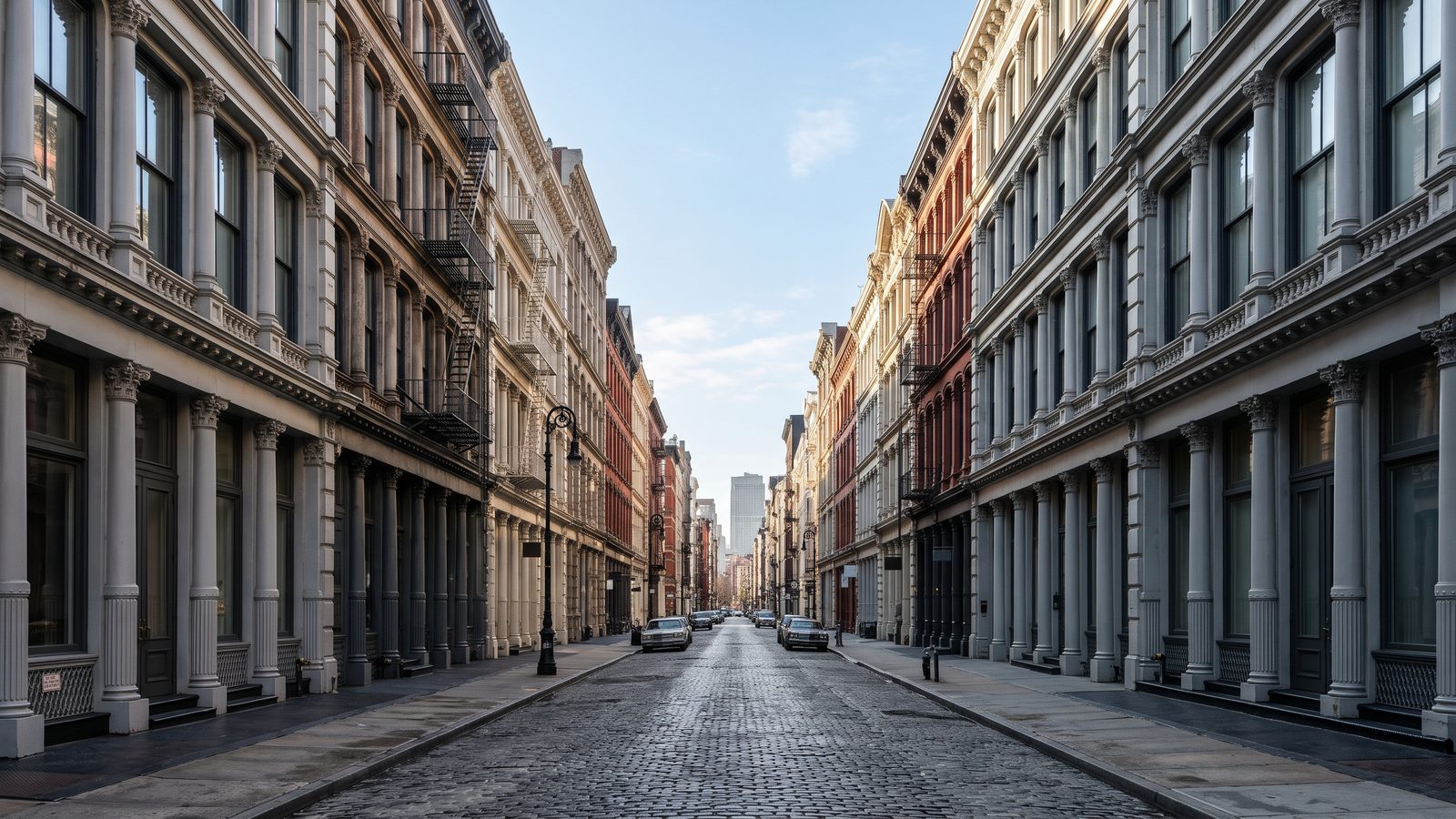
Welcome to Greene Street, the vibrant heart of SoHo's world-famous Cast-Iron Historic District. As you stroll along this historic street in Lower Manhattan, you step directly into a story of industrial innovation, artistic revolution, and high-fashion elegance. Once a marshy area turned 19th-century manufacturing hub, Greene Street showcases the highest concentration of historic cast-iron facades in New York City.
Today, these former textile warehouses house global fashion flagships, avant-garde art galleries, and grand dining lofts. This self-guided audio tour lets you explore SoHo's evolution at your own pace, unraveling the architectural marvels, bohemian history, and modern style that make Greene Street an iconic urban landmark.
Listen to a sample
The opening of this tour, exactly as AllTours narrates it on site.
What you'll hear on this tour
Stop 1. The Magic of Cast-Iron Architecture
As you gaze down Greene Street, you notice the extraordinary concentration of cast-iron facades stretching before you. Built during the mid-19th century, these structures represent a major engineering leap. Cast iron provided incredible structural strength with far less material than traditional masonry, allowing for massive, soaring windows that flood the cavernous loft interiors with natural light. Look closely at the intricate Corinthian columns, delicate arcades, and elaborate pediments framing the street. Although prefabricated in factories and bolted onto structural frames, these metal components brilliantly imitate grand stone architecture. You are looking at a living museum of industrial innovation and high Victorian design.
Stop 2. From Textile Warehouses to Landmark Status
You stand in the heart of a district that completely redefined itself across three centuries. In the mid-19th century, Greene Street quickly transforms from a quiet residential strip into an industrial epicenter for textile and dry goods manufacturing. These businesses require vast, open floor plates, giving rise to fire-resistant cast-iron construction. By the mid-20th century, manufacturing moves away, leaving these magnificent warehouses largely abandoned. In the 1960s, pioneering artists move into the cheap, vacant lofts, sparking an artistic renaissance. When city planners propose building the Lower Manhattan Expressway through the area, resident artists fight back, securing official historic landmark status in 1973 and saving Greene Street.
Stop 3. The Bohemian Loft Revolution
As you walk past these soaring windowed lofts, you feel the lingering energy of a true cultural revolution. During the 1960s and 70s, Minimalist and Conceptual artists transform these light-filled former factories into sanctuaries for radical, unrestricted creativity. Living and working under the same roof, these visionaries create groundbreaking works and ignite intense artistic debates inside these vast spaces. Their presence births the modern downtown gallery scene, moving contemporary art away from uptown exclusivity and placing it squarely at street level. You walk along the very sidewalk where radical self-expression and community activism united to protect SoHo's unique artistic soul.
Stop 4. Flagships and High-Fashion Runways
Take a moment to observe the dramatic retail transformation surrounding you on Greene Street. What once operated as a gritty manufacturing artery now functions as a premier global shopping destination. High-end luxury brands, avant-garde fashion labels, and independent designers nestle their flagship stores inside these historic cast-iron facades. Grand windows that once displayed industrial textiles now present curated designer collections, turning every block into an open-air runway. Inside, the immense, open footprints of former manufacturing lofts allow brands to build immersive retail spaces that go far beyond standard boutique design, offering you a unique shopping experience where history meets modern style.
Stop 5. Culinary Splendor in Converted Lofts
As you explore the neighborhood, you discover that dining on Greene Street is an artistic experience of its own. Historically, simple lunch counters served the area's garment workers, but today you find sophisticated bistros and fine dining establishments tucked inside magnificent former lofts. Notice how these restaurants utilize the dramatic scale of the cast-iron architecture, featuring soaring ceilings, historic details, and expansive windows overlooking the street. From artisanal cafes hidden in quiet courtyards to energetic dining rooms serving fresh, seasonal cuisine, eating here blends architectural grandeur with culinary art. You are participating in a rich lifestyle where design, history, and food seamlessly intersect.
Stop 6. Promenading Through Living Architectural History
Feel the rhythm of your footsteps as you continue your deliberate stroll along Greene Street. You are not simply passing historic buildings; you are moving through a living museum of cast-iron design and urban history. Notice how changing sunlight plays across intricate metal columns, casting shifting shadows along the ornamental cornices above. Where horse-drawn carriages and factory laborers once dominated the street, you now participate in an elegant daily dance of fashion, art, and retail. Every step connects you to the evolving story of SoHo, offering a rare opportunity to pause, absorb the quiet elegance, and appreciate the craftsmanship around you.
Planning your visit
- Best time to go
- Mornings or late afternoons on weekdays offer the pleasantest walking experience with lighter crowds and ideal lighting on the facades.
- Approximate duration
- about 45 minutes
- Where to start
- Greene Street between Canal Street and Houston Street, Manhattan, New York City.
Access and conditions change seasonally — check the official site before you go.
Frequently asked questions
Is Greene Street worth visiting?
Yes, Greene Street features the highest concentration of iconic 19th-century cast-iron buildings in SoHo, making it an essential visit for lovers of architecture, art history, and high-end fashion.
How long do you need at Greene Street?
A thorough walk along Greene Street takes about 30 to 45 minutes, though you may want to budget 1 to 2 hours if you plan to shop in the boutiques or visit local galleries.
Why are the buildings on Greene Street made of cast iron?
In the mid-19th century, cast iron was adopted because it was fire-resistant, inexpensive, and structurally strong, allowing architects to create large windows for natural light and mass-produce ornate decorative facades.
Keep exploring
Header image is an AI-generated illustration of Greene Street. AllTours.ai is an AI audio tour guide — point your camera at any landmark and hear its story.