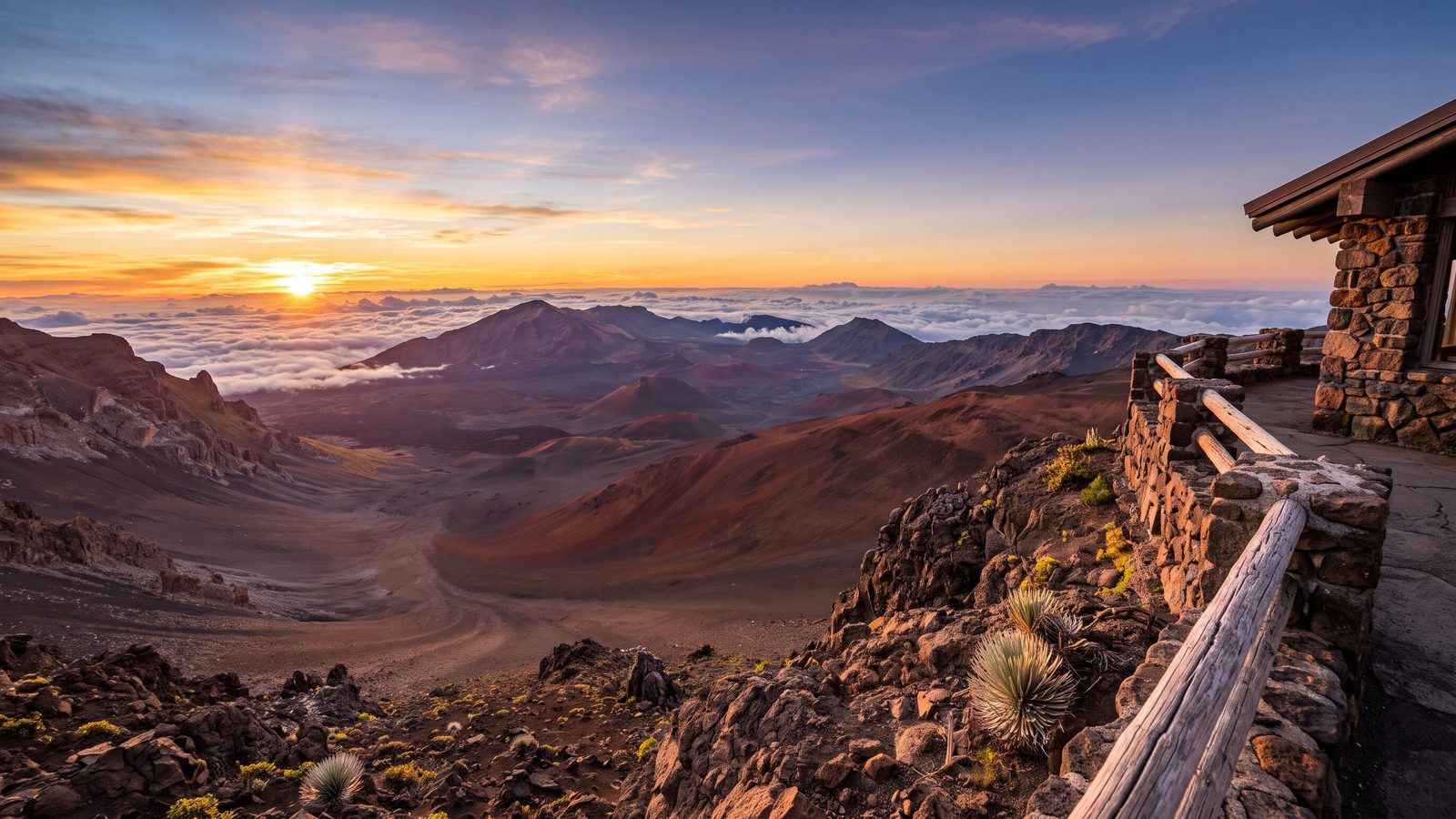
You stand atop a high dormant volcano reaching far above Maui's shores, where vast lava flows shape a sacred, dramatic landscape. The cool mountain air surrounds you as you look down upon clouds drifting far below your feet. Ancient Hawaiian traditions and breathtaking trails invite deep exploration across this immense crater. With every step, you encounter a rare realm where cosmic myths meet raw volcanic power.
Many travelers journey here to witness the world-famous sunrise, watching vibrant light paint the sky over sculpted cinder cones. Along the way, discover rare botanical marvels and historic sacred sites. This audio guide leads you through the natural architecture, ancient legends, and living culture of Haleakalā's high-elevation summit.
Listen to a sample
The opening of this tour, exactly as AllTours narrates it on site.
What you'll hear on this tour
Stop 1. Pele's Breath and Sacred Cinder Cones
You stand at the edge of the world, listening to ancient stories whispering on the wind. The cinder cones before you rest as sacred spaces of demigods and spirits. According to Hawaiian legends, the fiery goddess Pele carved this massive caldera using her fiery breath and her powerful digging stick, the pōhaku weleʻula. As you feel the immense stillness, you sense the raw energy that forged this summit. The gentle mists creeping across the crater represent Pele's tears shed for lost love and ancient battles. On clear nights, believers say spectral chants of the menehune resound through these vast volcanic depths as they tend the land.
Stop 2. Home of Demigods and Kahuna Chants
As you breathe the cool mountain air, you connect with a summit revered by Hawaiian people for centuries. This massive caldera serves as the legendary home of the demigod Maui, who lassoed the sun right here to slow its journey across the sky and grant extra daylight to his people. High priests, or kahuna, once climbed these steep volcanic slopes in solemn procession. Their sacred prayers and offerings rose into the high mists, seeking guidance from the divine forces residing in this high place. Beneath your feet, the dark rocks carry ancestral spirits, connecting you directly to Polynesia's living spiritual tradition where nature and the divine remain inseparable.
Stop 3. Rare Silverswords and Volcanic Wildlife
You step into a delicate high-altitude ecosystem brimming with specialized life. Look closely for the rare silversword, or ʻāhinahina, a stunning botanical wonder found nowhere else on Earth. Its silver-coated, fuzzy leaves protect it against intense sun radiation and dry volcanic winds. Nearby, you might spot or hear the native nēnē, the Hawaiian goose that remarkably adapted to these harsh lava slopes. Rich shades of red, orange, and black paint the ground, revealing mineral signatures left behind by fiery volcanic flows. Even the seemingly barren soil beneath you supports resilient microscopic life, forming the backbone of this unique mountain habitat.
Stop 4. Sacred Chiefs and Federal Conservation
Centuries ago, Polynesian navigators steered across vast ocean currents to reach these shores, honoring this colossal summit as the House of the Sun. High priests ascended to conduct sacred rituals, while warriors trained along the rugged slopes to forge physical and spiritual strength. This mountain provided invaluable resources, including precious bird feathers crafted into vibrant capes and cloaks reserved exclusively for aliʻi, or chiefs. Western arrivals in the late eighteenth century reshaped local land practices. Recognizing the imperative to protect its cultural and natural wonders, federal protection began in 1916, culminating in the separate establishment of Haleakalā National Park in 1961 to safeguard this sanctuary.
Stop 5. Nature's Palette Etched in Volcanic Stone
You look out across an expansive canvas sculpted by millions of years of volcanic processes. Iron oxides paint the crater floor in rich, natural pigments of rust and ochre. Shifting sunlight catches the jagged ridges, creating dramatic light and shadow contrast reminiscent of a master painting. Erosion continually carves ephemeral works of art across this high-elevation amphitheater, evolving with every passing cloud. Spanning the stark terrain, silver-leafed silversword plants appear like delicate living sculptures. You are not merely observing scenery; you are witnessing an ever-changing masterpiece crafted by the relentless forces of fire, wind, and time across the dramatic Hawaiian landscape.
Stop 6. Grand Geological Amphitheaters of Lava
You gaze across the crater rim to behold magnificent architecture carved not by humans, but by primal natural forces. The sculpted slopes and steep ravines before you formed over eons as endless lava flows cooled and eroded into grand, amphitheater-like structures. Notice how the fiery precision of ancient eruptions carved every distinct ridge and valley across this massive bowl. The shifting light highlights stacked layers of volcanic history, displaying a narrative written directly in stone. Standing here, you appreciate natural engineering on a monumental scale, where elemental heat and planetary time constructed a structural wonder that easily dwarfs any human creation.
Planning your visit
- Best time to go
- Early morning for sunrise or late afternoon for sunset and stargazing.
- Approximate duration
- About 2 to 4 hours
- Where to start
- Haleakalā Visitor Center near the summit rim
Access and conditions change seasonally — check the official site before you go.
Frequently asked questions
Is Haleakalā National Park worth visiting?
Yes, Haleakalā National Park offers spectacular summit views, rare native species like the silversword and nēnē goose, rich Hawaiian cultural history, and unforgettable high-elevation scenery above the clouds.
How long do you need at Haleakalā National Park?
Most visitors spend between 2 to 4 hours exploring the summit district, stopping at crater overlooks, driving the scenic mountain road, and taking short high-altitude walks.
What is the historical significance of Haleakalā to Native Hawaiians?
Haleakalā, known as the 'House of the Sun', was historically a sacred realm where kahuna (high priests) performed rituals, warriors trained, and precious feathers were gathered for chiefs' royal cloaks.
Keep exploring
Header image is an AI-generated illustration of Haleakalā National Park. AllTours.ai is an AI audio tour guide — point your camera at any landmark and hear its story.