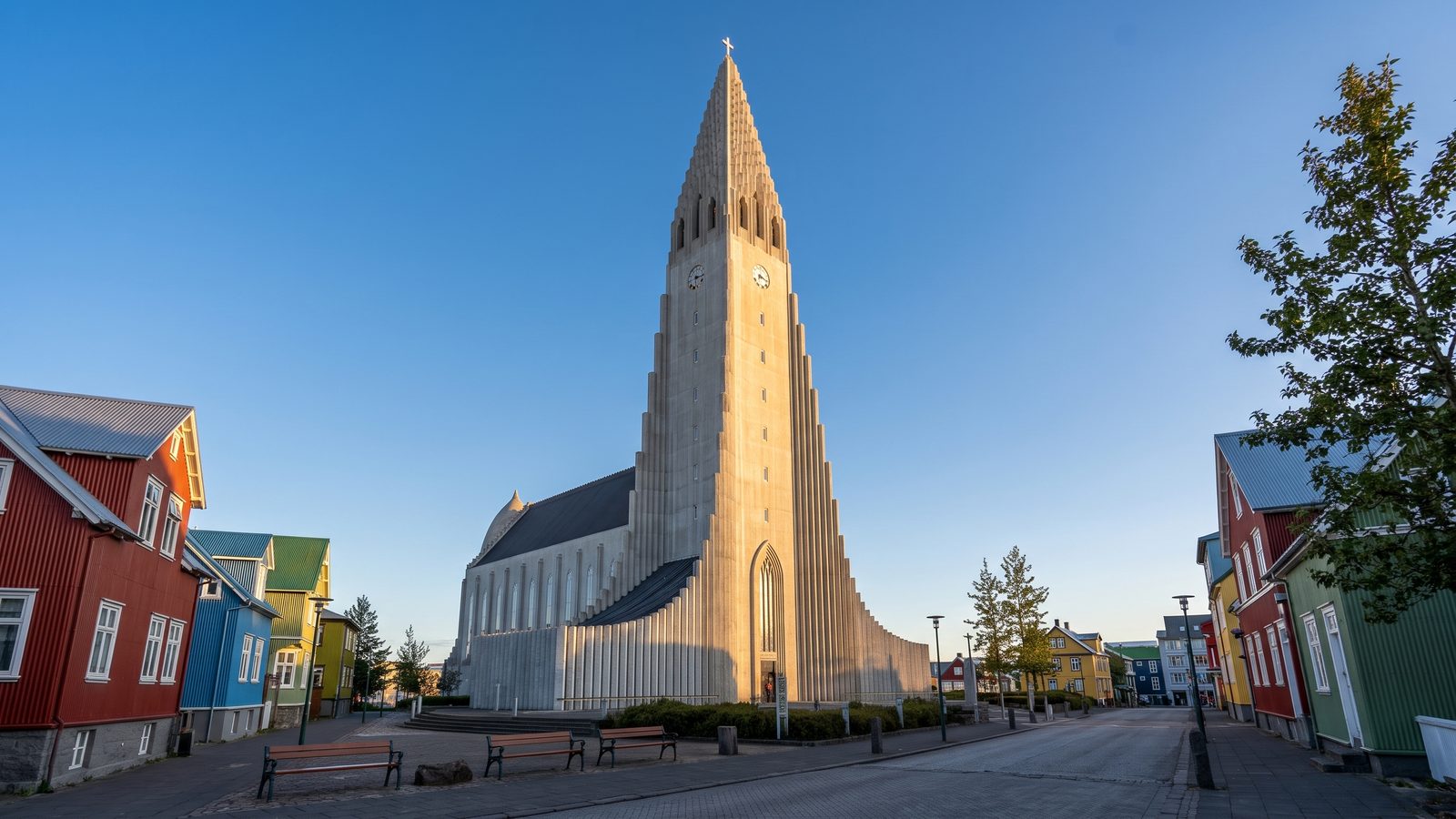
Standing tall over Reykjavik, Hallgrímskirkja is one of Iceland’s most recognizable landmarks. Designed by national architect Guðjón Samúelsson, this monumental Lutheran church blends modernist grandeur with raw natural inspiration. As you walk toward its soaring tower, you will see how its dramatic concrete facade mimics the majestic basalt columns formed by volcanic eruptions across the island, serving as both a sacred place of worship and a national monument.
This self-guided audio tour reveals the decades of passion, craftsmanship, and Icelandic heritage woven into the cathedral's design. From its towering exterior to the peaceful simplicity of its light-filled sanctuary, you will discover the deep connections between faith, art, and Iceland's untamed natural landscape.
Listen to a sample
The opening of this tour, exactly as AllTours narrates it on site.
What you'll hear on this tour
Stop 1. Basalt Columns Written in Stone
Look up at the towering facade and notice how the concrete forms dramatic, cascading columns. You are looking at architect Guðjón Samúelsson's homage to Iceland's famous volcanic geology, designed to mirror hexagonal basalt structures like those at Reynisfjara beach. Observe how the entire building tapers upward, drawing your eyes toward the sky to evoke a sense of spiritual ascension. Samúelsson wove elements of traditional Icelandic longhouses and medieval turf churches into this modernist design, giving concrete the appearance of flowing glacial forces. As you stand before this soaring masterpiece, you experience a sacred structure built directly from the visual identity of the surrounding island.
Stop 2. Majestic Pipe Organ and Sacred Art
Step inside the vast interior and let your eyes drift toward the soaring ceiling and the magnificent pipe organ towering above the entrance. This incredible instrument, crafted with thousands of individual pipes, fills the serene space with breathtaking acoustic power. Below, you can examine the altar sculpture titled 'Christ's Ascension,' which masterfully conveys both divine reverence and human emotion. Notice how the subtle stained-glass windows bathe the sanctuary in a soft, calm light rather than overpowering the space with heavy colors. Even the textured concrete walls around you reflect deliberate artistic craftsmanship, designed specifically to echo the rugged basalt formations of the Icelandic countryside.
Stop 3. A Generational Monument of Resilience
You are standing inside a generational dream that took over four decades to fully realize. Workers laid the church’s foundational stones in 1945 during the post-war era, a time when Iceland was actively shaping its modern identity as an independent republic. The landmark central tower reached its towering height in 1974, while full construction wrapped up years later in 1986. Architect Guðjón Samúelsson envisioned the church as a lasting symbol of national pride, enduring economic shifts and changing architectural trends along the way. Today, as you admire its monumental hall, you feel the perseverance and faith of the Icelandic people built into every stone.
Stop 4. Reflecting Iceland's Untamed Elements
Pause to absorb how deeply this sanctuary connects to the untamed nature just outside its walls. The geometric columns framing the structure draw direct inspiration from famous natural wonders across the country, such as the dramatic hexagonal rock walls of Svartifoss waterfall and sea stacks along the coast. The unique northern light filters through the high windows, illuminating the quiet space with an ethereal quality unique to this latitude. Inside this quiet refuge, the stark elegance of volcanic stone meets the ocean air of the North Atlantic. You are standing in a space where raw geological forces are captured, refined, and honored in architectural form.
Stop 5. Vertical Lines and Textured Molds
Examine the exterior wings flanking the main tower and notice their pronounced verticality. The stepped facades are crafted to guide your gaze heavenward, mirroring the stepped rock faces found in Iceland's volcanic mountains. Observe the rough texture of the concrete walls around you; architect Guðjón Samúelsson spent years creating custom molds and experimenting with materials to replicate the coarse surface of natural lava rock. Even the pointed arches inside the nave offer a distinct interpretation of sacred space, departing from standard Gothic rules to emphasize upward motion. Every architectural detail works in harmony to transform raw concrete into a living reflection of the landscape.
Stop 6. A Sacred Cultural Anchor
As you walk through the tranquil interior, notice the intentional lack of ornate, gilded decorations. This deliberate, elemental simplicity mirrors the Icelandic connection to nature, emphasizing quiet reflection over opulent display. Within these expansive walls, you can feel the enduring spirit of the ancient sagas—a rich storytelling tradition that continues to shape local community and identity. The minimalist sanctuary invites you to sit, reflect, and contemplate your place in the universe beneath Iceland’s vast northern skies. More than a church, this building serves as a modern cultural anchor, preserving national identity and spiritual heritage for generations of visitors and locals alike.
Planning your visit
- Best time to go
- Visit in the morning for quiet reflection and soft natural light streaming through the interior, or late afternoon to capture the golden light hitting the basalt facade.
- Approximate duration
- about 45 minutes
- Where to start
- Begin outside in front of the main entrance facing the majestic facade and the statue of Leif Erikson.
Access and conditions change seasonally — check the official site before you go.
Frequently asked questions
Is Hallgrímskirkja worth visiting?
Yes, Hallgrímskirkja is one of Iceland's most famous landmarks and an essential Reykjavik experience, renowned for its unique volcanic basalt architecture and magnificent interior pipe organ.
How long do you need at Hallgrímskirkja?
Most visitors spend between 30 and 45 minutes exploring the main sanctuary, admiring the architecture, and experiencing the quiet interior atmosphere.
When was Hallgrímskirkja built?
Construction began in 1945 and took over four decades to complete, with the central tower finished in 1974 and the entire church fully consecrated in 1986.
Keep exploring
Header image is an AI-generated illustration of Hallgrímskirkja. AllTours.ai is an AI audio tour guide — point your camera at any landmark and hear its story.