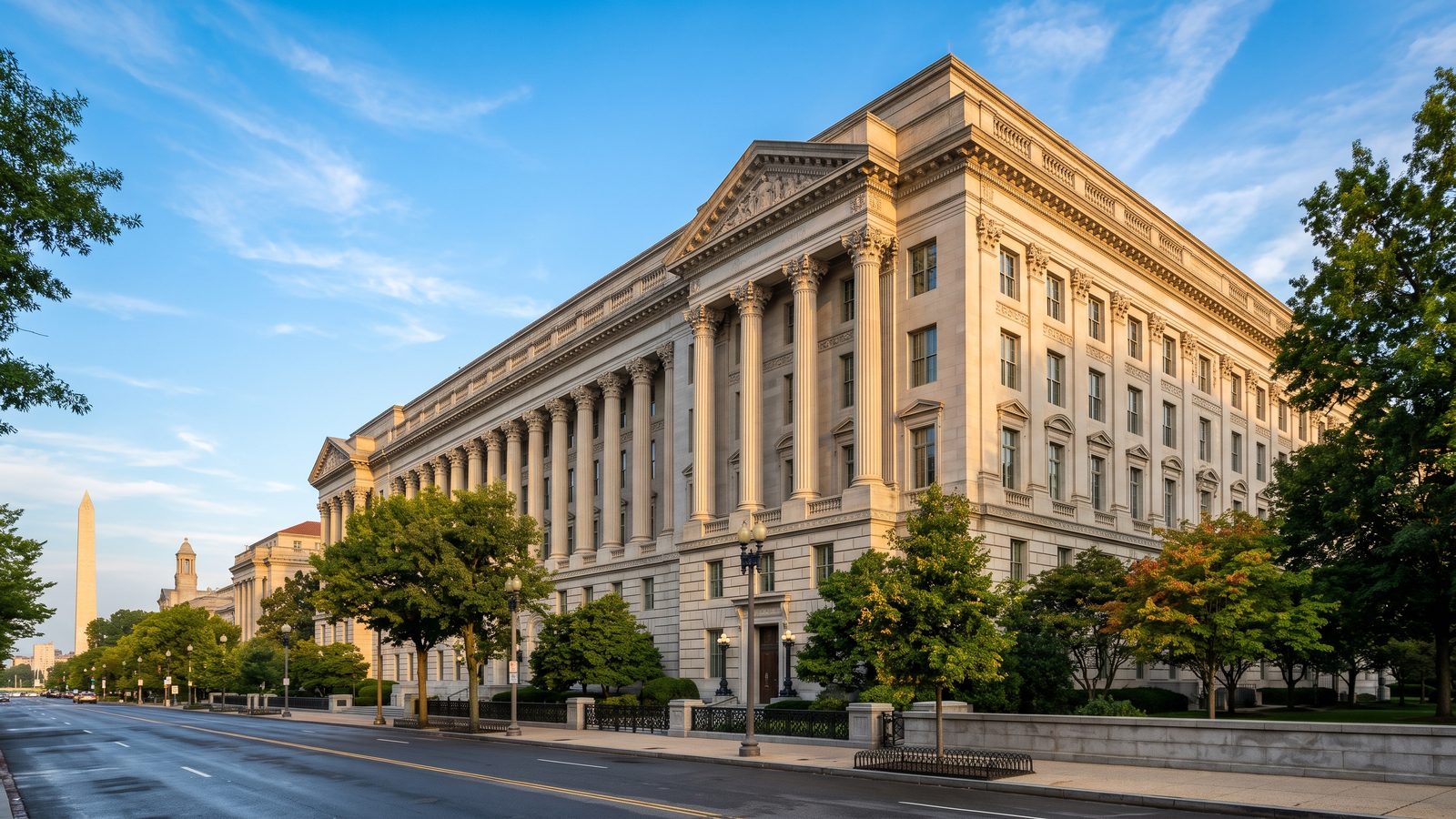
Welcome to the Herbert C. Hoover Building, home to the United States Department of Commerce. Completed in 1932 during an era of bold federal ambition, this colossal neoclassical structure clad in Indiana limestone anchors the heart of Washington, D.C. As you walk along its monumental perimeter, you explore how this impressive landmark reflects the nation's economic power, architectural mastery, and enduring dedication to trade and industry.
This self-guided audio tour walks you through the building's striking exterior features, from massive Beaux-Arts columns and detailed allegorical sculptures to the deliberate design choices symbolizing economic stability. Prepare to discover how policy, art, and grand architecture converge in this historic center of American enterprise.
Listen to a sample
The opening of this tour, exactly as AllTours narrates it on site.
What you'll hear on this tour
Stop 1. Grand Columns and Classical Lines
Look up to admire the monumental order of the building's facade, reflecting classical ideals of strength and permanence. You stand before an imposing granite base that securely grounds the structure, symbolizing the foundational role of commerce in national stability. As your eyes drift upward, notice the refined elegance of the Indiana limestone carved with subtle trade motifs. A rhythm of colossal Corinthian columns exemplifies classic Beaux-Arts design, projecting an air of dignified authority and civic importance. The precisely arranged, symmetrical windows mirror the regulated nature of a well-functioning economy, while subtle setbacks along the top create a harmonious silhouette against the Washington sky.
Stop 2. Sculpted Visions of Ingenuity
Examine the relief sculptures carved directly into the stone facade, telling a story of American ingenuity and enterprise. You see robust figures representing Industry and Agriculture, standing as permanent symbols for the foundational pillars of the nation's economy. Above them, detailed reliefs depict historic advancements in communication and transportation, highlighting the vital networks that enable global trade. These artistic elements are not merely decorative; they serve as daily inspiration for the policy makers within. Take a moment to appreciate the sculptors who chiseled these monumental forms, imbuing the hard stone with economic optimism, national pride, and a celebrated spirit of commercial ambition.
Stop 3. Calculated Rhythms in Stone
Feel the intentional weight of the building's grand design choices. The massive scale and imposing massing communicate a calculated statement of federal authority and commercial strength. Notice the unyielding rhythm of the pilasters running across the block; this structured repetition offers a visual anchor amidst shifting global economic currents. Look closely at the deep reveals framing each window, where natural sunlight creates dynamic shadows across the facade to prevent the wall from feeling monolithic. Above, a finely tuned cornice caps the structure with quiet dignity. Every architectural line reinforces a profound sense of permanence, mirroring the enduring ambition of the American marketplace.
Stop 4. The Engine of American Enterprise
Stand before the physical engine room of the American enterprise. Within these massive limestone walls, officials collect critical data, analyze trade trends, and shape economic policies that touch daily lives across the globe. You are looking at the site where foundational principles are codified to guide the nation through economic booms and busts. Every policy debated inside creates ripple effects, fostering innovation, regulating fair competition, and influencing everything from local job markets to international commerce routes. As you view this imposing landmark, reflect on the immense weight of the economic decisions made inside and their continuous role in nurturing national prosperity.
Stop 5. A Foundation of National Ambition
Transport yourself back to the early 20th century, when this landmark was commissioned during a pivotal moment of American expansion. Completed in 1932 as part of a massive initiative to house government agencies, the structure reflects a national drive to solidify America's role on the global stage. As you stand here, imagine the intense political debates and sheer industrial effort required to build this neoclassical edifice. It was designed not merely for administrative offices, but to project stability and confidence to a changing world. The historic decisions crafted behind these stone walls have directed international trade routes and policy for nearly a century.
Stop 6. Narratives of Enterprise and Opportunity
Step closer to observe how American culture and values are woven into the building's design. The allegorical sculptures along the facade form visual narratives celebrating human labor, inventive spirit, and continuous innovation. You are walking in the footsteps of generations of public servants dedicated to fostering opportunity and economic progress. This monumental building embodies a collective belief in hard work, ingenuity, and a thriving marketplace. As you explore the exterior, you witness a physical representation of the American dream, where civic effort and commercial ambition join together in a permanent tribute to national progress.
Planning your visit
- Best time to go
- Morning or early afternoon on weekdays for optimal natural lighting on the facade and light pedestrian traffic.
- Approximate duration
- About 45 minutes
- Where to start
- Outside the main east facade of the Herbert C. Hoover Building on 14th Street NW, between Constitution Avenue and Pennsylvania Avenue.
Access and conditions change seasonally — check the official site before you go.
Frequently asked questions
Is Herbert C. Hoover Building worth visiting?
Yes, its impressive Beaux-Arts neoclassical architecture, rich allegorical relief sculptures, and historic role as the Department of Commerce make it a compelling landmark to explore near the National Mall.
How long do you need at Herbert C. Hoover Building?
A self-guided walking tour around the exterior of the Herbert C. Hoover Building typically takes about 30 to 45 minutes to appreciate its architecture, relief sculptures, and design history.
When was the Herbert C. Hoover Building built?
The building was completed in 1932 as part of a major federal construction effort to consolidate government agencies and house the Department of Commerce.
Keep exploring
Header image is an AI-generated illustration of Herbert C. Hoover Building. AllTours.ai is an AI audio tour guide — point your camera at any landmark and hear its story.