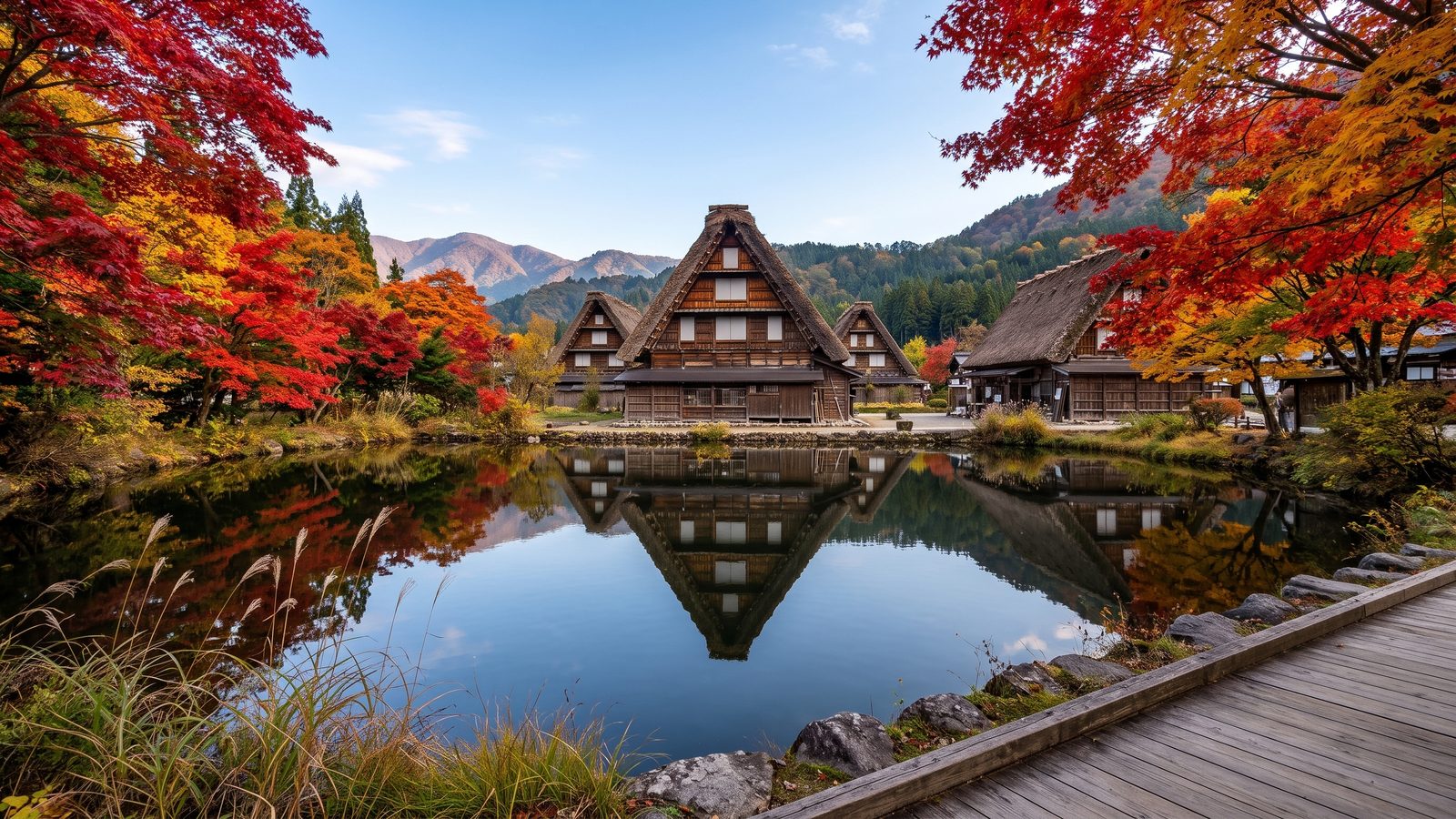
Welcome to Hida Folk Village in Takayama, Gifu Prefecture, an open-air museum showcasing traditional Japanese mountain life. Relocated from across the Hida region to preserve historic structures from modern development and dam construction, this picturesque hillside settlement brings centuries of rural heritage into clear view. Wander among authentic gassho-zukuri farmhouses, serene ponds, and lush mountain vistas while unearthing the self-sufficient lifestyle of Japan’s alpine communities.
As you walk through the village, this audio tour reveals the ingenious architecture, master carpentry, and communal traditions that allowed locals to thrive in severe winters. Immerse yourself in the stories behind every thatched roof, central irori hearth, and hand-crafted artifact preserved along these winding, forested paths.
What you'll hear on this tour
Stop 1. Rooflines Raised Like Hands in Prayer
You immediately notice the distinctive gassho-zukuri style, where steeply pitched thatched roofs, engineered at an astonishing sixty-degree angle, resemble hands clasped in prayer. Built from thick mountain grasses, these roofs allow heavy snowfall to slide off effortlessly. Look closer and you realize the entire roof structure is assembled without a single nail; interlocked chestnut or zelkova beams are secured with straw ropes and wisteria vines. Step inside to see how multi-level attics utilize residual heat from lower floors to cultivate silkworms. Oriented north-south to maximize sun exposure and reduce rot, these roofs require monumental re-thatching every thirty to forty years, uniting whole communities in cooperative effort.
Stop 2. Structures Rescued from a Submerged Past
You stand amidst historic structures rescued from rapid modernization. Established in 1971, this village was created during a critical preservation movement when traditional gassho-zukuri farmhouses faced demolition or submergence under reservoir waters from projects like the Miboro Dam. Dating back to the late Edo period, each home was carefully dismantled, transported, and reassembled on this Takayama hillside. As you explore, you witness a physical record of resilience and adaptation to harsh mountain winters. Relocating these homes preserved more than timber; it saved the tangible legacy of a self-sufficient, sericulture-based lifestyle that sustained isolated Hida communities for generations before the tide of modern development.
Stop 3. Faceless Amulets and Master Carpenter Tools
Step inside the workshops to encounter the enduring spirit of local artisans. You see bright red sarubobo dolls, traditional faceless 'baby monkey' amulets crafted by grandmothers from fabric scraps to wish for safe childbirth and happy marriages. Leaving the face blank allows you to project your own hopes onto the figure. Nearby, observe the woodworking tools of the legendary Hida no Takumi. These master carpenters were so revered that historical authorities exempted them from standard taxes, allowing them to construct grand temples across Japan. Notice the intricate nail-free joinery in the timber framing, where complex interlocking wood pieces demonstrate generations of inherited skill and deep reverence for natural materials.
Stop 4. Reflections Across the Village Pond
Gaze across the landscape as the towering peaks of the Hida Mountains cradle this serene village. The central pond acts as a living mirror, reflecting iconic thatched roofs against sky and forest in striking symmetry. As you walk along moss-bordered stone paths, listen to the constant, soothing murmur of small streams winding through the grounds. In winter, pristine snow transforms the vista into a quiet wonderland, while autumn paints the cedar and maple canopy in brilliant red and gold. You stand inside an integrated landscape where human architectural ingenuity and alpine nature coexist in quiet harmony, offering a profound sense of peace.
Stop 5. The Warm Hearth of Communal Life
Immerse yourself in the cultural tapestry woven by generations of mountain villagers. Inside these expansive homes, multi-generational families shared daily life and work. At the center sits the irori, an open hearth that served as the heart of every household. Here, families gathered for warm meals, storytelling, and warmth, while smoke rising to the attic preserved timber structures and deterred pests. You see tools for indigo dyeing, straw weaving, and silkworm cultivation, demonstrating how each home achieved self-sufficiency. This living culture reflects the deep communal spirit, resourcefulness, and harmony with a rugged alpine environment that defined the legendary endurance of the Hida people.
Stop 6. Living Streams and Mountain Canopies
Look beyond the thatched rooftops to see how deeply this village connects with its natural environment. Dense stands of Japanese cedar and cypress form a protective canopy overhead, offering building materials and shielding structures from biting mountain winds. Pure snowmelt from the surrounding Hida Mountains feeds a network of gentle irrigation channels that run beside the farmhouses, historically powering watermills and nourishing rice paddies. Whether framed by autumn maples or heavy winter snow, every building and stone path respects the landscape's natural rhythms. You witness a historic lifestyle built not on conquering nature, but on living alongside its seasonal cycles.
Planning your visit
- Best time to go
- Autumn for vibrant foliage or winter for dramatic snow scenes on thatched roofs; morning light is ideal for photos.
- Approximate duration
- About 1.5 to 2 hours
- Where to start
- Begin at the main entrance near Go-mokugi Pond facing the central gassho-zukuri farmhouses.
Access and conditions change seasonally — check the official site before you go.
Frequently asked questions
Is Hida Folk Village worth visiting?
Yes, Hida Folk Village (Hida no Sato) is well worth visiting for anyone interested in traditional Japanese architecture, rural mountain culture, and serene scenery without the heavy crowds of Shirakawa-go.
How long do you need at Hida Folk Village?
Most visitors spend between 1 to 2 hours exploring the open-air museum, visiting the restored gassho-zukuri farmhouses, and watching craft demonstrations.
Why were the houses in Hida Folk Village relocated here?
The houses were relocated starting in 1971 during a preservation movement to save historic gassho-zukuri farmhouses from demolition and flooding caused by dam construction, such as the Miboro Dam.
Keep exploring
Header image is an AI-generated illustration of Hida Folk Village. AllTours.ai is an AI audio tour guide — point your camera at any landmark and hear its story.