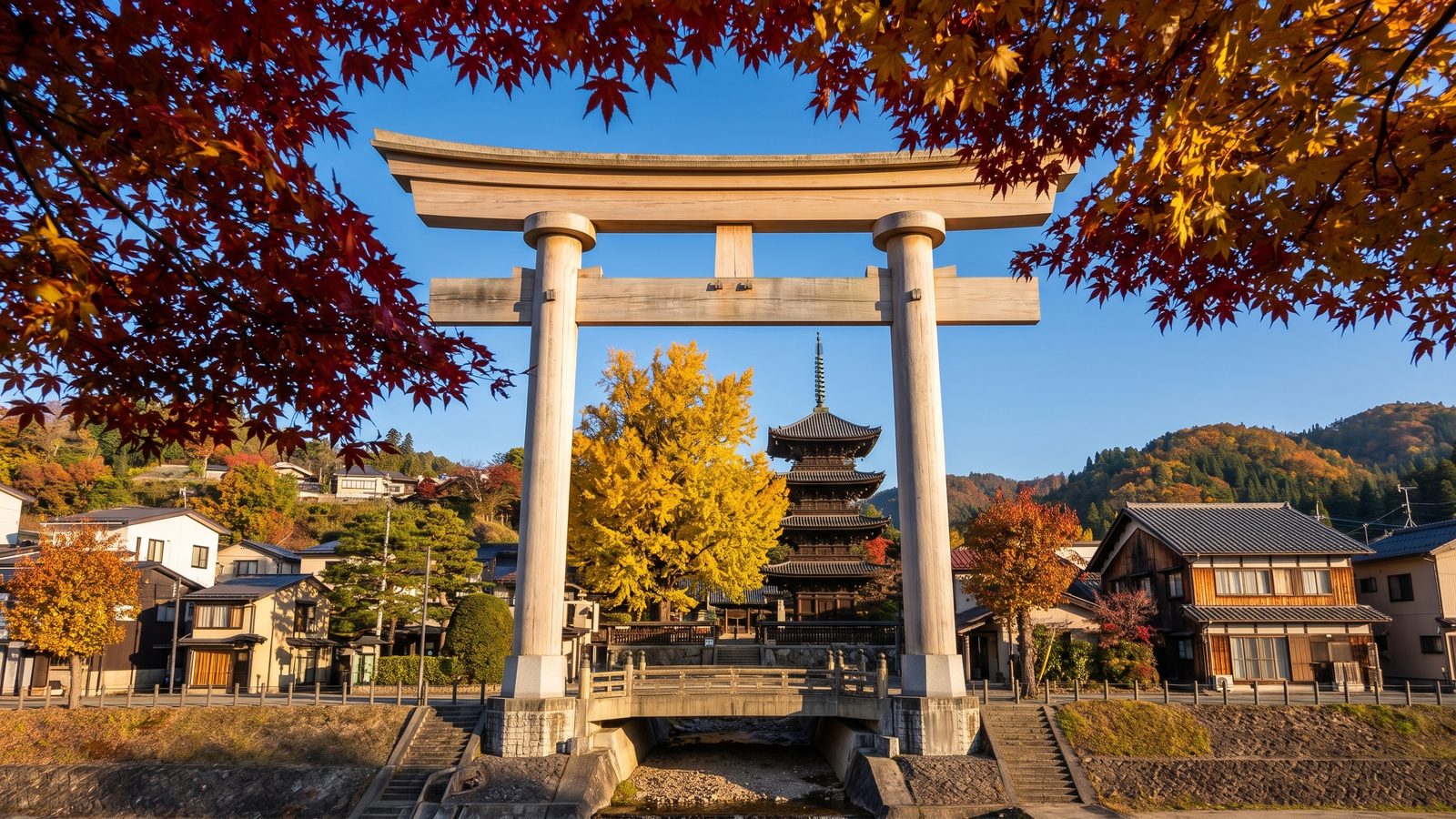
Step through the historic gate of Hida Kokubun-ji Temple, a sacred sanctuary established in 741 AD by imperial decree of Emperor Shōmu. Located in the heart of Takayama, Gifu, this ancient gateway introduces you to centuries of spiritual devotion, remarkable wooden architecture, and a serene natural environment featuring a towering 1,200-year-old ginkgo tree and a majestic three-story pagoda.
As you walk beneath the wooden archway, you follow in the footsteps of ancient pilgrims. Experience the living heritage of Hida's master carpenters and immerse yourself in a tranquil sanctuary where history, sacred craftsmanship, and nature meet in perfect harmony.
Listen to a sample
The opening of this tour, exactly as AllTours narrates it on site.
What you'll hear on this tour
Stop 1. Imperial Decrees and Lasting Faith
You are standing before a gateway whose history stretches back nearly thirteen centuries. In 741 AD, Emperor Shōmu issued a monumental decree to establish provincial temples across Japan, anchoring imperial influence and Buddhism in Hida Province. Though fires and earthquakes threatened the site over the ages, constant reconstructions kept its spiritual purpose alive. As you gaze at this structure, imagine generations of pilgrims, feudal lords, and locals passing beneath its timber arch. The gate serves as an unbroken bridge between the earthly realm and the sacred, embodying Takayama's architectural resilience and enduring faith across the changing tides of Japanese history.
Stop 2. Precision of the Myojin Style
Look closely at the gate's structural elements. You notice massive vertical posts, the hashira, rising directly from the ground without an elaborate foundation, establishing a firm connection to the earth. Above, the lower nuki beam passes cleanly through the main pillars, while the upper kasagi beam curves subtly upward, defining the classic myojin style. Hida's master carpenters crafted these robust timbers—likely local hinoki cypress—with a delicate taper toward the top, preventing a top-heavy appearance. Without relying on heavy ornamentation or nails, the gate highlights flawless interlocking mortise-and-tenon joinery, allowing the raw grain and strength of the wood to speak for itself.
Stop 3. Secrets of the Hida no Takumi
Shift your gaze to the exquisite woodworking details that showcase the legacy of the Hida no Takumi, Japan's legendary master carpenters. For over a millennium, these local artisans have shaped timber architecture across the nation using precise, nail-free joinery. You see substantial cypress and cedar beams meticulously planed and fitted together through intricate mortise-and-tenon techniques. This unadorned, refined construction demands absolute perfection in every angle and cut, relying entirely on the natural mechanical strength of the wood. As you examine the flawless alignment, you appreciate how generations of artisans passed down these secret methods, maintaining an extraordinary standard of woodworking excellence.
Stop 4. Sacred Cedars and Autumn Gold
Take a moment to absorb the natural sanctuary surrounding you. Towering sugi—Japanese cedars—rise around the gate, their venerable trunks standing as silent sentinels over 500 years old. Sunlight filters through their high canopy, casting dappled patterns onto the mossy ground and stone lanterns. Beyond the entry lies the renowned 1,200-year-old ginkgo tree and vibrant momiji maples that burst into crimson and gold during autumn. Listen to the gentle rustle of leaves carried on the crisp mountain air and breathe in the rich scent of cedar wood and damp soil. Nature and human devotion exist here in peaceful, timeless balance.
Stop 5. Community Spirit and Sacred Rituals
Beyond its architectural beauty, this gate represents the cultural soul of Takayama's community. You are looking at the living heritage of miyadaiku, the master temple carpenters who preserved regional traditions through their craft. For centuries, this sacred threshold has anchored local life and seasonal celebrations. Imagine vibrant autumn harvest festivals where local villagers carry heavy, ornate mikoshi—portable shrines—in joyous processions directly beneath this wooden archway. Passing through this gate connects community members to ancestral spirits and seasonal blessings. It remains a vital symbol of unity, shared memory, and enduring regional pride that you can feel today.
Stop 6. A Living Textbook of Carpentry
Consider how this gate functions as a living textbook for Japanese architectural traditions. Through centuries of careful renewal, the knowledge of selecting choice timbers and executing complex joinery has been passed down directly from master to apprentice. The gate embodies Takayama's commitment to preserving its unique identity and honoring the Hida no Takumi legacy. Rather than standing as a static relic, it remains a vibrant testament to perpetual care and human ingenuity. As you step under its arch, you participate in an unbroken tradition of respect for craftsmanship, ensuring these priceless woodworking secrets survive for future generations to admire.
Planning your visit
- Best time to go
- Autumn is ideal to view the surrounding red maples and golden ginkgo foliage, though morning hours year-round offer a peaceful atmosphere.
- Approximate duration
- about 30 minutes
- Where to start
- In front of the main Torii Gate entrance facing the temple grounds.
Access and conditions change seasonally — check the official site before you go.
Frequently asked questions
Is Hida Kokubun-ji Temple Torii Gate worth visiting?
Yes, it is highly worth visiting for anyone interested in ancient Japanese timber architecture, history, and craftsmanship. It serves as the historic entrance to Takayama's oldest temple site.
How long do you need at Hida Kokubun-ji Temple Torii Gate?
You generally need about 20 to 30 minutes to explore the Torii Gate, admire its joinery details, and take in the surrounding courtyard and ancient trees.
What is the historical significance of Hida Kokubun-ji Temple?
Established in 741 AD by decree of Emperor Shōmu, it was built as Hida Province's official state-sponsored temple to promote Buddhism and unify the region under imperial guidance.
Keep exploring
Header image is an AI-generated illustration of Hida Kokubun-ji Temple Torii Gate. AllTours.ai is an AI audio tour guide — point your camera at any landmark and hear its story.