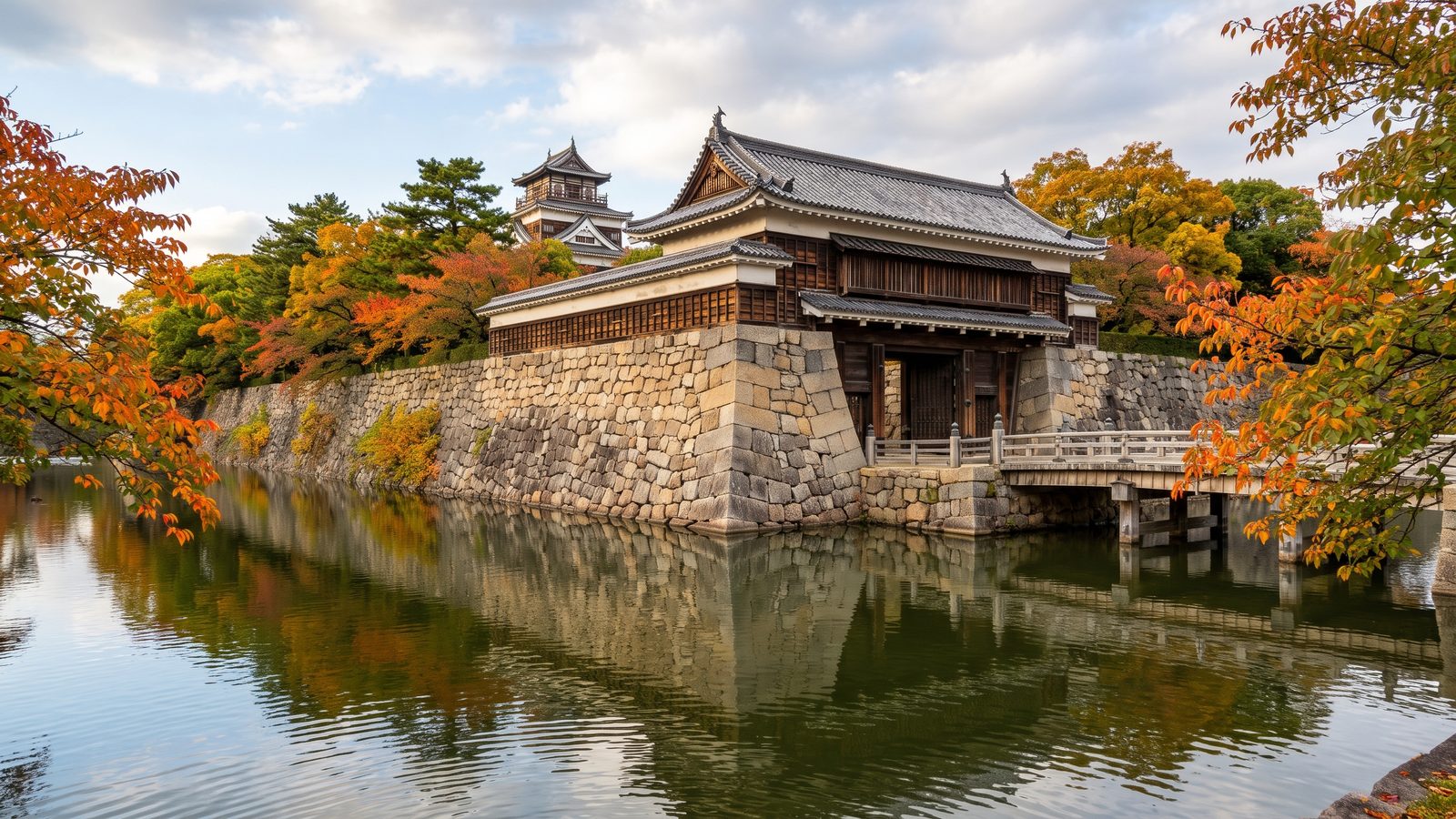
Welcome to the site of the First Gate of Hiroshima Castle. You are stepping through what was once the principal entrance to Lord Fukushima Masanori's formidable samurai stronghold. Built originally in the late 16th century on the Ota River delta, this gate stood as the first impression of feudal authority and defense. Though destroyed in the 1945 atomic bombing, its presence connects you directly to centuries of Japanese history and resilience.
Today, standing at this restored entrance allows you to experience both the strategic genius of medieval warcraft and Hiroshima's profound message of peace. As you explore, look closely at the surviving stone foundations that bear silent witness to destruction, transformation, and rebirth.
Listen to a sample
The opening of this tour, exactly as AllTours narrates it on site.
What you'll hear on this tour
Stop 1. Scars Etched in Stone
Look closely at the scattered stone foundations beneath your feet, marking the exact footprint of the original Front First Gate. You are standing where feudal defenders once guarded the entrance. Notice the subtle scorch marks on these massive stone blocks, left by the intense thermal heat of the 1945 atomic blast. The slight displacement of the heavy stones reveals how violently the shockwave shook this ground, vaporizing the original wooden gatehouse above. These surviving fragments reveal traditional Edo-period masonry while offering a poignant, physical link to the castle's tragic destruction and the city's enduring message of peace.
Stop 2. The Phoenix of Carp Castle
As you gaze up at the five-story main keep, you behold a detailed 1958 reconstruction of Mōri Terumoto's 1590s flatland castle, or hirajiro. Known affectionately as Rijō, or Carp Castle—perhaps due to its dark fish-scale roof tiles or the carp swimming in the surrounding moats—it once served as the economic and political hub of the domain. You trace the broad water-filled moats that protected the fortress grounds. Inside the rebuilt keep, you discover exhibits illustrating samurai daily life and military history, reminding you of the resilience that transformed this destroyed landmark into a living museum of Hiroshima's spirit.
Stop 3. Defensive Mastery of the Samurai
Examine the clever structural layout of this entrance site, which reflects the strategic genius of Japan's Sengoku period. You see the principles of a masugata gate layout, a classic Japanese defense that trapped approaching invaders between inner and outer portals. Powerful daimyo designed these killing boxes to defend their regional territories. Look at the timber construction; traditional Japanese woodworking relies on intricate interlocking joinery that frequently eliminates the need for metal nails. This incredible craftsmanship and harmonious design demonstrate a culture that blended architectural beauty with defensive force, leaving a lasting mark on Japan's martial heritage.
Stop 4. Centuries of Changing Power
You stand on ground that marks the birth of Hiroshima, envisioned by Mōri Terumoto in 1589 on the Ota River delta. Over the centuries, control shifted to the Asano clan, who governed from 1619 throughout the Edo period, turning the castle into an administrative and cultural hub. With the Meiji Restoration, the site shifted from feudal rule to a modern military center, even housing the Imperial General Headquarters during the First Sino-Japanese War in 1894–95. As you walk here, you trace Japan's dramatic journey from samurai lords to modern military conflicts, ending in the atomic bombing of August 6, 1945.
Stop 5. The Impact of Modern Warfare
Stand near the entrance and reflect on how this site became deeply entangled in modern military history. Prior to 1945, Hiroshima Castle served as a key command center for the 5th Division and 2nd General Army. Located just 1.3 kilometers from the atomic bomb's hypocenter on August 6, 1945, the original wooden gate and surrounding buildings were completely vaporized by the thermal flash and explosive force. You are standing where absolute destruction took place in an instant. The reconstructed gate before you now serves as a solemn monument to the devastating realities of war and the indomitable human spirit that rebuilt from nothing.
Stop 6. The Lost Grandeur of the Honmaru
Look beyond the gate toward the central enclosure, where the sprawling Honmaru Goten palace complex once stood. You are imagining the administrative and personal domain of the Mōri and Asano lords. In the public Omote-goten, feudal rulers greeted retainers amidst painted screens and sliding doors. Further inside lay the private Oku-goten, a quiet retreat of tatami rooms and peaceful courtyards where family life unfolded. Though destroyed in 1945, historical records preserve the memory of this lavish wooden palace. As you cross the grounds, you can still trace the ghost footprint of this lost heart of regional governance.
Planning your visit
- Best time to go
- Morning or late afternoon, especially during autumn foliage or spring cherry blossom season.
- Approximate duration
- about 45 minutes
- Where to start
- At the outer moat bridge approaching the First Gate entrance of Hiroshima Castle.
Access and conditions change seasonally — check the official site before you go.
Frequently asked questions
Is Hiroshima Castle First Gate Site worth visiting?
Yes, it offers a compelling look into samurai military architecture, visible atomic blast scars on original foundation stones, and Hiroshima's remarkable history of reconstruction.
How long do you need at Hiroshima Castle First Gate Site?
You typically need about 30 to 45 minutes to explore the gate site, view the foundation stones, and appreciate the outer moats.
Who originally built Hiroshima Castle and when?
Hiroshima Castle was originally commissioned by feudal lord Mōri Terumoto starting in 1589 on the Ota River delta.
Keep exploring
Header image is an AI-generated illustration of Hiroshima Castle First Gate Site. AllTours.ai is an AI audio tour guide — point your camera at any landmark and hear its story.