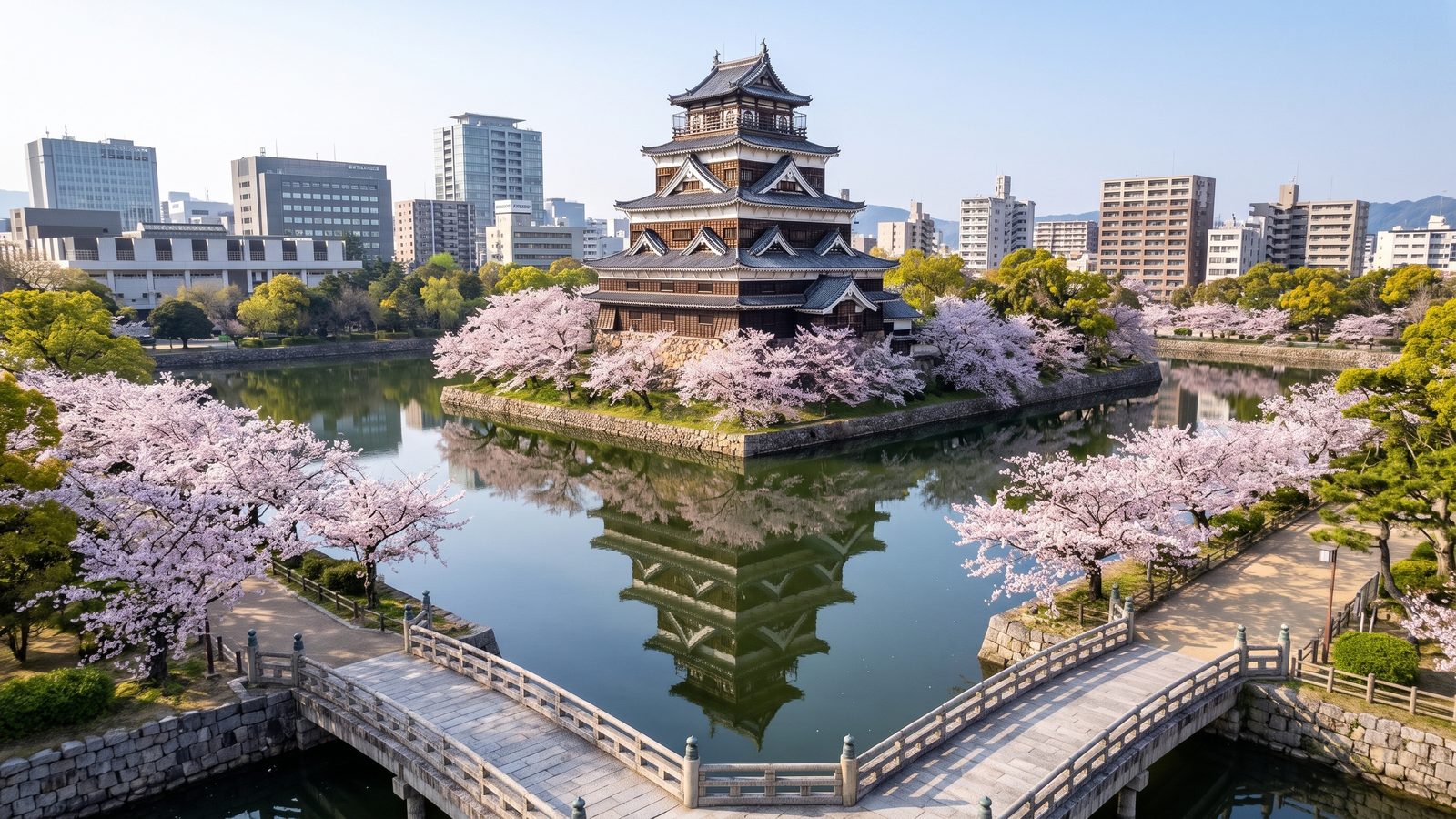
Welcome to Hiroshima Castle, an iconic landmark in the heart of Hiroshima Prefecture. Known affectionately as Carp Castle, this majestic site was originally built in the late sixteenth century by feudal lord Mori Terumoto. Surrounded by a peaceful moat and lush greenery, the castle grounds offer a quiet retreat from modern urban life while standing as a proud testament to the region's rich samurai tradition and military history.
As you walk through the reconstructed main keep and museum, you discover fascinating exhibits of samurai armor, swords, and historical documents. Experience stunning panoramic views from the top floor and witness how this historic fortress endures as a celebrated symbol of resilience, memory, and rebirth in Hiroshima.
Listen to a sample
The opening of this tour, exactly as AllTours narrates it on site.
What you'll hear on this tour
Stop 1. The Feudal Foundations of Carp Castle
You stand before the majestic wooden facade of Hiroshima Castle, often known as Carp Castle. Feudal lord Mori Terumoto originally constructed this formidable stronghold in the late sixteenth century as a strategic military base. As you gaze up at its elegant tiered roofs rising into the city skyline, you can appreciate the architectural genius required to build such a massive fortress. The surrounding structure served as the center of power for the region during the feudal era. Walking along the outer perimeter, you feel connected to centuries of Japanese history. Take in the grand scale of the keep as you prepare to step deeper into the fortress grounds.
Stop 2. Serene Waterways and Seasonal Blooms
You pause along the edge of the expansive moat that gently encircles Hiroshima Castle. The calm waters reflect a striking silhouette of the keep above, offering a peaceful escape from the bustling city around you. As you stroll through the castle grounds, you notice how the lush natural scenery enhances the historic atmosphere. If you visit during spring, delicate cherry blossoms add vibrant touches of pink to the fortress walls. You can take a quiet moment here to enjoy the serene environment, imagining how guards once watched over these same calm waters to defend the feudal lord from unexpected approaching forces.
Stop 3. Inside the Samurai Culture Museum
You enter the castle's interior, which now houses a detailed museum dedicated to Hiroshima's rich samurai heritage. As you walk through the climate-controlled exhibition halls, you observe impressive displays of authentic samurai armor, sharp historical swords, and ancient documents. These artifacts offer you a clear glimpse into the daily lives, honor codes, and military traditions of the warriors who once walked these exact corridors. You can examine the intricate craftsmanship of the weapons and protective gear up close. Each display helps you understand how this fortress functioned as an active command center during centuries of regional feudal rule.
Stop 4. A Symbol of Reconstruction and Resilience
You reflect on the complex history of Hiroshima Castle as you explore its historic grounds. Although this fortress served as a powerful military base for generations, it suffered complete destruction during World War II. Following the war, the people of Hiroshima meticulously reconstructed the main keep to match its original late-sixteenth-century appearance. Today, as you stand beneath its majestic timber frame, the fortress represents far more than its feudal roots. It stands as a profound symbol of resilience, rebirth, and enduring strength, demonstrating how a city can honor its past while continuously rebuilding for the future.
Stop 5. Panoramic Views from the Top Floor
You climb to the top floor of the castle keep to experience sweeping panoramic views across Hiroshima. From this high vantage point, you look out over the vibrant city skyline, the surrounding mountains, and the reflective moat below. It is easy to imagine how feudal lords once surveyed their entire domain from this elevated position. If you remain near the grounds as day turns to night, you can watch the castle lights illuminate the dark sky, creating a magical atmosphere. You can end your tour here with quiet reflection and ideal photo opportunities overlooking the transformed landscape.
Planning your visit
- Best time to go
- Spring for cherry blossoms around the moat, or late afternoon to experience both daylight and evening illumination.
- Approximate duration
- About 1 to 1.5 hours
- Where to start
- At the main entrance along the outer castle moat.
Access and conditions change seasonally — check the official site before you go.
Frequently asked questions
Is Hiroshima Castle worth visiting?
Yes, Hiroshima Castle is well worth visiting for its rich samurai history, detailed museum artifacts, peaceful moat, and panoramic views from the top floor of the reconstructed keep.
How long do you need at Hiroshima Castle?
Most visitors spend about 1 to 1.5 hours exploring the castle interior museum, walking around the moat grounds, and admiring the views from the top observation level.
Why is Hiroshima Castle called Carp Castle?
Hiroshima Castle is known as Carp Castle (Rijo) due to its historical association with the surrounding geography, local folklore, and the dark exterior wooden cladding reminiscent of carp scales.
Keep exploring
Header image is an AI-generated illustration of Hiroshima Castle. AllTours.ai is an AI audio tour guide — point your camera at any landmark and hear its story.