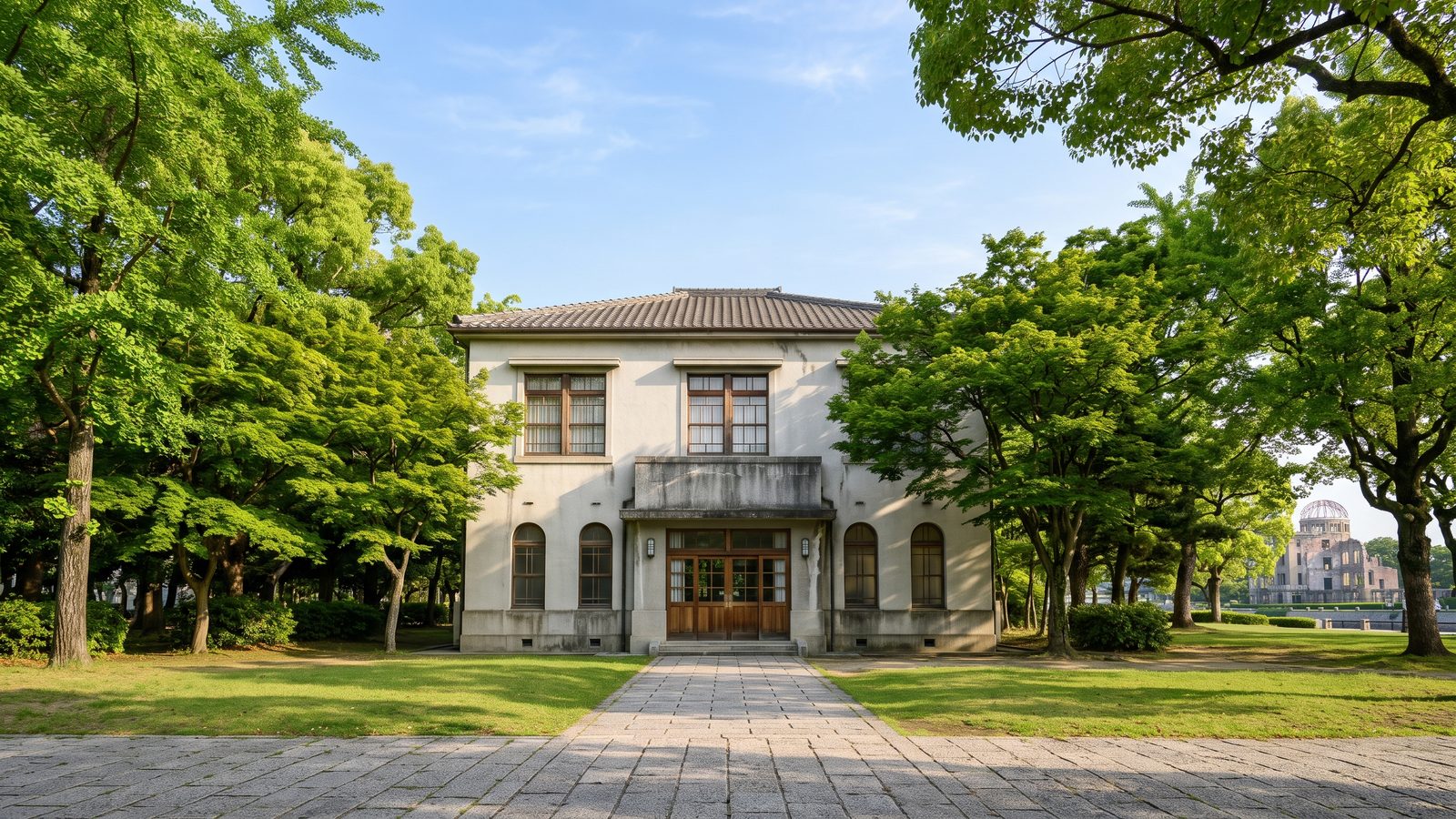
Standing just 170 meters from the atomic bomb hypocenter, the Hiroshima Rest House—originally the Former Fuel Hall—is one of the rare structures to survive the blast of August 6, 1945. This audio tour invites you to explore its preserved concrete walls, tragic history, and vibrant present-day role. Discover how a devastating tragedy gave rise to an inspiring symbol of peace and urban renewal in the heart of Hiroshima.
As you walk through its historic halls and surrounding streets, you will hear stories of survival, architectural design, and local craftsmanship. Experience the profound journey from pre-war bustle to post-war recovery as you discover the quiet resilience embedded within every brick, bike, and boulevard.
Listen to a sample
The opening of this tour, exactly as AllTours narrates it on site.
What you'll hear on this tour
Stop 1. Silent Witness of August Sixth
You stand before the Rest House, historically known as the Former Fuel Hall or the Wall Building. Located just 170 meters from the atomic bomb hypocenter, this reinforced concrete structure remains one of the very few buildings that survived partially standing. Look closely at its weathered walls; they serve as a silent witness to unimaginable destruction and remarkable human resilience. As you explore, remember that the original basement is preserved beneath your feet—a chilling, untouched snapshot of August 6, 1945. Today, this poignant structure offers you a tranquil place for reflection, standing as an enduring symbol of Hiroshima’s devastating history and its unwavering commitment to global peace.
Stop 2. The Paved Path of Reflection
You step onto the pavement beneath your feet, walking along what was once a bustling pre-war thoroughfare. Before 1945, this vital street throbbed with streetcars and daily life until the atomic blast vaporized its surroundings and melted the asphalt. Today, you traverse a route thoughtfully rebuilt with profound purpose. Notice how the road's subtle curve gently guides your gaze toward the preserved Rest House, framing it as a focal point for remembrance. Replanted trees line your path like silent sentinels watching over visitors seeking understanding. As you walk, you experience how this street transforms tragedy into hope, paving a literal and symbolic path toward peace.
Stop 3. Wheels of Daily Resilience
You notice the bicycles parked along the streets near the Rest House, representing a subtle yet profound symbol of Hiroshima's enduring spirit. In the devastating aftermath of 1945, when public transit lay ruined and roads were blocked, these humble machines became essential lifelines across the debris. You can imagine survivors riding them through rubble to search for loved ones, transport food, and carry salvaged building materials. Today, as you watch cyclists glide past these historic walls, you hear the quiet rhythm of daily determination. Every pedal stroke reminds you of the city's sustainable recovery and the quiet strength that continues to define daily life in modern Hiroshima.
Stop 4. Crafts and Culture Within
You enter the vibrant lower levels of the Rest House, where retail becomes an immersive cultural experience celebrating Hiroshima's creative renewal. As you browse, you discover exceptional creations from local artisans sharing their heritage through traditional crafts. You can pick up iconic momiji manju maple-leaf cakes, including gourmet versions filled with local lemon or rich matcha. You also encounter delicate Kumano-fude brushes, famous worldwide for calligraphy and cosmetics, alongside ceramics and textiles adorned with peace motifs. Each item you explore offers a tangible connection to the city's artistic heritage, showing how local traditions flourished from hardship into forward-looking innovation.
Stop 5. Panoramic Tapestry of Renewal
You gaze outward from the building across Hiroshima’s modern cityscape, where high-rises stand as optimistic markers of post-war recovery. Below you, the silver ribbons of the Ota River divide the urban landscape into six delta islands, creating a natural circulatory system for the reborn metropolis. As you look closer, you see extensive green parks and tree-lined avenues punctuating the concrete, reflecting a deliberate choice to integrate nature into the city's philosophical vision. The mix of sleek glass towers and modest functional buildings reveals a story of rapid adaptation. From this vantage point, you witness a thriving city rooted in its history yet constantly evolving.
Stop 6. Reconstructed Geometry of Peace
You explore an urban environment shaped by a visionary post-war redesign. Before the blast, you would have seen a densely packed castle town of narrow streets and wooden buildings. The atomic explosion flattened that traditional fabric entirely. In its place, planners re-imagined the city layout, laying out wide boulevards like Peace Boulevard alongside expansive green spaces. As you walk around the Rest House, you perceive how this deliberate open planning creates a calm, accessible atmosphere that contrasts sharply with pre-war density. The very geometry of the streets around you reflects a moral imperative, transforming a former military center into a worldwide sanctuary for peace.
Planning your visit
- Best time to go
- Morning or late afternoon for gentle natural light and fewer crowds.
- Approximate duration
- About 45 minutes
- Where to start
- Main entrance of the Hiroshima Rest House in Peace Memorial Park.
Access and conditions change seasonally — check the official site before you go.
Frequently asked questions
Is Hiroshima Rest House worth visiting?
Yes, Hiroshima Rest House is deeply worth visiting. Located just 170 meters from the hypocenter, it offers a poignant connection to August 6, 1945, featuring a preserved basement, historical exhibits, visitor services, and local artisanal products.
How long do you need at Hiroshima Rest House?
Most visitors spend 30 to 45 minutes exploring the Rest House, including its historic basement exhibit, gift shop, and visitor information area.
What is the history of Hiroshima Rest House?
Originally constructed in 1929 as a kimono shop and later used as the Fuel Hall, this reinforced concrete building survived the 1945 atomic blast 170 meters from the hypocenter. Restored after the war, it now serves as a rest house, shop, and memorial building in Peace Memorial Park.
Keep exploring
Header image is an AI-generated illustration of Hiroshima Rest House. AllTours.ai is an AI audio tour guide — point your camera at any landmark and hear its story.