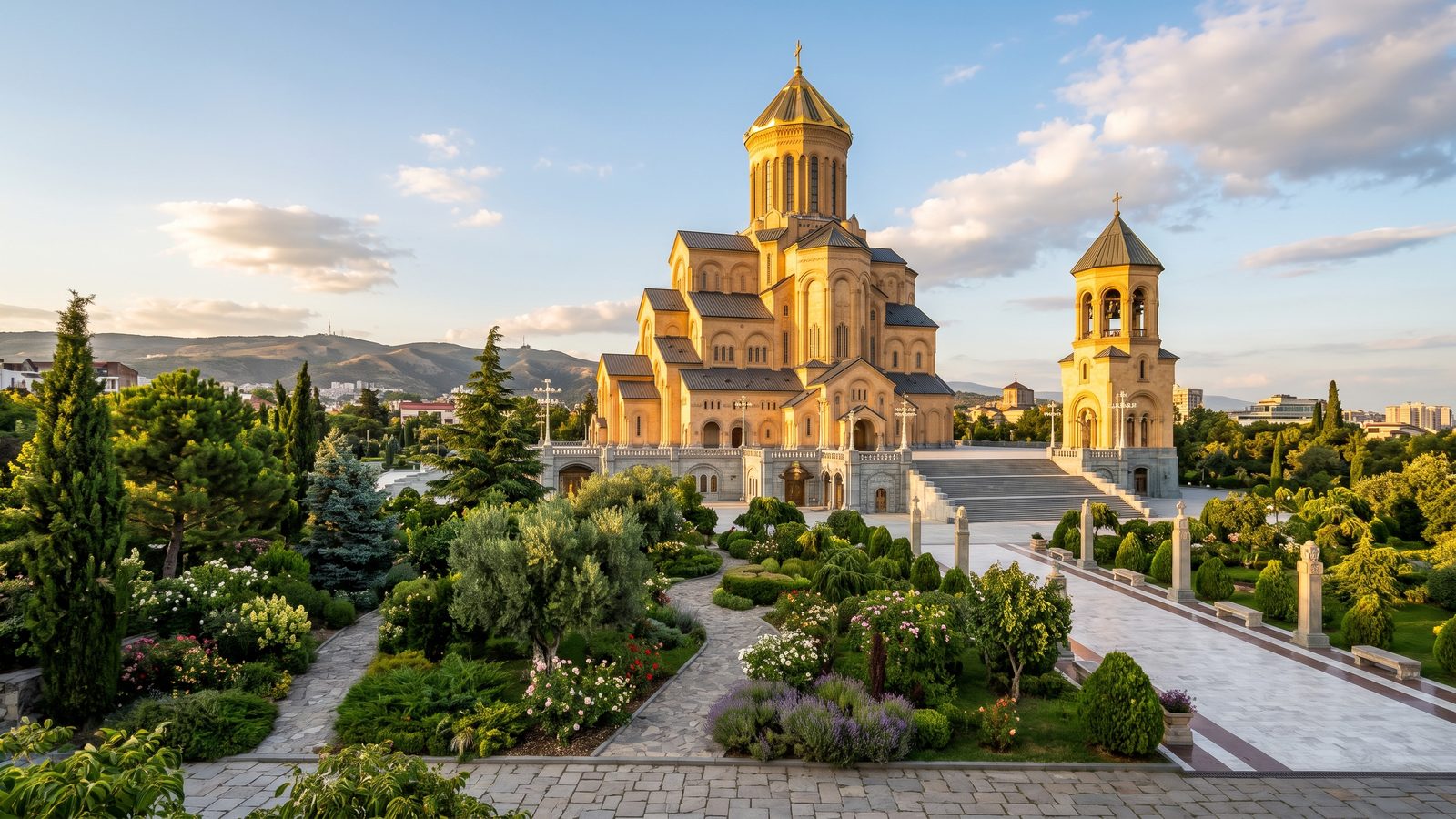
Welcome to Holy Trinity Cathedral, locally known as Sameba, perched prominently atop Elia Hill in Tbilisi. Consecrated in 2004 to celebrate two millennia of Christianity and 1,500 years of Georgian Orthodox autocephaly, this monumental sanctuary serves as a beacon of Georgia's national and spiritual rebirth following decades of Soviet suppression. As you approach this immense complex, prepare to experience the vibrant living traditions, striking architecture, and deep devotion of Georgian Orthodoxy.
As you walk through its gates, you are entering one of the world's largest Orthodox cathedrals. From its soaring golden dome visible across the city to its sacred inner chapels and marble floors, every corner of Sameba reflects a rich history and an enduring spirit of faith that defines modern Georgia.
Listen to a sample
The opening of this tour, exactly as AllTours narrates it on site.
What you'll hear on this tour
Stop 1. A Symbol of Spiritual Rebirth
You stand atop Elia Hill before a monument born from Georgia's re-emergence after decades of Soviet suppression. Conceived in the early 1990s, Sameba commemorates two millennia of Christianity and 1,500 years of the Georgian Orthodox Church's autocephaly. You witness the culmination of a decade-long national effort that began construction in 1995 and ended with its consecration in 2004. By choosing this prominent elevation, the cathedral echoes ancient traditions of building sacred sites on high ground, linking modern national aspirations directly to a continuous historical lineage. This vast sanctuary stands not merely as a church, but as a tangible declaration of freedom and enduring faith.
Stop 2. Masterpiece of Stone and Gold
You gaze up at a masterclass in Georgian ecclesiastical design, scaled to monumental proportions. The cathedral's cruciform layout anchors the structure, while a central golden dome rests atop a massive, intricately carved drum that lifts your eyes skyward. Gold leaf catches the sunlight, making the dome a shining beacon across Tbilisi. As you examine the exterior facade, you notice the warm ochre stone seamlessly paired with pristine white marble cladding. This monumental ensemble includes nine distinct chapels and a grand, detached bell tower. Each element reflects meticulous planning, blending traditional Orthodox motifs with an ambitious, contemporary architectural vision.
Stop 3. Wonders Within the Sanctuary
As you step inside Sameba, the immense scale of the main nave immediately takes your breath away. High above, celestial frescoes cover the vaulted interior with vibrant biblical imagery that draws your eyes upward. Look down at your feet to admire the marble flooring, crafted into intricate geometric mosaic patterns that guide you through the expansive space. Beyond the open central hall, you discover nine internal chapels dedicated to various saints. Be sure to explore the hidden underground chapel beneath the main sanctuary, which offers a quiet, reflective setting away from the grand visual spectacle of the upper cathedral.
Stop 4. Living Traditions and Polyphonic Chants
You enter a sensory cultural atmosphere where ancient Georgian traditions flourish. Listen carefully as ethereal echoes of Georgian polyphonic chanting—a UNESCO-recognized intangible cultural heritage—fill the lofty acoustics. This ancient vocal tradition serves as a living prayer passed down through generations. Around you, local worshippers light thin candles, kiss sacred icons, and perform age-old rituals that define Georgian identity. Intricate icons painted in a distinctive regional style tell stories of faith and national heritage. Accompanied by the gentle scent of incense, these sacred customs turn the cathedral into a vibrant, beating heart of contemporary Georgian life.
Stop 5. The Heart of Georgian Orthodoxy
You stand inside the patriarchal cathedra, the spiritual center of the autocephalous Georgian Orthodox Church. Georgia's religious roots stretch back to the fourth century, when Saint Nino converted the kingdom using her grapevine cross. Through centuries of foreign invasions and political suppression, Orthodoxy remained the bedrock of national resilience. Magnificent icons adorn the grand iconostasis, serving as sacred windows to the divine, while detailed frescoes depict the lives of Georgian saints and key biblical events. Here in this active place of worship, ancient liturgical practices continue uninterrupted, connecting you directly to a sacred lineage that has sustained the nation for millennia.
Stop 6. A Sacred Atmosphere of Prayer
You feel a gentle shift in the air as you move deeper into the cathedral's serene interior. Dozens of flickering candles cast a warm, soft glow, each flame representing a silent prayer ascending toward the heavens. The rich iconography surrounding you acts as a visual theology, inviting quiet contemplation and personal reflection. When the choir sings, the resonant chants carry centuries of devotion, filling the vast hall with soothing sound. Worshippers quietly cross themselves and offer prayers, demonstrating a deep personal connection to the divine. In this peaceful haven, visitors and pilgrims alike find solace and spiritual renewal.
Planning your visit
- Best time to go
- Late afternoon before sunset offers warm light on the central dome and comfortable temperatures for strolling through the complex.
- Approximate duration
- About 1 to 1.5 hours
- Where to start
- At the main entrance gates at the foot of the Elia Hill complex.
Access and conditions change seasonally — check the official site before you go.
Frequently asked questions
Is Holy Trinity Cathedral of Tbilisi worth visiting?
Yes. As one of the world's largest Orthodox cathedrals and the spiritual center of Georgia, Sameba offers incredible architecture, rich culture, and sweeping view across Tbilisi.
How long do you need at Holy Trinity Cathedral of Tbilisi?
You should allow 1 to 1.5 hours to tour the grand main nave, discover the underground chapels, see the bell tower, and explore the grounds.
When was Sameba Cathedral built?
Conceived in the early 1990s to commemorate 2,000 years of Christianity and 1,500 years of Georgian Orthodox autocephaly, construction started in 1995 and the cathedral was consecrated in 2004.
Keep exploring
Header image is an AI-generated illustration of Holy Trinity Cathedral of Tbilisi. AllTours.ai is an AI audio tour guide — point your camera at any landmark and hear its story.