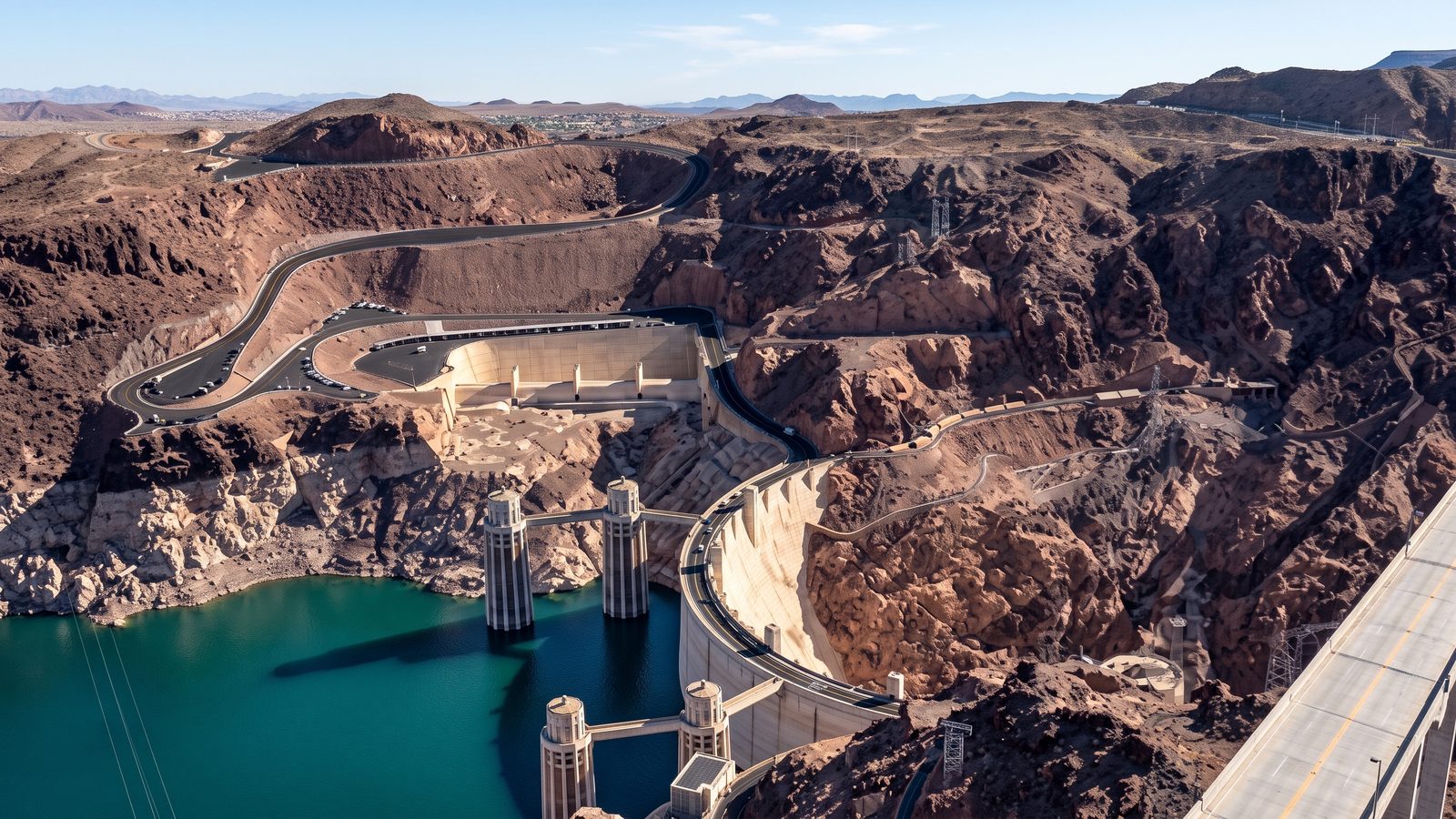
Stand atop Hoover Dam, a massive arch-gravity structure built in Black Canyon during the Great Depression. As you look out over Lake Mead and the Colorado River, you experience a true monument to human ingenuity. Thousands of workers labored in extreme desert conditions to construct this engineering marvel, transforming the American Southwest forever through flood control, massive hydroelectric power, and vital water storage.
This self-guided audio tour walks you through the dam's bold history, striking Art Deco architecture, and astonishing technical feats. From massive diversion tunnels carved into solid canyon walls to powerful hydroelectric turbines, prepare to discover how human grit tamed a wild river in the Mojave Desert.
Listen to a sample
The opening of this tour, exactly as AllTours narrates it on site.
What you'll hear on this tour
Stop 1. Cooling Concrete and Carving Canyons
You stand before an unprecedented engineering achievement born from sheer audacity. To clear the riverbed, workers blast four massive fifty-foot-wide diversion tunnels directly through solid canyon rock, rerouting the Colorado River into temporary channels. Upstream and downstream cofferdams create a completely dry workspace inside Black Canyon. Pouring over three million cubic yards of concrete presents a deadly challenge: curing heat threatens to crack the structure. Engineers solve this by embedding six hundred miles of steel pipe within concrete blocks, circulating chilled water and refrigerant to cool the dam safely. Look around to see where massive cableways once lowered twenty-three-ton concrete buckets, anchoring this arch-gravity design into solid stone.
Stop 2. Art Deco Elegance in Concrete
You admire more than just an industrial barrier; you stand before a masterwork of Art Deco design. Architect Gordon B. Kaufmann elevates a utilitarian dam into a sculpted landmark that echoes the surrounding canyon walls. Look closely at the towering intake towers with their subtle fluting and stepped forms. Below, the powerhouse buildings feature streamlined facades, bronze doors, and geometric motifs that carry the modern aesthetic throughout the facility. From terrazzo floors to custom light fixtures and ventilation grates, every detail reveals an extraordinary commitment to beauty. You witness form and function operating in perfect harmony, turning an arch-gravity concrete wall into a monument of enduring elegance.
Stop 3. Hope in the Great Depression
You step back into the 1930s, when America faces severe economic hardship during the Great Depression. In 1931, the construction of Hoover Dam becomes a vital symbol of national hope, drawing thousands of desperate men to work in Black Canyon. You feel the intense pressure under which the Six Companies consortium mobilizes an army of laborers to tame a wild river. Men work relentlessly amidst intense heat, thick dust, and dangerous conditions just to earn a living. Before pouring the main foundation, they must divert the powerful Colorado River through giant rock tunnels. You stand on ground born from sacrifice, grit, and an unwavering drive to build a prosperous future.
Stop 4. The Pulse of Southwestern Energy
You feel a subtle, rhythmic vibration beneath your feet as energy surges through the canyon. Deep within the U-shaped powerhouses flanking the riverbed, seventeen massive turbines spin inside the hydroelectric plant. Water drops hundreds of feet through heavy penstocks, transforming kinetic force into clean alternating current. You look out at high-voltage transmission lines stretching across the desert horizon, carrying electricity to millions of residents in Nevada, Arizona, and Southern California. This massive power plant yields enough energy to sustain over a million people, electrifying major cities and fueling industrial growth. You are standing right above the beating heart of Southwestern energy production.
Stop 5. Lifeblood of the Arid West
You look out over Lake Mead, a massive turquoise reservoir storing water from distant snowmelt in the Rocky Mountains. After traveling a thousand miles through rugged canyons, the untamed Colorado River reaches this colossal barrier to become a carefully managed lifeblood for the Southwest. Millions of people across seven states rely on this water for drinking, while vast agricultural fields depend on it for irrigation. Beneath you, incredible water pressure drives the flow through penstocks into the turbines before continuing downstream. You stand at the center of a grand hydrological feat that transforms an unforgiving desert into a thriving region capable of supporting vibrant communities and agriculture.
Stop 6. Conquering the Mojave Heat
You gaze across the stark expanse of the Mojave Desert, where harsh climate tests human endurance. Workers build this massive structure while confronting summer temperatures that routinely top one hundred twenty degrees Fahrenheit. The scorching sun bakes rock and metal into burning surfaces, making heat exhaustion and dehydration constant threats. Creosote bushes and tough cacti endure in this dry environment where water once had to be hauled in by truck and rail. Around you, ancient volcanic rock layers tell stories of geological upheaval long before the river carved Black Canyon. You appreciate the immense grit required to overcome dust storms, dangerous terrain, and intense isolation.
Planning your visit
- Best time to go
- Early morning or late afternoon from autumn through spring to avoid peak crowds and scorching summer desert heat.
- Approximate duration
- About 2 hours
- Where to start
- The Nevada side parking area near the Visitor Center or the pedestrian walkway on the Mike O'Callaghan–Pat Tillman Memorial Bridge.
Access and conditions change seasonally — check the official site before you go.
Frequently asked questions
Is Hoover Dam worth visiting?
Yes, Hoover Dam is a world-famous engineering marvel featuring striking Art Deco architecture, vast scenic views of Lake Mead, and fascinating history from the Great Depression.
How long do you need at Hoover Dam?
Most visitors spend about 2 hours walking across the top of the dam, viewing Black Canyon from the bypass bridge, and enjoying a self-guided tour.
When was Hoover Dam built?
Construction of Hoover Dam began in 1931 and was completed in 1936 by the Six Companies consortium during the Great Depression.
Keep exploring
Header image is an AI-generated illustration of Hoover Dam. AllTours.ai is an AI audio tour guide — point your camera at any landmark and hear its story.