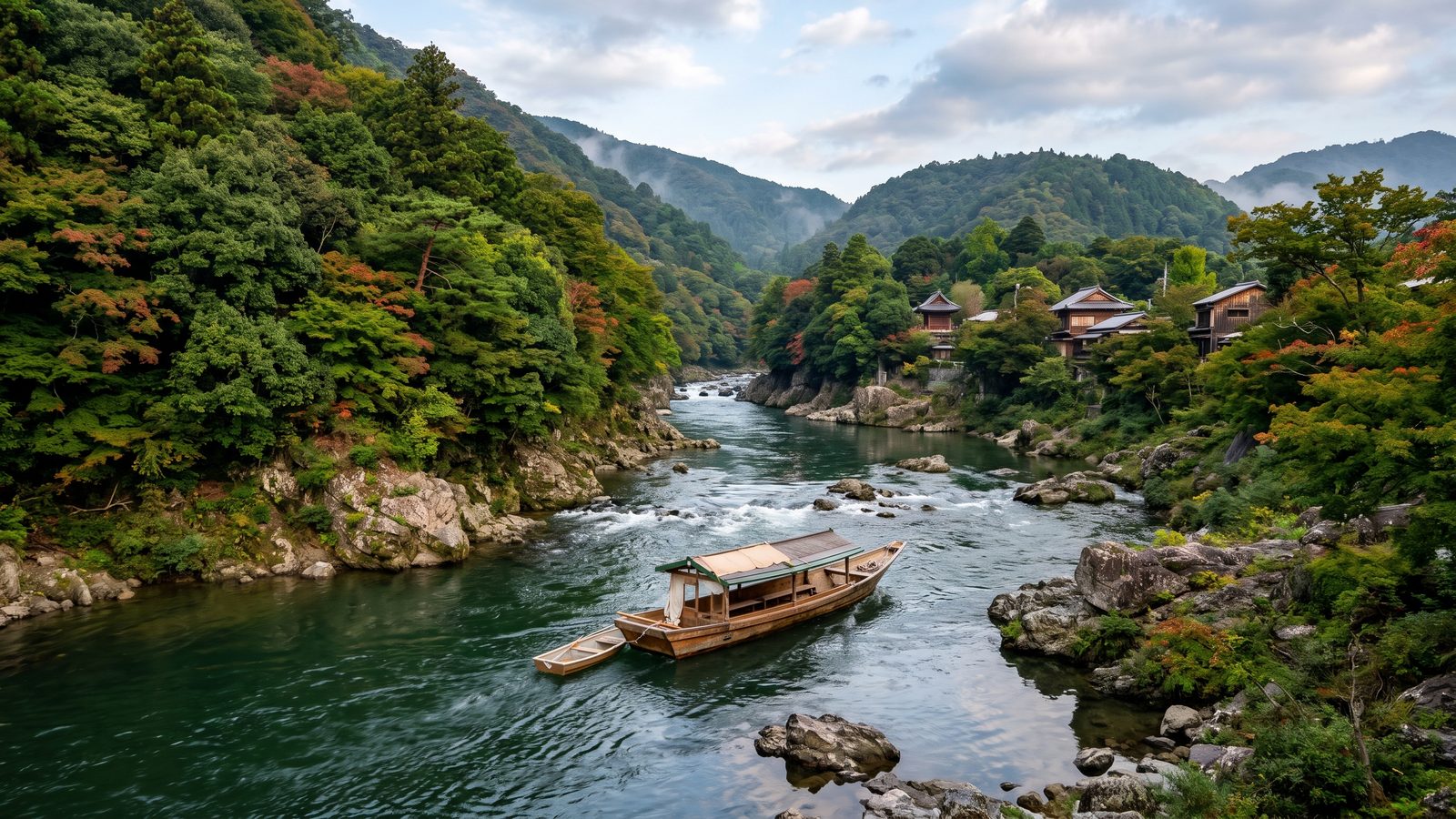
Welcome to the magnificent Hozugawa River, the historical and ecological heart of Arashiyama in Kyoto. For centuries, this winding waterway served as a critical trade artery, connecting the timber-rich Tamba mountains to Japan's ancient capital. Today, the river invites visitors to experience an unforgettable journey past towering cliffs, dense bamboo groves, and thrilling white-water rapids carved into the mountain gorge over millennia of continuous flow.
On this self-guided audio tour, you will discover the river's rich history, from 17th-century engineering feats to centuries-old boating traditions. Experience the breathtaking seasonal scenery, local wildlife, and peaceful sanctuary of the nearby Sagano Bamboo Forest at your own relaxed pace.
Listen to a sample
The opening of this tour, exactly as AllTours narrates it on site.
What you'll hear on this tour
Stop 1. Navigating Rapids with Master Sendou
Step aboard a traditional flat-bottomed wooden boat and feel centuries of river history come alive beneath you. Three skilled sendou, or boatmen, guide your passage through the water with synchronized precision using long bamboo poles. As you approach exhilarating rapids like Kame-no-se, or Turtle Rapids, you experience the thrill of the churn and splash while the crew shouts commands in their traditional language. Each boatman holds a specific role at the bow, stern, or middle. These direct descendants of historical cargo craft connect you to an active, living navigation legacy carved deep into Arashiyama’s mountains.
Stop 2. The Historic Artery of Kyoto
Feel the ancient pulse of the Hozugawa River as you travel down its emerald stream. For generations, this rushing waterway served as Kyoto's vital artery, transporting massive timber logs from the remote Tamba mountains to build the capital's grandest temples and imperial palaces. As you glide through dramatic gorges, you witness the river's captivating dual nature: serene stretches reflecting mountain foliage alternating with exhilarating white-water rapids. Today, the pristine, crystal-clear water supports a thriving ecosystem of darting fish and vibrant birdlife along the banks, carrying a profound legacy of human perseverance and raw natural beauty.
Stop 3. Whispers of Sagano Bamboo Forest
Venture away from the riverbank and step into the sacred canopy of the Sagano Bamboo Forest. Towering Moso bamboo stalks reach over twenty meters high, filtering the sunlight into dappled emerald patterns across your path. As you walk, listen closely to the gentle rustling of wind sweeping through the hollow culms—a soothing sound officially cherished as one of Japan's designated top soundscapes. Bamboo symbolises deep resilience in Japanese tradition, supplying material for everything from crafts to traditional flutes. Within this timeless, quiet grove, you experience an immediate sense of tranquility and spiritual connection to Kyoto's natural sanctuary.
Stop 4. Kyoto's Ever-Changing Mountain Tapestry
Gaze at the steep slopes and towering cliffs framing the river, where ancient Japanese cedars and cypress trees cling firmly to gnarled roots. In spring, delicate wild cherry blossoms cascade down the mountainsides, reflecting pink blushes onto the clear water below. Autumn ignites these same hills with fiery red maples contrasting sharply against dark evergreen pines. As you breathe in the crisp scent of damp pine needles and mountain earth, keep an eye out for silver sweetfish darting through the river currents. Nature creates an invigorating, living landscape here that continuously rejuvenates your spirit with every passing season.
Stop 5. Sculpted Rocks and Seasonal Views
Trace the winding curve of the Hozugawa River and immerse yourself in Arashiyama's painterly landscapes. Water-worn rock formations punctuate the shoreline, forming natural sculptures carved by millennia of rushing currents and softened by emerald moss. In spring, cherry blossoms paint the valley in soft whites and pinks, while autumn transforms the scene into an incandescent symphony of crimson maples and golden ginkgo trees. High above the riverbank, dramatic glimpses of towering bamboo complete this iconic vista. Clean mountain air carries the subtle scents of pine and damp earth, transporting you into a serene world sculpted entirely by nature.
Stop 6. Suminokura Ryoi and Engineering Legacy
Welcome to the edge of the Hozugawa River, the vibrant waterway carving through the heart of Arashiyama. In the early seventeenth century, visionary merchant Suminokura Ryoi engineered bold improvements to these perilous rapids, transforming a dangerous mountain gorge into a safe trade route for timber and regional goods. Today, when you watch traditional wooden boats navigate the current, you observe the enduring convergence of human ingenuity and natural power. The dramatic cliffs, lush forests, and thrilling rapids continue to shape the cultural spirit of Kyoto, offering a living scroll of history that continues to unfold right before your eyes.
Planning your visit
- Best time to go
- Spring (cherry blossoms) or autumn (vibrant fall foliage) during morning hours for calmer crowds.
- Approximate duration
- about 2 hours
- Where to start
- Arashiyama waterfront along the Hozugawa River near Togetsukyo Bridge.
Access and conditions change seasonally — check the official site before you go.
Frequently asked questions
Is Hozugawa River worth visiting?
Yes, the Hozugawa River is well worth visiting for its stunning gorge scenery, traditional boat rides, deep trade history, and direct connection to Arashiyama's famous bamboo grove.
How long do you need at Hozugawa River?
Most visitors spend between 1.5 to 3 hours in the Hozugawa River area, depending on whether you take a river cruise or explore the surrounding trails.
What is the history of the Hozugawa River?
In the early 17th century, merchant Suminokura Ryoi cleared the hazardous rapids, turning the river into Kyoto's main transport canal for mountain timber and goods.
Keep exploring
Header image is an AI-generated illustration of Hozugawa River. AllTours.ai is an AI audio tour guide — point your camera at any landmark and hear its story.