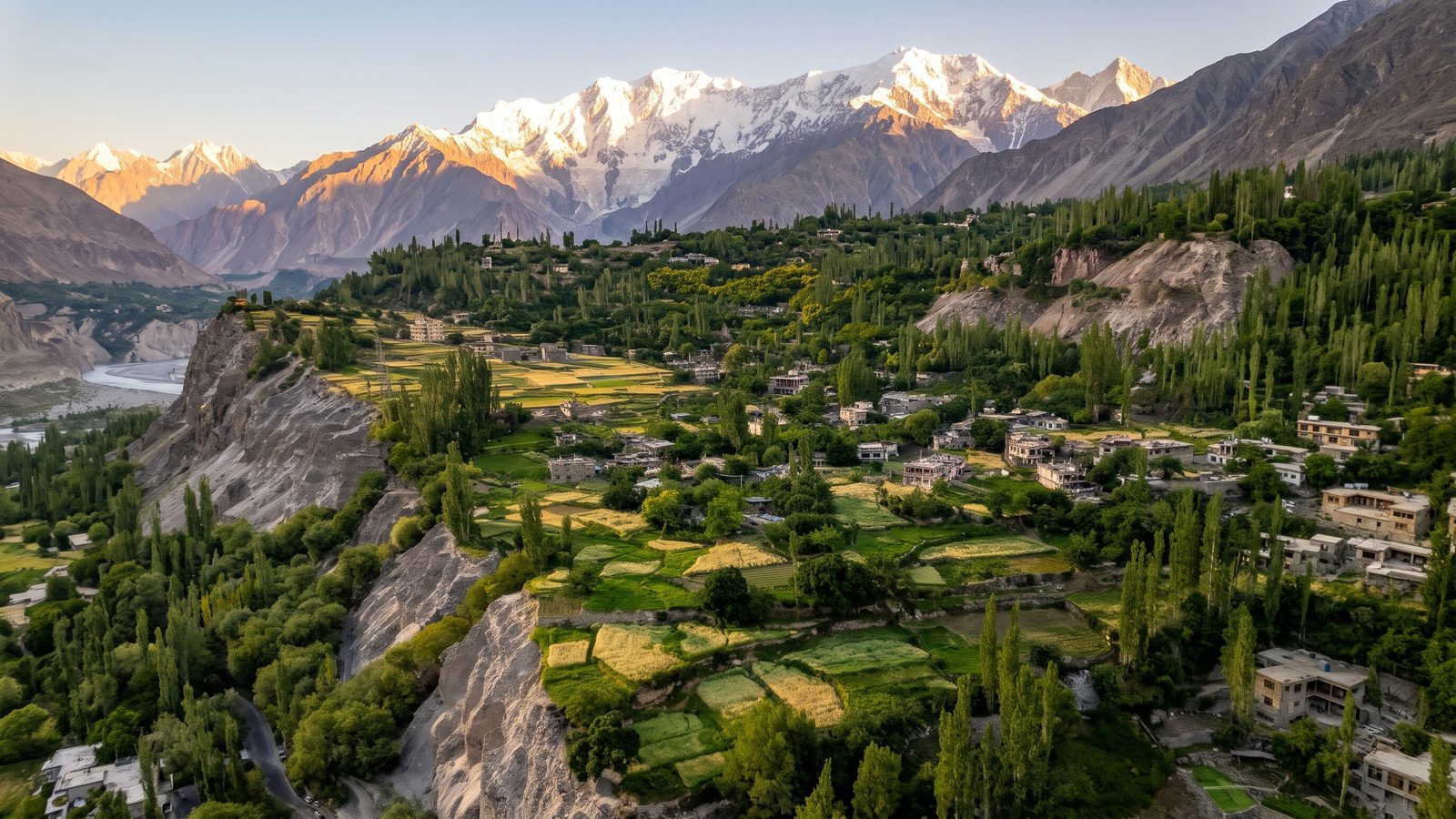
Nestled where the Karakoram, Himalaya, and Hindu Kush mountain ranges meet, the Hunza Valley is a breathtaking sanctuary of soaring ice peaks, turquoise waters, and ancient Silk Road heritage. Ringed by legendary 7,000-meter peaks like Rakaposhi and Ultar, this high-altitude haven in Gilgit-Baltistan has captivated travelers for centuries with its pristine mountain air, rich traditions, and rumors of extraordinary longevity.
This self-guided audio tour takes you through Karimabad and the surrounding valley floor. You will explore glacier-watered agricultural terraces, walk along ancient Silk Road trade branches, discover historic mountain stone villages, and marvel at dramatic geological wonders shaped over millions of years by ice and stone.
What you'll hear on this tour
Stop 1. The Golden Valley of Light
Look out across the valley where the Karakoram mountains frame a breathtaking landscape carved by nature and human resilience. Majestic snow-capped peaks like Rakaposhi catch the morning sunlight, while the sharp ridge of Ultar Peak reminds you of the sheer power of the mountains. Below, the Hunza River winds like a turquoise ribbon beside hand-carved terraced fields and lush apricot orchards. Nearby, the startling blue-green waters of Attabad Lake quietly record a recent geological transformation. As light shifts from golden dawn to vivid sunset, the shifting colors illuminate a living canvas shaped over millions of years.
Stop 2. Giants of the Karakoram Crossroads
You are standing at the dramatic convergence of three of the world's greatest mountain ranges: the Karakoram, the Himalayas, and the Hindu Kush. Rising dramatically before you is Rakaposhi, towering above 7,700 meters with its nearly vertical ice walls earning it the affectionate nickname 'Sleeping Beauty.' Look closely at the razor-sharp contours of Ultar Peak and Ladyfinger Peak, sculpted over millennia by glacial ice. These grand mountain walls served as protective geographic barriers while shaping the resilient culture and spiritual reverence of the people who call this magnificent valley home.
Stop 3. Glacier Waters and Golden Apricots
Gaze across the cascading stone terraces that step dramatically down the valley slopes. These fields are not natural formations, but the product of centuries of engineering brilliance. Ancient canals and underground karez channels channel pure glacier meltwater directly from high peaks to irrigate every plot of land. Apricots are the absolute soul of Hunza life, harvested each summer to be dried, processed into oil, and used as an economic pillar. Alongside walnuts, mulberries, and cherries, these orchards thrive strictly on traditional organic farming methods without synthetic chemicals, serving as a core element of the local reputation for health and longevity.
Stop 4. Living Legacy of the Silk Road
Step into the heart of ancient Karimabad, where narrow stone alleyways echo centuries of Silk Road caravans. The fortified stone houses built into the mountain slopes represent generations of architectural genius, designed with thick walls to keep interiors warm in freezing winters and cool during hot summers. As you wind through the maze-like passages, look for dried golden apricots laid out on rooftops and admire the hand-carved wooden doorframes that record family histories. Here, daily life centers around strong community bonds, shared irrigation channels, and an enduring philosophy of simple, resilient alpine living.
Stop 5. Trails Along Ancient Caravan Routes
Follow the ancient footpaths that once carried Silk Road merchants across the high Karakoram. Walk past fragrant orchard paths before tackling rugged mountain trails that ascend toward stunning viewpoints, including the iconic jagged spires of the Passu Cones. Along alpine pastures, you will encounter local herdsmen tending livestock in harmony with the wild landscape. Wildflowers carpet the high meadows in summer, creating a striking contrast against snow-clad peaks and grinding glaciers. Hiking these historical trails immerses you in the raw wilderness and quiet spiritual power of this legendary valley.
Stop 6. The Glacial Engine and Spring Blossoms
Feel the cool, pristine air flowing down from the Karakoram glaciers that carve and sustain the entire valley. Perpetual ice on Rakaposhi acts as a living river, slowly sculpting the rugged valley floor and providing the vital meltwater that feeds the local ecosystem. In springtime, this harsh alpine realm transforms into a dreamlike oasis as tens of thousands of apricot trees erupt into a vast sea of pink and white blossoms. The sweet scent of blossoms combines with crisp glacial air, offering a sensory spectacle where immense geological power meets delicate natural beauty.
Planning your visit
- Best time to go
- Spring (April) for apricot blossoms, or autumn (October) for golden foliage and clear mountain skies.
- Approximate duration
- About 3 to 4 hours
- Where to start
- Karimabad village center, near the main bazaar overlooking Rakaposhi Peak.
Access and conditions change seasonally — check the official site before you go.
Frequently asked questions
Is Hunza Valley worth visiting?
Yes, Hunza Valley is world-famous for its spectacular Karakoram mountain panoramas, historic Silk Road villages, glacier-fed terraced fields, and unique local culture.
How long do you need at Hunza Valley?
Plan to spend at least 3 to 5 days in Hunza Valley to explore Karimabad, visit Attabad Lake, and hike to viewpoints near Passu Cones at a comfortable pace.
What is the history behind Hunza Valley's settlements?
Hunza Valley was a crucial branch of the ancient Silk Road connecting South and Central Asia. Its mountain villages were fortified for protection and sustained by sophisticated glacial irrigation systems.
Keep exploring
Header image is an AI-generated illustration of Hunza Valley. AllTours.ai is an AI audio tour guide — point your camera at any landmark and hear its story.