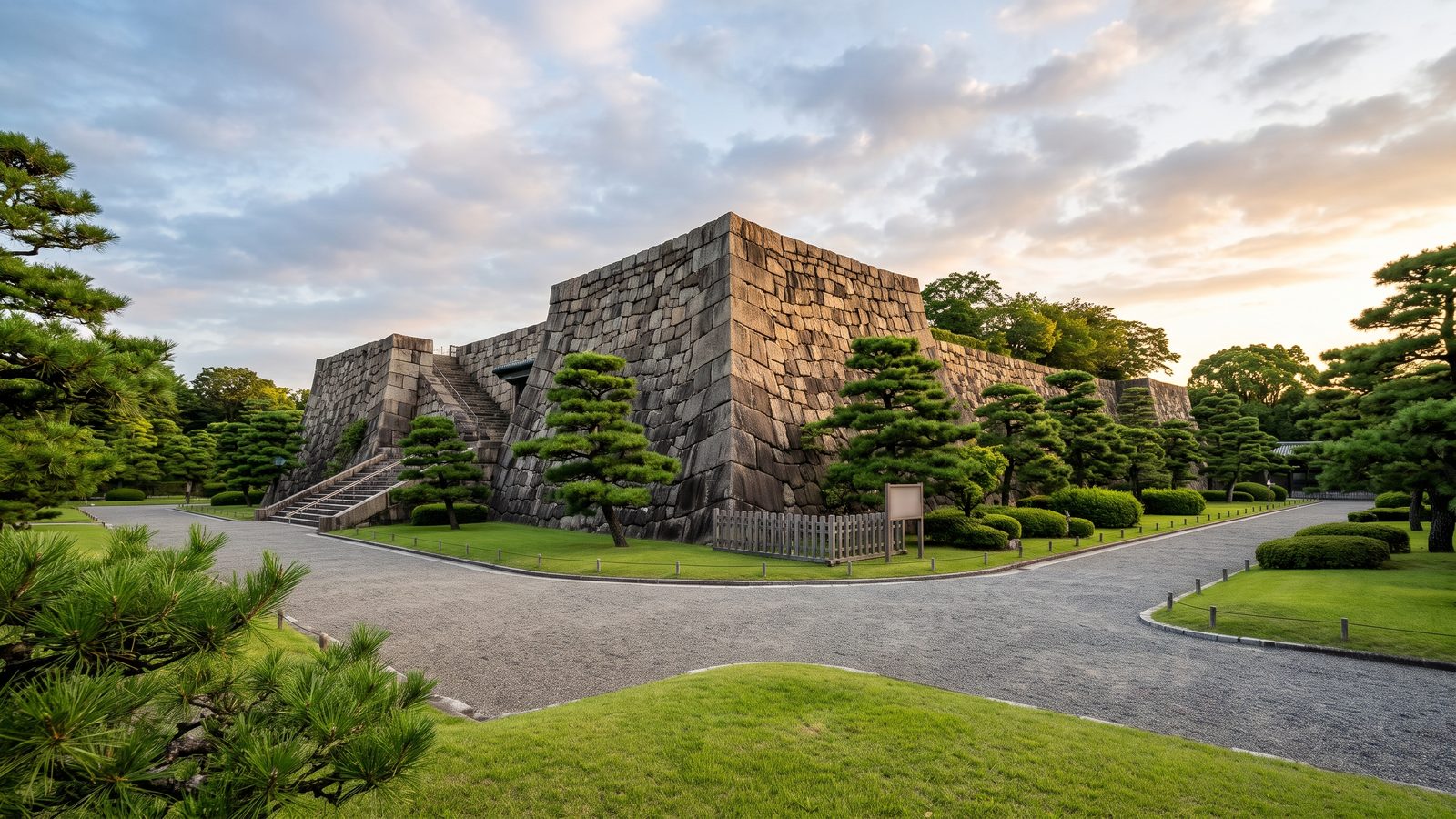
Step onto the historic grounds of the Imperial Palace East Gardens, the former heart of Edo Castle and seat of the Tokugawa Shogunate. On this self-guided audio tour, you will explore colossal stone foundations, historic watchtowers, and serene traditional gardens. Wander through centuries of samurai legacy and imperial history tucked inside modern Tokyo, discovering monumental stone architecture and tranquil landscapes designed for quiet contemplation.
As you stroll along winding pathways and peaceful ponds, the audio narration highlights the architectural marvels, cultural traditions, and natural symbolism that make these gardens unique. Feel the atmosphere of old Japan while tracing the footsteps of shoguns and emperors who governed the nation from these monumental grounds.
Listen to a sample
The opening of this tour, exactly as AllTours narrates it on site.
What you'll hear on this tour
Stop 1. The Engineering of Edo Fortress Walls
You stand before the monumental ishigaki stone walls, a seventeenth-century engineering marvel crafted without mortar. As you gaze at these massive, precisely fitted blocks, you appreciate the immense defensive strength built to protect Edo Castle. Nearby rises the Tenshudai, the colossal stone foundation that once supported the fortress's grand main keep, its sheer scale revealing the power of the shogunate. Look across the grounds to admire the Fujimi-yagura, an elegant, multi-tiered watchtower that exemplifies sophisticated Edo fortress architecture. These imposing stone structures and refined defense towers offer a striking look at the master builders who shaped feudal Japan's greatest stronghold.
Stop 2. Serene Masterpieces of the Ninomaru Garden
You step into the Ninomaru Garden, where Edo-period design transforms nature into a serene sanctuary. Once the castle's second circle of defense, this tranquil haven now features a calm pond framed by artfully arranged stones, reflecting the refined taste of the shoguns. You observe carefully pruned trees shaped through traditional niwaki techniques, creating miniature landscapes that encourage deep reflection. As you stroll past seasonal blooms and quiet waters, you experience a harmonious landscape crafted for quiet contemplation. Every carefully placed rock and manicured branch tells a story of enduring design, converting a historic defense compound into an inviting, peaceful respite within modern Tokyo.
Stop 3. Heart of the Tokugawa Shogunate
You walk across ground steeped in centuries of political power. Built by Tokugawa Ieyasu in the seventeenth century, Edo Castle served as the ruling seat of the Tokugawa Shogunate for more than two hundred and fifty years. After the Meiji Restoration, the Emperor moved to this site, marking a dramatic shift in Japanese history. Although devastating fires eventually destroyed the grand main keep, the massive stone foundation, known as the Tenshu-dai, remains intact beneath your feet. Standing beside these ancient stones, you feel the profound legacy of shoguns and emperors who governed Japan from this very fortress.
Stop 4. Sacred Pines and Living Ecosystems
You find yourself surrounded by a living tapestry where natural elements are deeply revered and artistically sculpted. Ancient matsu pine trees, carefully trained over centuries, stretch their gnarled branches across the landscape, symbolizing imperial longevity and resilient strength. Below, water fed by historic castle moats fills tranquil ponds where colorful carp glide smoothly beneath the surface. As you wander past moss-covered stones and precisely arranged shrubs, every visual element guides your gaze toward peaceful reflection. This carefully maintained ecosystem connects historical fortress design with a serene natural environment, offering you an intimate look at traditional Japanese landscape aesthetics.
Stop 5. Warrior Spirit and Imperial Traditions
You sense a profound reverence for the Imperial family embedded within every corner of these grounds. The subtle elegance of the garden design honors the principles of wabi-sabi, a cultural philosophy celebrating impermanence, simplicity, and transient beauty. As you walk alongside towering stone walls, you tread the exact routes where samurai once stood guard. Their unwavering loyalty and warrior spirit, guided by the code of bushido, still echo through these ancient stones. This sacred landscape offers you a rare window into the deep-seated cultural traditions and warrior ethics that profoundly shaped the identity of historic and modern Japan.
Stop 6. Contemplative Paths of Emperors and Shoguns
You trace the footsteps of historic rulers as you walk along compacted earth paths that once bore imperial processionals. The deliberately winding routes guide your gaze across ancient stone walls, historic watchtowers, and meticulously pruned pine trees. Designed to slow your steps, each turn presents a fresh visual perspective and a subtle shift in the garden's narrative. As you move through this peaceful landscape at a contemplative pace, the noise of the surrounding city fades away. You absorb the quiet tranquility of a space engineered over centuries to inspire reflection, connect with history, and reveal subtle natural beauty.
Planning your visit
- Best time to go
- Morning on a weekday to avoid crowds, or during spring and autumn for vibrant foliage.
- Approximate duration
- about 1.5 to 2 hours
- Where to start
- Ote-mon Gate (main entrance to the Imperial Palace East Gardens)
Access and conditions change seasonally — check the official site before you go.
Frequently asked questions
Is Imperial Palace East Gardens worth visiting?
Yes, the East Gardens offer a captivating look at Japan's history, featuring massive Edo Castle stone foundations, historic watchtowers, and the serene Ninomaru Garden.
How long do you need at Imperial Palace East Gardens?
Most visitors spend between 1.5 and 2 hours exploring the expansive grounds, historic stone walls, keep foundation, and traditional gardens at a relaxed pace.
What is the historical significance of Edo Castle in the East Gardens?
Edo Castle was built by Tokugawa Ieyasu in the 17th century and served as the seat of the Tokugawa Shogunate for over 250 years before becoming the Imperial residence.
Keep exploring
Header image is an AI-generated illustration of Imperial Palace East Gardens. AllTours.ai is an AI audio tour guide — point your camera at any landmark and hear its story.