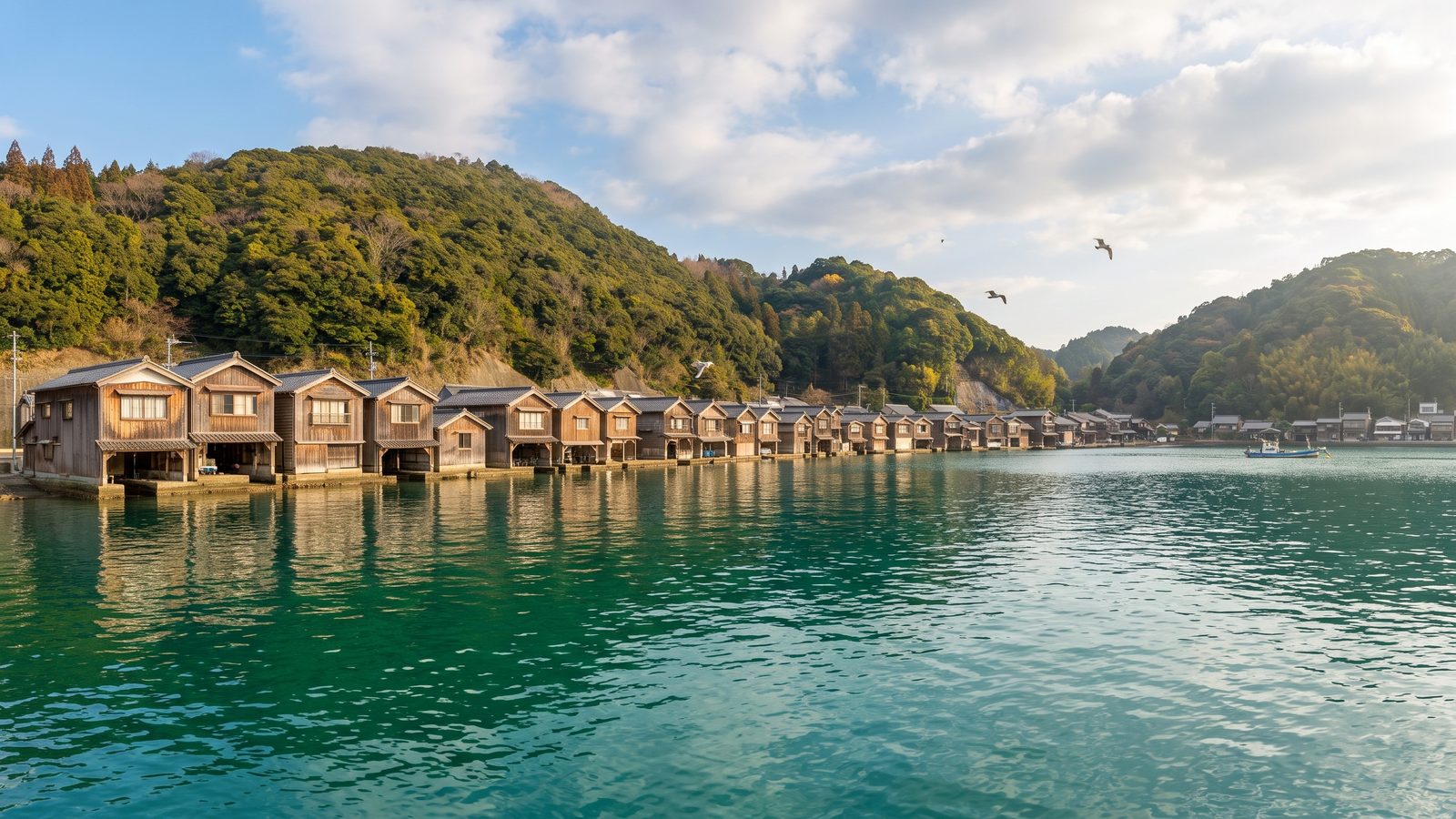
Nestled along the sheltered bay of the Tango Peninsula, Ine offers a serene glance into traditional maritime Japan. Famous for its funaya—traditional wooden boathouses built directly over the water—this designated preservation district showcases over 1,700 years of living history. As you explore the quiet, winding lanes and tranquil shoreline, you will discover how generations of local fishing families have built a life in complete harmony with the sea.
With this self-guided audio tour, you can wander at your own pace along the U-shaped bay. Listen to stories of unique architecture, sustainable fishing traditions, and coastal life as you soak in the calm emerald waters, weathered timber facades, and timeless atmosphere of this remarkable floating village.
Listen to a sample
The opening of this tour, exactly as AllTours narrates it on site.
What you'll hear on this tour
Stop 1. Amphibious Homes Over the Bay
As you stand before these remarkable funaya, you witness a masterclass in coastal architecture. Each wooden structure functions as an ingenious two-story home built directly above the tide. On the water level, an open garage dock allows local fishermen to moor their boats straight beneath their living quarters for immediate, tide-independent access to the bay. Above this aquatic harbor, family living spaces stay dry and safe from lapping waves. Built from robust local cypress and cedar using ancient shipbuilding techniques, these buildings withstand relentless marine elements. You see sliding doors facing the bay, reflecting a profound symbiosis where the water itself forms the foundation of everyday life.
Stop 2. Emerald Waters and Mirrored Facades
Gaze across Ine Bay and observe how human ingenuity blends seamlessly with nature. The funaya do not simply sit by the water; they emerge directly from it, creating an amphibious shoreline that defines this peaceful landscape. The calm, emerald surface acts as a mirror, reflecting weathered wooden facades and lush, green hills behind them. As clouds shift above, vibrant fishing boats gently bob against muted traditional timber, adding subtle color to the serene tableau. Your eyes follow the gentle curve of the bay along an unbroken line of historic boathouses. This breathtaking view invites you to slow down and breathe in the tranquil rhythm of coastal living.
Stop 3. The Heartbeat of the Bay
Look closely at the boathouses and you will spot coiled ropes, mended nets, and traps stored on lower decks. Here, fishing is not just a trade; it is the heartbeat of daily existence. Fishermen employ sustainable methods like longline fishing and gillnetting, a tradition passed down across generations. Depending on the season, they seek prized yellowtail during winter, squid in spring, and sea bream throughout the year. You can imagine early morning departures as engines hum softly and boats slide directly from lower garages into the bay. The daily catch moves quickly from deck to processing, maintaining a timeless rhythm dictated by ocean tides.
Stop 4. A Natural Cradle for Funaya
Sweep your gaze across the U-shaped indentation of the Tango Peninsula. This dramatic natural harbor shields the bay from the tempestuous Sea of Japan, creating the ideal conditions for funaya architecture to thrive. Calm, shallow waters lap against the lower levels of boathouses, allowing vessels to glide effortlessly into their ground-floor berths. Local wisdom speaks of coastal currents that naturally draw rich marine life into these sheltered waters, providing a constant source of livelihood. As you peer into the clear harbor, you can often spot vibrant marine life swimming beneath the surface, revealing a thriving ecosystem cradled within this protected bay.
Stop 5. A Living Tapestry of Sea Life
As you observe these wooden dwellings, you glimpse a living cultural tapestry centered on the ocean. Life here revolves around the lapping waves, where the day's fresh catch comes straight into the lower level for processing, making seafood an everyday staple prepared with generations of culinary knowledge. You notice the subtle markers of a close community bound by mutual cooperation, where neighbors help repair boats and share ancestral fishing wisdom. This is not a frozen relic of the past, but an active, evolving lifestyle where elder fishermen teach youth to respect the sea, ensuring the resilient soul of Ine endures for centuries to come.
Stop 6. Ancient Lanes Behind the Harbor
Step back from the waterfront to explore the winding lanes of Ine village. These narrow pathways, etched into the hillsides for over 1,700 years, connect uphill residences with the bustling bay below. Walking through these alleys, you see sturdy wooden homes built with elevated foundations to withstand harsh coastal weather. Small, weathered shrines nestle between houses, standing as silent guardians for departing fishermen. These streets hold generations of personal history—from families reuniting after a day at sea to community gatherings during annual fishing festivals. The inland village showcases an enduring resilience, keeping local heritage firmly grounded on land.
Planning your visit
- Best time to go
- Early morning or late afternoon for calm waters, quiet streets, and soft light reflecting off the bay.
- Approximate duration
- About 1 to 2 hours
- Where to start
- Begin near the main Ine Bay waterfront promenade to view the line of funaya along the shoreline.
Access and conditions change seasonally — check the official site before you go.
Frequently asked questions
Is Ine Boathouses worth visiting?
Yes, Ine Boathouses offers a rare view of a traditional Japanese fishing village where historic funaya boathouses sit directly over calm bay waters, creating a unique coastal landscape.
How long do you need at Ine Boathouses?
Most visitors spend about 1 to 2 hours walking along the bay promenade, admiring the unique architecture, and taking in the peaceful harbor views.
What is the history of Ine Boathouses?
Ine's fishing community dates back over 1,700 years. The funaya boathouses were ingeniously built with boat garages on the water level and living quarters above to give fishermen immediate access to the sea.
Keep exploring
Header image is an AI-generated illustration of Ine Boathouses. AllTours.ai is an AI audio tour guide — point your camera at any landmark and hear its story.