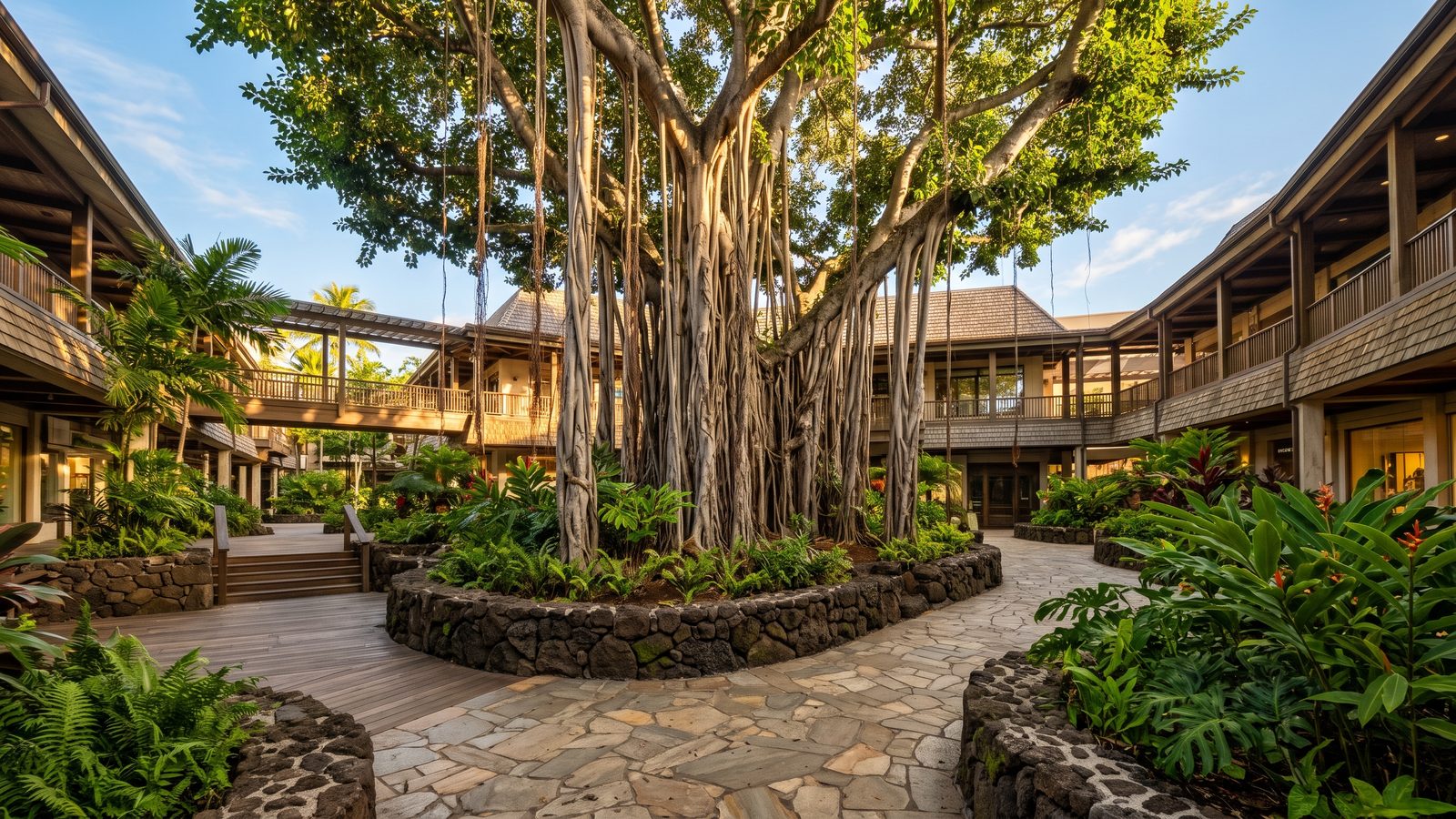
Step into an open-air sanctuary in the heart of Waikiki where rich Hawaiian heritage blends with modern elegance. Once part of Queen Emma’s royal estate and later transformed by Donn Beach into a mid-century tiki paradise, International Market Place centers around a majestic, centuries-old Banyan tree. As you wander through lush pathways and curving corridors, you will discover a vibrant gathering space filled with culture, local craftsmanship, and world-class dining.
This self-guided audio tour leads you through the marketplace's architectural secrets, royal historical roots, and enduring cultural traditions. Learn about the legacy of Hawaiian royalty, admire indigenous design elements like lava rock cladding, and experience the living spirit of aloha that anchors this iconic Honolulu destination.
What you'll hear on this tour
Stop 1. From Royal Estates to Tiki Paradise
You stand on land that was once part of the vast royal estate of Princess Bernice Pauahi Bishop and Queen Emma. Long before any shops arrived, Hawaiian royalty gathered on these sacred grounds. In 1957, tiki culture pioneer Donn Beach leased the property to create his dream Polynesian village, complete with his world-famous 'Don the Beachcomber' restaurant and tropical cocktails. As you explore, notice how the 2016 redevelopment preserved this rich heritage by designing the modern center around the ancient Banyan tree. You walk across layers of history, traveling from sacred royal grounds to a mid-century cultural phenomenon, all reimagined to honor its Hawaiian roots.
Stop 2. Designing Around a Living Canopy
Look closely at the surrounding structures and notice how every building curves respectfully around the ancient Banyan tree. Designers used warm koa wood accents, rugged lava rock cladding, and subtle coral stone to anchor the complex to the island's geology. Above you, terraced rooflines step back to echo Hawaii's volcanic landscape while opening up ocean and city views. The open-air design functions as a natural passive cooling system, using louvered elements and trade winds to keep you comfortable. As you follow the curvilinear pathways, you experience a space thoughtfully crafted to evoke the winding trails of a traditional Hawaiian village rather than a rigid urban grid.
Stop 3. Preserving Mana and Ancient Traditions
As you wander through the central courtyard, you feel the spiritual energy, or mana, of the ancient Banyan tree. This living monument once served as a sacred gathering spot for both aliʻi royalty and commoners, its sprawling roots connecting deeply to the land. Listen for the rhythms of daily hula performances, where dancers share ancient legends and ancestral chants through expressive movement. Around you, master artisans craft intricate wood carvings and woven lauhala, keeping traditions passed down by elders alive. Every open space and handcrafted piece honors cultural heritage, welcoming you to share in the enduring spirit of aloha that defines this historic gathering place.
Stop 4. Culinary Journeys Under the Canopy
As delicious aromas drift through the warm air, you find yourself surrounded by an extraordinary dining scene. You can choose to sit directly under the banyan tree at Eating House 1849 by Roy Yamaguchi, where plantation-era flavors are reimagined with fresh, local ingredients. Alternatively, head up to the rooftop terrace to visit Stripsteak Waikiki, pairing a gourmet meal with breathtaking city and ocean views. From artisanal poke bowls made with fresh catches to fusion menus celebrating sustainable island produce, every restaurant tells a delicious story. You are invited to savor modern Hawaiian gastronomy in setting options ranging from lively open-air cafes to sophisticated retreats.
Stop 5. A Curated Blend of Luxury and Craft
You stroll along breezy, shaded walkways where international luxury meets local creativity. Global flagship destinations like Saks Fifth Avenue offer exclusive resort wear and high fashion, while nestled nearby, local boutiques display handcrafted koa wood jewelry and contemporary aloha wear. As you browse, you discover that shopping here is an immersive exploration rather than a simple transaction. Every turn presents a chance to find a one-of-a-kind treasure, whether it is a vibrant print dress or a delicate handcrafted shell piece. This seamless mix of global sophistication and authentic island artistry allows you to take home a tangible memory of Waikiki.
Stop 6. Tangible Treasures of Hawaiian Heritage
Look through the marketplace stalls to find keepsake items steeped in island history. You can admire hand-carved bowls made from native koa wood, a precious material historically reserved for royalty and canoes. Examine intricate lauhala hats woven from hala leaves, an art form passed down by generations of women. You will also see classic aloha shirts, born in the 1930s as a fusion of Japanese kimono fabrics and Western tailoring. From ocean-tumbled puka shell necklaces to rich, locally grown Kona coffee nourished by volcanic soil, each souvenir offers you an authentic connection to Hawaii's rich culture and natural beauty.
Planning your visit
- Best time to go
- Late afternoon to early evening for cooler trade breezes, golden lighting, and live hula performances.
- Approximate duration
- about 1 to 2 hours
- Where to start
- The main entrance at Kalākaua Avenue, near the historic Banyan tree courtyard.
Access and conditions change seasonally — check the official site before you go.
Frequently asked questions
Is International Market Place worth visiting?
Yes, International Market Place is well worth visiting for its unique combination of royal Hawaiian history, iconic architecture centered around a massive centuries-old banyan tree, open-air dining, and curated retail.
How long do you need at International Market Place?
Most visitors spend between 1 and 2 hours exploring the open-air pathways, admiring the central banyan tree, and browsing shops, or up to half a day if enjoying a meal on the rooftop dining deck.
What is the history of the International Market Place?
The site was originally royal land belonging to Queen Emma and Princess Bernice Pauahi Bishop. In 1957, Donn Beach created a famous Polynesian tiki village here, which was redeveloped in 2016 around its historic banyan tree.
Keep exploring
Header image is an AI-generated illustration of International Market Place. AllTours.ai is an AI audio tour guide — point your camera at any landmark and hear its story.