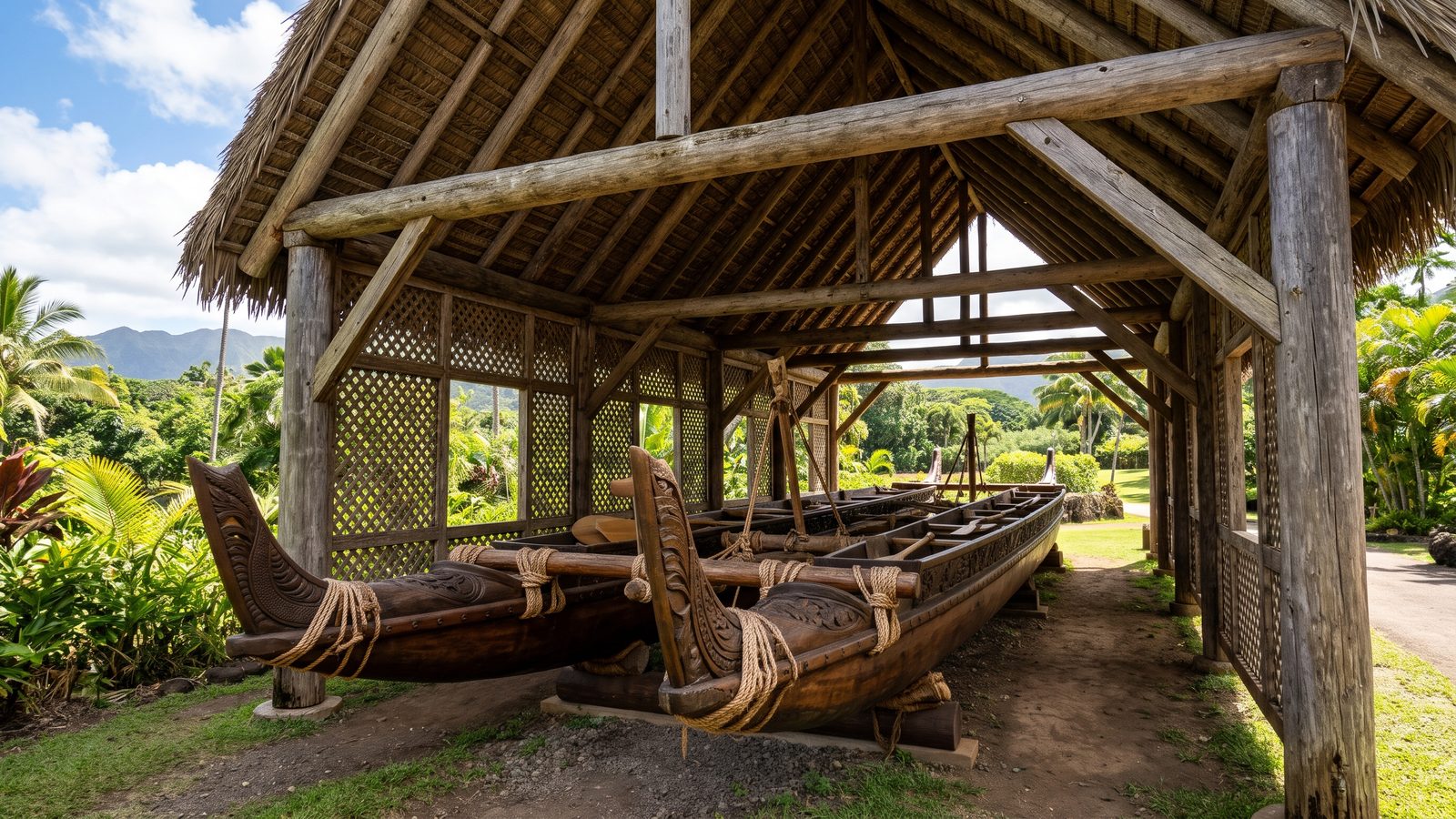
Welcome to the Iosepa Canoe House at the Polynesian Cultural Center in Laie, Hawaii. As you step beneath the massive wooden roof, you enter a sanctuary dedicated to the legendary voyagers of the Pacific. This living monument connects you directly to the Great Migration, honoring the ancient navigators who crossed thousands of miles of open ocean using only stars, wind, and profound oceanic wisdom to settle these islands.
Look around at the incredible craft of traditional boatbuilding, from lashed timbers to intricate ancestral carvings. As you explore this sacred space, you will discover how sacred traditions, communal labor, and deep artistic heritage keep the soul of Polynesian seafaring alive today.
What you'll hear on this tour
Stop 1. The Heart of Polynesian Ocean Migration
Stand before this magnificent traditional vessel and feel the legacy of open-ocean exploration. You are looking at a canoe carved from massive single logs using ancient techniques, designed to navigate unpredictable ocean swells across thousands of miles. Notice the elegant curve of the wooden hull, engineered for both speed and stability. Observe the outrigger, a brilliant feature of Polynesian engineering that provides crucial balance against ocean currents. Generations of master navigators relied on craft like this, reading the stars, wave patterns, and bird flights to discover new lands. This canoe preserves that seafaring spirit, reminding you of the profound bond connecting these islands to the sea.
Stop 2. Engineering Built for Island Elements
Look up at the distinctive, steeply pitched roofline towering above you. You see a design built specifically to shed heavy tropical rainstorms and protect the precious voyaging canoes underneath. Notice that no metal nails or modern fasteners hold this structure together; instead, master builders used intricate, robust lashing techniques alongside sturdy timbers and woven pandanus leaves. This open-air shelter features wide, generous eaves that invite natural breezes inside, keeping the interior cool and ventilated on warm Hawaiian days. As you walk through the house, you observe an architectural tradition perfectly tuned to local resources and the surrounding environment.
Stop 3. Visual Stories Etched in Sacred Timber
Examine the detailed carvings decorating the supporting wooden beams around you. These motifs are not mere ornament; they serve as a visual language communicating spiritual beliefs, protective spirits, lineaged stories, and stylized ocean waves. Look at the intricate geometric patterns on the woven tapa cloth wall hangings, created using natural dyes like turmeric and pandanus leaves. These designs reflect a sophisticated aesthetic that mirrors the textures of tree bark and flowing water. Even the orientation and proportions of this house express a deep artistic sensibility aligned with the natural world and the cosmos, preserving ancestral knowledge in every structural detail.
Stop 4. Communal Identity and Sacred Ocean Ties
Step closer to the canoe and witness the core of Polynesian identity. Notice the detailed carvings along the vessel, where each carved symbol tells a story of lineage and honors the ancestral spirits who guided ocean voyages. The traditional lashing of the timbers highlights generations of inherited knowledge and deep reverence for natural materials. Building a vessel like this was never a solitary task; it was a sacred communal effort that forged tight social bonds and shared purpose. As you explore this space, you experience a living testament to humanity's sacred relationship with the sea and the power of collective tradition.
Stop 5. Masterful Hands and Natural Materials
Marvel at the aerodynamic sail suspended above you, painstakingly woven strand by strand from resilient pandanus leaves. Master craftspeople selected and interlaced each leaf to withstand powerful ocean winds without tearing. Consider the traditional tools required to shape the dense wooden hull—sharpened sea shells and dense volcanic rock wielded with incredible precision and patience. Look at the sturdy ropes binding the structure together, crafted entirely from braided coconut husk fibers. Every element around you demonstrates zero waste and a profound, ingenious understanding of local plant fibers and stone tools handed down through generations.
Stop 6. A Living Monument to Great Migrations
Stand in awe before this living monument connecting you directly to the Great Migration. Imagine the immense courage of Polynesian voyagers who set sail across thousands of miles of ocean, bringing their families, food, and cultural heritage to populate Pacific islands. Driven by exploration and necessity, these ancestors navigated uncharted waters without modern instruments, relying entirely on celestial navigation and ocean wisdom. This canoe house honors those epic ocean crossings, celebrating the ingenuity and resilience that allowed island cultures to thrive. You are standing in a tangible link to that extraordinary seafaring past.
Planning your visit
- Best time to go
- Daytime hours during Polynesian Cultural Center operations when bright sunlight illuminates the open-air structure and detailed carvings.
- Approximate duration
- About 30 to 45 minutes
- Where to start
- At the front exterior entrance of the Iosepa Canoe House structure.
Access and conditions change seasonally — check the official site before you go.
Frequently asked questions
Is Iosepa Canoe House worth visiting?
Yes, it is a highlight of the Polynesian Cultural Center, offering visitors an authentic look at traditional Polynesian voyaging canoes, intricate wood carvings, and ancient Pacific maritime engineering.
How long do you need at Iosepa Canoe House?
Most visitors spend around 30 to 45 minutes exploring the open-air canoe house, observing the voyaging canoe, intricate fiber lashings, woven sails, and carved structural beams.
What is the historical significance of the Iosepa canoe?
The Iosepa represents the Great Migration, honoring Polynesian ancestors who courageously navigated thousands of miles across the Pacific Ocean using stars, ocean currents, and deep seafaring knowledge to settle island communities.
Keep exploring
Header image is an AI-generated illustration of Iosepa Canoe House. AllTours.ai is an AI audio tour guide — point your camera at any landmark and hear its story.