Welcome to the Japanese Garden at The Huntington, a living masterpiece of traditional landscape design first opened in 1912. Commissioned by Henry E. Huntington in 1903, this sanctuary stands as one of America's oldest and most authentic Japanese gardens. As you stroll past ancient sculpted pines, an authentic 1904 Japanese house, and shimmering koi ponds, you step into a tranquil world crafted to inspire reflection, harmony, and deep appreciation for nature.
This self-guided audio tour leads you through carefully arranged rocks, flowing waters, and raked gravel gardens. You will uncover how Zen Buddhist principles, time-honored carpentry, and the aesthetic of wabi-sabi transform a landscape into an immersive journey of spiritual calm, right in the heart of San Marino.
Listen to a sample
The opening of this tour, exactly as AllTours narrates it on site.
What you'll hear on this tour
Stop 1. Crossing the Vermillion Moon Bridge
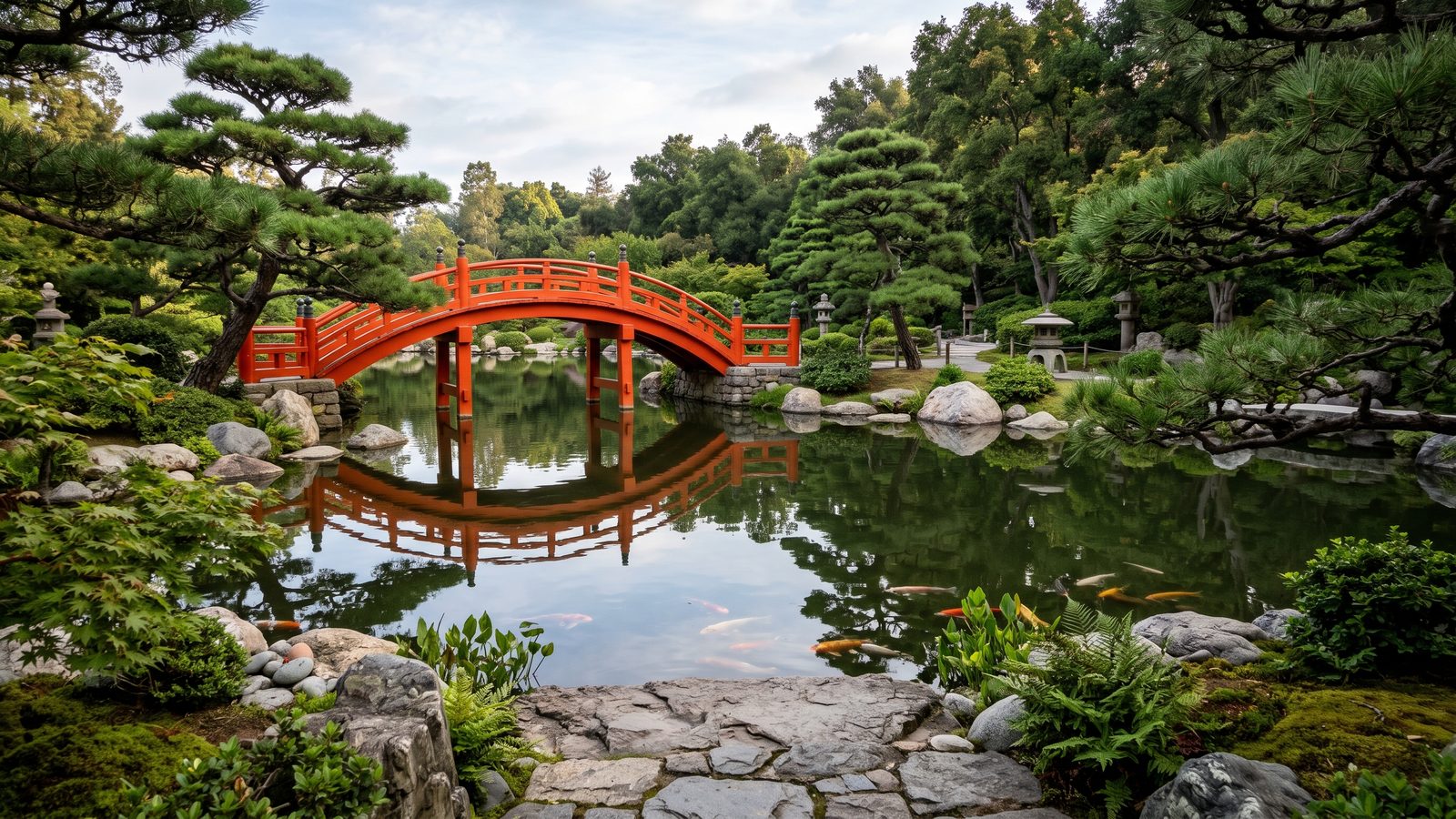
You feel a slight ascent as you step onto the iconic vermillion bridge, a traditional taiko-bashi or drum bridge. Dating back to the garden's 1912 opening, its vibrant red hue traditionally symbolizes good fortune and wards off evil forces, creating a striking focal point above the water. As you reach the crest of this graceful arch, built with traditional Japanese carpentry techniques, you look down at the shimmering koi pond and precisely placed stones below. This elevation gives you an unparalleled vantage point to pause, breathe, and experience a symbolic passage over the tranquil waters into pure, quiet reflection.
Stop 2. The Visionary Origins of 1903
You stand in a landscape whose profound history begins in 1903, when Henry E. Huntington, captivated by Japanese aesthetics, commissioned its creation. As one of America's earliest and most authentic Japanese gardens, it serves as a testament to his pioneering vision. You observe the iconic Moon Bridge, which dates to that inaugural era and reflects its original design. Nearby, the traditional Japanese house—built in 1904 and later relocated—anchors the garden's serene character. Every step you take connects you with over a century of preserved heritage, reflecting early 20th-century craftsmanship and an enduring reverence for traditional Japanese art.
Stop 3. Zen Principles and Wabi-Sabi Aesthetics
As you wander through the garden, you experience a profound cultural reverence for nature deeply rooted in Zen Buddhist principles. You notice meticulously placed stones and precisely pruned pine branches, each embodying the philosophy of wabi-sabi—the quiet appreciation of imperfection and transience. Nothing here is random; every element forms a deliberate arrangement that reflects a spiritual journey. As your eyes take in these subtle details, the landscape invites you to find inner tranquility and contemplate the interconnectedness of all things, guiding your mind toward the core tenets of Japanese aesthetic philosophy and peaceful self-reflection.
Stop 4. Meticulously Sculpted Elements of Nature
In this garden, you witness nature meticulously sculpted rather than simply grown. You look closely at the ancient pines, their branches artfully wired and pruned over decades to mimic windswept mountainsides, embodying resilience and strength. Beside them, carefully placed rocks represent distant islands or towering mountain peaks, grounding the gentle streams of flowing water that symbolize life's continuous journey. Beneath your feet, lush carpets of verdant moss evoke ancient, shadowy forests. Every carefully controlled plant, stone, and stream invites you to slow your pace, gaze thoughtfully, and connect with a sculpted world designed for quiet contemplation.
Stop 5. Living Artwork and Zen Gravel Patterns
Stepping deeper into the landscape, you are enveloped by a living artwork designed in the early 20th century to evoke deep tranquility. You gaze upon the Moon Bridge arching over the peaceful koi pond, inviting you to leave everyday distractions behind. Around you, pines shaped through the traditional Japanese art of niwaki demonstrate decades of careful cultivation. Nearby, the serene Zen Garden reveals raked gravel patterns that evoke the oceanic ebb and flow of tides. As you take in these harmonious elements, the garden encourages profound contemplation, wrapping you in a crafted sanctuary of balance and restraint.
Stop 6. The Calibrated Soundscape of Cascading Water
To truly relax here, you embrace the garden's deliberate, unhurried pacing. You listen to the gentle murmur of the waterfall, realizing it is not mere background noise, but a carefully calibrated soundscape engineered to quiet your inner thoughts. You notice subtle asymmetry in every placed stone and pruned tree, mirroring nature's unforced harmony rather than rigid human geometry. As your gaze drifts across the landscape, your mind settles into ease. This meticulously crafted environment invites your spirit to find its natural rhythm, offering a profound sense of peace and rest as you linger in the quiet.
Planning your visit
- Best time to go
- Morning or late afternoon for quiet reflection and soft light.
- Approximate duration
- about 1 hour
- Where to start
- Begin at the primary entrance path leading toward the Moon Bridge overlooking the koi pond.
Access and conditions change seasonally — check the official site before you go.
Frequently asked questions
Is Japanese Garden at The Huntington worth visiting?
Yes, it is one of America's oldest, most authentic Japanese gardens, featuring a historic 1904 Japanese House, an iconic vermillion Moon Bridge, and meticulously manicured niwaki pines.
How long do you need at Japanese Garden at The Huntington?
Most visitors spend 45 to 60 minutes exploring the Moon Bridge, koi pond, Zen garden, and surrounding traditional paths at a relaxed pace.
What is the history of the Japanese Garden at The Huntington?
Commissioned by Henry E. Huntington in 1903 and opened in 1912, the garden was designed as an authentic Japanese landscape featuring historic structures like a 1904 Japanese house and the iconic Moon Bridge.
Keep exploring
Header image is an AI-generated illustration of Japanese Garden at The Huntington. AllTours.ai is an AI audio tour guide — point your camera at any landmark and hear its story.