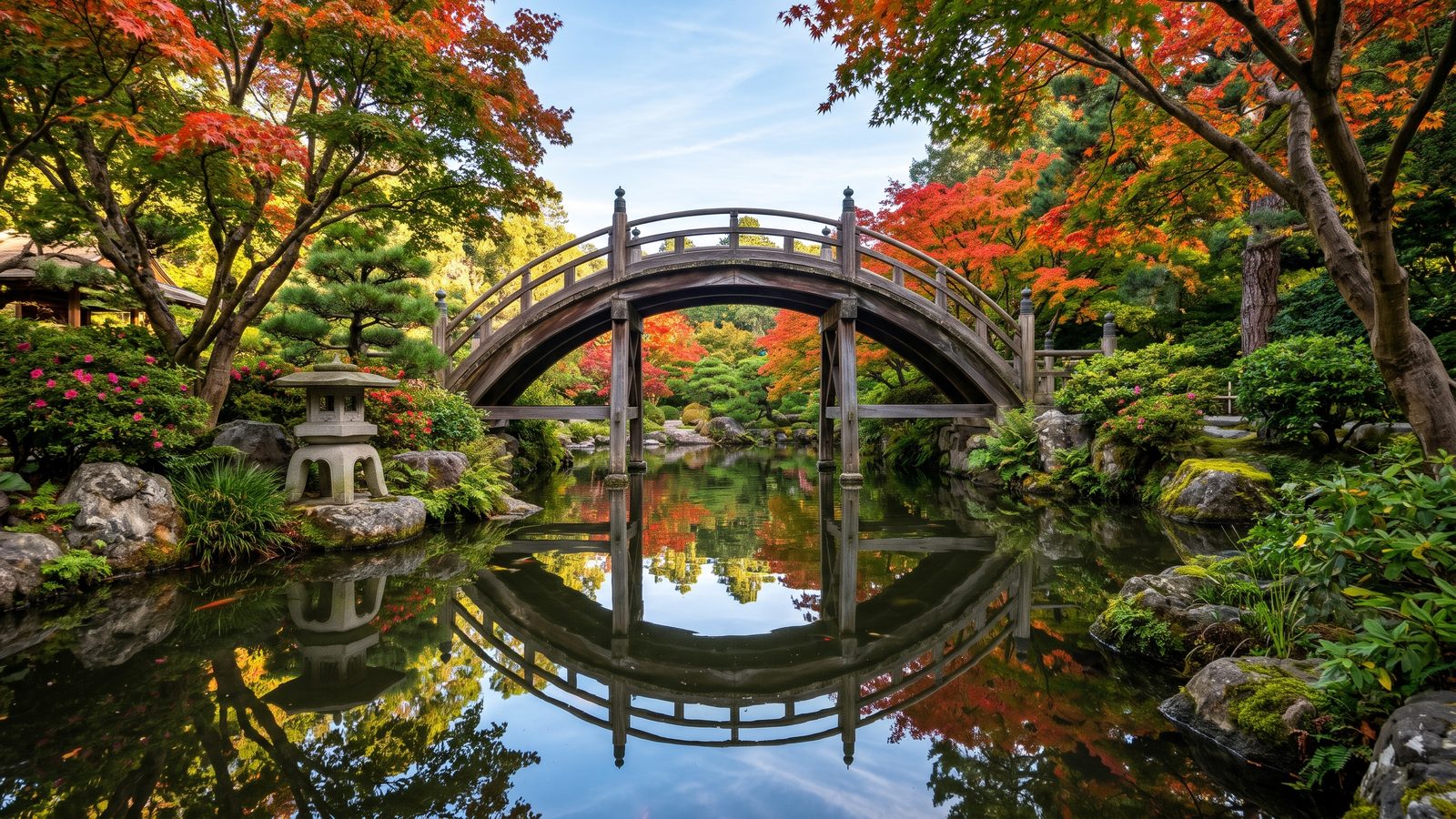
Welcome to the Japanese Tea Garden, an enchanting oasis nestled inside Golden Gate Park. Originally conceived for the 1894 Midwinter International Exposition, this historic site stands as the oldest public Japanese garden in the United States. As you explore its peaceful paths, you will discover traditional architecture, meticulous landscaping, and quiet tea rooms that transport you straight into authentic Japanese culture and timeless Zen philosophy.
From its iconic wooden structures to serene koi ponds, every element here offers a moment of reflection. Whether you are climbing the famed Drum Bridge or sipping ceremonial green tea, this self-guided tour leads you through a living masterpiece designed for tranquility, mindfulness, and deep connection with nature.
Listen to a sample
The opening of this tour, exactly as AllTours narrates it on site.
What you'll hear on this tour
Stop 1. Ascending the Iconic Drum Bridge
As you gaze up at the iconic Drum Bridge, you notice its steep, graceful wooden arch designed to evoke the curve of a full moon reflecting on the water below. Climbing its challenging steps is more than just crossing a tranquil pond; you are symbolically ascending to a higher plane of enlightenment. With each deliberate step up the wooden slats, your view expands, revealing new, breathtaking perspectives of the surrounding garden's intricate design. Once you reach the apex, you can pause to take in the serene harmony between water, stone, and meticulously shaped foliage stretched out beneath your feet.
Stop 2. The Way of Tea at the Tea House
Step closer to the historic Tea House, where the very essence of chado, or the Way of Tea, permeates the quiet air. You are experiencing a sacred tradition deeply rooted in Zen Buddhism, originally used by meditating monks to maintain focus and mental clarity. The matcha or sencha served here embodies centuries of careful cultivation, offering a complex umami flavor profile unique to traditional Japanese green tea. As you take a mindful sip, you connect directly to a profound ritual of harmony, purity, and respect—a living art form perfected over generations and preserved in this peaceful sanctuary.
Stop 3. Roots of the Midwinter Village
You trace the origins of this garden back to the 1894 California Midwinter International Exposition, where it began as a temporary Japanese Village. Makoto Hagiwara, a passionate Japanese immigrant and landscape architect, convinced city leaders to preserve the space permanently. For decades, the Hagiwara family devoted their lives to cultivating its tranquil paths and delicate flora. However, World War II brought a heartbreaking chapter when the family was unjustly removed and interned, and the garden was temporarily renamed. Today, as you walk these historic grounds, you honor their enduring legacy and unwavering devotion.
Stop 4. Living Sculptures and Ancient Pines
As you stroll along the winding pathways, you notice ancient bonsai trees meticulously trained over generations, each twisted branch sculpting a narrative of resilience. Brilliant bursts of seasonal azaleas bring sudden colors to life, offering a fleeting yet profound expression of natural cycles. All around you, gnarled pine trees—some over a century old—stand as stoic guardians of the landscape. Look closely at how their roots intertwine with carefully placed rocks, designed to mimic towering mountain ranges in miniature, creating a vast and captivating natural world inside this calm urban retreat.
Stop 5. Mindfulness and Wabi-Sabi Aesthetics
Here in the garden, you experience chanoyu, the traditional Japanese tea ceremony, as a deeply meaningful cultural practice rather than a simple ritual. Watch how every deliberate gesture, from preparing vibrant matcha to serving guests, embodies the philosophy of wabi-sabi—finding profound beauty in transience and natural imperfection. As you observe these quiet movements, you feel a deep respect for the environment alongside a pursuit of harmony, purity, and stillness. These core tenets of Zen philosophy foster a rare sense of mindfulness, inviting you to slow down and appreciate the subtle elegance around you.
Stop 6. Borrowed Scenery and Zen Design
Wandering deeper into the landscape, you notice how the garden masterfully employs shakkei, or borrowed scenery, seamlessly integrating the surrounding trees of Golden Gate Park into its overall design. The arched Drum Bridge stands as a powerful symbol of transition, challenging your ascent much like life's obstacles. Everywhere you look, artfully pruned bonsai and weathered stone lanterns whisper timeless tales of Zen philosophy. Every stepping stone and water feature invites quiet contemplation, encouraging you to step away from daily bustle and immerse yourself in an atmosphere of balanced natural art.
Planning your visit
- Best time to go
- Early morning or late afternoon on weekdays for the quietest atmosphere and best photography light.
- Approximate duration
- about 1 hour
- Where to start
- Begin at the main entrance gate inside Golden Gate Park, near Hagiwara Tea Garden Drive.
Access and conditions change seasonally — check the official site before you go.
Frequently asked questions
Is Japanese Tea Garden worth visiting?
Yes, as the oldest public Japanese garden in the United States, it offers stunning traditional architecture, serene koi ponds, historic bonsai, and an authentic Tea House experience inside San Francisco's Golden Gate Park.
How long do you need at Japanese Tea Garden?
Most visitors spend between 45 minutes to 1.5 hours wandering the landscaped paths, taking photographs at the Drum Bridge, and enjoying tea at the traditional Tea House.
Who designed and built the Japanese Tea Garden?
Originally created as a temporary Japanese Village for the 1894 Midwinter Fair, it was preserved and expanded by Japanese landscape architect Makoto Hagiwara and his family, who cared for it for decades.
Keep exploring
Header image is an AI-generated illustration of Japanese Tea Garden. AllTours.ai is an AI audio tour guide — point your camera at any landmark and hear its story.