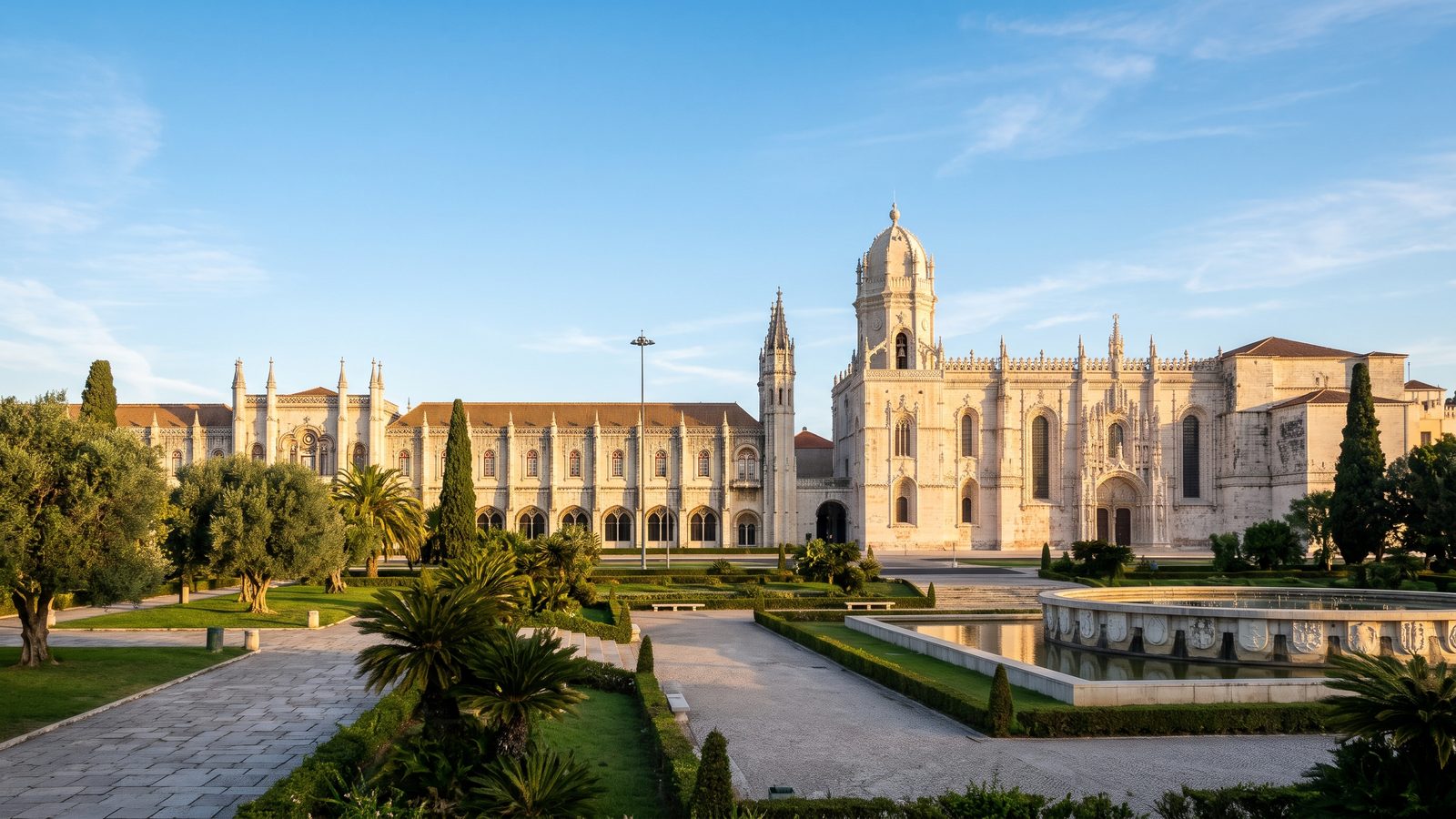
Welcome to Jerónimos Monastery, a triumph of Portugal's Golden Age and Age of Discoveries. Commissioned in 1501 by King Manuel I and funded by the lucrative spice trade, this UNESCO World Heritage site stands where sailors once prayed before setting sail. On this self-guided tour, you will marvel at breathtaking Manueline architecture, step inside serene cloisters, and discover the resting places of historical giants like Vasco da Gama.
Walk through grand vaulted naves supported by palm-like columns and quiet monastic gardens where Hieronymite monks once meditated. Immerse yourself in the rich culture, seafaring history, and enduring spirit of exploration that carved Lisbon’s iconic identity into solid stone.
Listen to a sample
The opening of this tour, exactly as AllTours narrates it on site.
What you'll hear on this tour
Stop 1. Maritime Motifs and Soaring Stone Vaults
As you step into the monastery, notice how the Manueline style weaves maritime life directly into Gothic stonework. Look closely at the main portal to spot King Manuel I’s symbol, the armillary sphere, alongside carved ropes, anchors, and coral. Inside the church, gaze up at the extraordinary single-span vaulted ceiling. Slender octagonal columns fan out overhead like palm fronds, creating a vast, open sanctuary. Moving into the two-story cloister, marvel at how Gothic grandeur meets Renaissance precision. Every arch, balustrade, and pinnacle showcases master stonemasonry, adorned with gargoyles and intricate tracery that capture Portugal's global ambition.
Stop 2. Built on Pepper, Faith, and Discovery
You are standing on ground deeply bound to world history. Long before this monumental complex was built, Henry the Navigator founded a simple hermitage here as a spiritual haven for departing sailors. It was from this very site that Vasco da Gama set sail in 1497 on his historic voyage to India. Upon his triumphant return, King Manuel I commissioned this monastery in 1501, using wealth from the lucrative pepper tax on the spice trade. Built over a century by master architects like Diogo de Boitaca and João de Castilho, the massive structure even survived the catastrophic 1755 earthquake, standing today as a living chronicle of Portugal’s Golden Age.
Stop 3. Inside the Lives of Hieronymite Monks
Step into the vast two-story cloister and feel the quiet serenity that defined monastic life. Built for the Hieronymite monks, every column and carved arch reflects a balance of sacred devotion and maritime pride. As you wander past detailed nautical motifs—ropes, anchors, and mythical sea monsters—picture the monks chanting daily prayers for navigators setting out across treacherous waters. Beyond this central courtyard, picture the solemnity of the Chapter House, where the community gathered to make crucial decisions under grand vaulted ceilings, and imagine silent, introspective meals inside the monastery's Refectory.
Stop 4. The Cultural Soul of Portugal's Explorers
Look around and you will see more than grand architecture; you are witnessing the core of Portuguese cultural identity. The Manueline carvings reflect a nation reaching outward into the unknown world, merging faith with sea exploration. Within these sacred walls lies the tomb of Luís Vaz de Camões, whose epic poem Os Lusíadas immortalized Vasco da Gama's voyage and laid the groundwork for Portuguese literary tradition. Nearby, modern literary icon Fernando Pessoa also finds a symbolic home, bridging centuries of intellectual heritage. As you walk through these halls, you experience an ongoing dialogue between artistic innovation, literature, and maritime exploration.
Stop 5. A Quiet Oasis of Monastic Reflection
Look down into the cloister garden, a serene green sanctuary designed for deep contemplation. Unlike extravagant grand estates, this intimate space offered the Hieronymite monks a tranquil retreat from stone walls. Notice the geometric layout, divided into four quadrants by pathways, subtly symbolizing the four Gospels and the four rivers of Paradise. As you admire the simple roses, fragrant herbs, and medicinal plants once cultivated for monastic self-sufficiency, feel the peaceful atmosphere that still lingers here. This verdant haven provided a living balance to the grand stone arches, inviting you to take a quiet moment for reflection.
Stop 6. A World Heritage Treasure of Universal Value
In 1983, UNESCO recognized Jerónimos Monastery alongside Belém Tower as a World Heritage site of Outstanding Universal Value. This international honor highlights how the complex transcends national history to belong to humanity as a whole. UNESCO selected the monastery for bearing exceptional witness to the Age of Discoveries through its unique Manueline architectural style, where sea motifs capture a golden era of global reach. Furthermore, it directly links to universal literary traditions through Os Lusíadas and the historic voyages celebrated within these walls, ensuring this breathtaking architectural achievement remains preserved for generations to come.
Planning your visit
- Best time to go
- Early morning right at opening or late afternoon to avoid peak crowds and enjoy softer light on the stone facade.
- Approximate duration
- about 1.5 to 2 hours
- Where to start
- Begin at the main entrance portal facing Praça do Império in Belém.
Access and conditions change seasonally — check the official site before you go.
Frequently asked questions
Is Jerónimos Monastery worth visiting?
Yes, Jerónimos Monastery is one of Lisbon's premier sights and a UNESCO World Heritage monument. It features extraordinary Manueline architecture, historic cloisters, and the tombs of figures like Vasco da Gama.
How long do you need at Jerónimos Monastery?
Most visitors spend about 1.5 to 2 hours exploring the church interior, the double-story cloister, and the courtyard gardens.
Why was Jerónimos Monastery built?
King Manuel I commissioned the monastery in 1501 to give thanks for Vasco da Gama's successful voyage to India and to celebrate Portugal's Age of Discoveries, funding it through the lucrative spice trade tax.
Keep exploring
Header image is an AI-generated illustration of Jerónimos Monastery. AllTours.ai is an AI audio tour guide — point your camera at any landmark and hear its story.