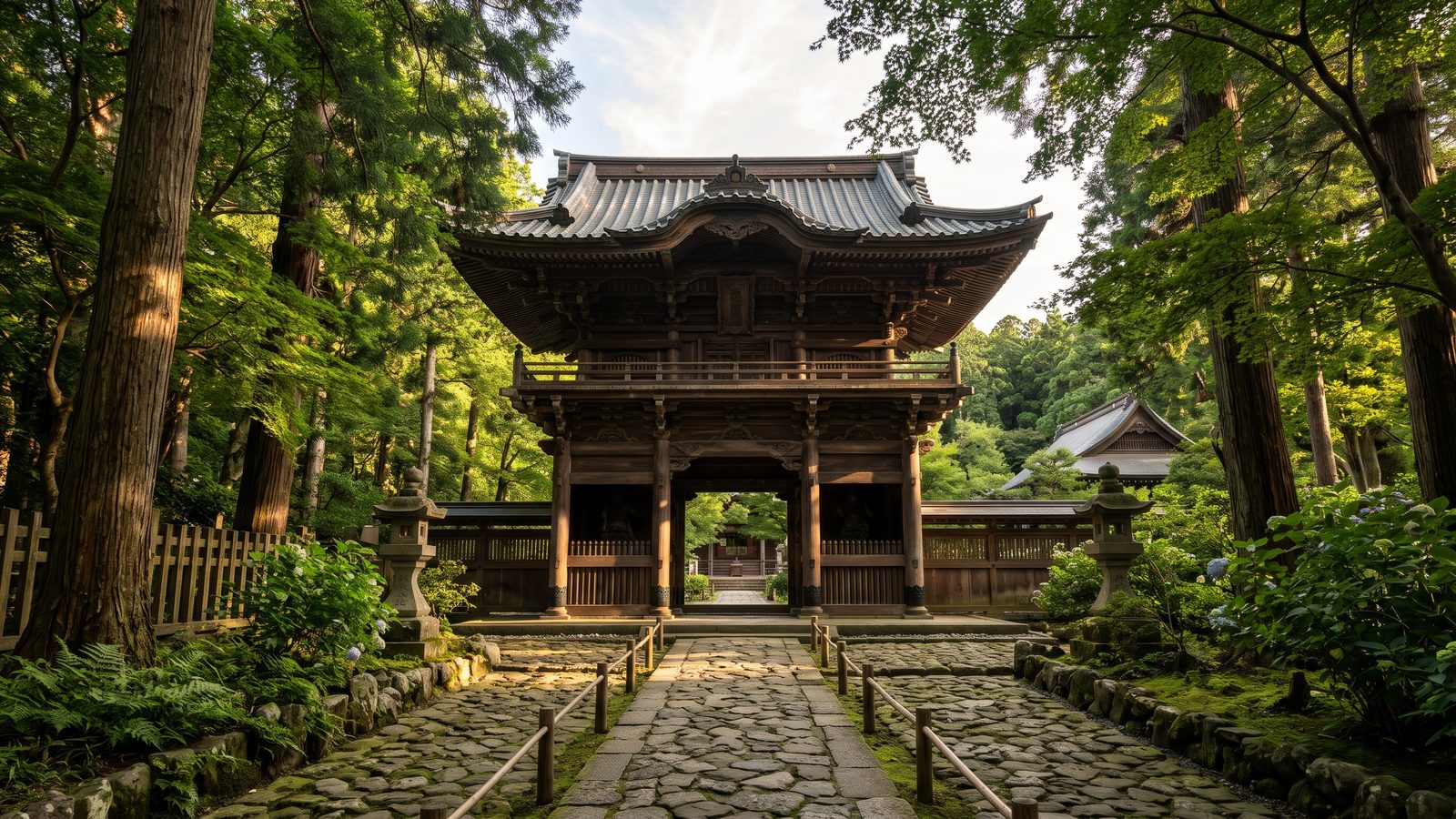
Nestled in Chofu, Tokyo, Jindai-ji Temple is a serene retreat dating back to 733 AD. As Tokyo's second-oldest temple complex, it offers a peaceful departure from the metropolis, surrounded by lush Musashino greenery and flowing spring waters. With this self-guided audio tour, you will explore ancient Edo-period wooden architecture, tranquil Zen stone gardens, and vibrant cultural customs that have sustained this sacred site for nearly thirteen centuries.
Stroll along forested paths past traditional soba shops, listen to the deep resonance of the temple bell, and marvel at master carpentry. Whether painting a Daruma doll or admiring irises along the heart-shaped pond, this audio experience guides you through Jindai-ji's rich history, spirituality, and timeless beauty.
What you'll hear on this tour
Stop 1. Soba, Daruma, and Sacred Waters
You step into a vibrant tapestry of local customs born from pure spring water and fertile soil. Smell the freshly prepared Jindaiji Soba, a famous culinary tradition that has nourished monks and travelers for centuries. Nearby, you witness visitors gently pouring water over Jizo statues, whispering prayers for health, safe childbirth, and family protection. Look closely at the small, round Daruma dolls sold across the grounds. You purchase one, painting in an eye as you make a wish, waiting for the day it comes true to paint the second. Depending on the season, you might join the winter Setsubun bean-throwing festival or summer's lively Hozuki Ichi market.
Stop 2. Tokyo's Second-Oldest Temple
You stand at Jindai-ji, Tokyo's second-oldest temple, founded in 733 AD during the Nara period. As you walk these sacred grounds, you trace its history from its origins as a prominent Tendai sect temple to its alignment with the Daruma sect, emphasizing meditation and direct enlightenment. Over the centuries, devastating Edo-period fires repeatedly destroyed its wooden structures. Yet with each rebuild, artisans meticulously preserved traditional architectural styles, ensuring ancient spiritual traditions remained unbroken. Historical records even reveal patronage from powerful samurai and shogunate officials. Today, you experience the enduring resilience of a spiritual center that has continually served its community for nearly thirteen centuries.
Stop 3. Mastery of Nail-Free Woodwork
You approach the main hall and admire its sweeping, multi-tiered irimoya-zukuri roof. Its curving eaves efficiently shed heavy rain and snow while showcasing traditional Japanese joinery, where massive wooden timbers interlock without a single nail. This ingenious carpentry allows the complex to flex subtly during earthquakes. Turning toward the imposing Sanmon gate, you stand before robust wooden pillars supporting a grand tiled roof. Look into the gate's niches to see fierce Nio guardian statues warding off evil spirits with detailed, muscular forms. The dark, hand-applied lacquer on cypress pillars reflects centuries of devotion, protecting the wood while preserving timeless beauty.
Stop 4. Forest Solace and Sacred Sound
You feel peace settle over you as the low thrum of the ancient bonshō bell vibrates through the air, purifying your spirit. The woody fragrance of byakudan incense wafts from the main hall, gently inviting quiet reflection. Walking beyond the central grounds, you enter the dense Musashino forest, where a high canopy filters away city noise and dappled sunlight illuminates moss-covered paths. Listen closely to hear the faint, continuous murmur of a hidden spring. Here, serene forest air carries thirteen centuries of tranquility, offering a gentle invitation to stillness amidst nature and history.
Stop 5. Zen Stones and Heart Ponds
You step onto meticulously raked gravel where artfully placed stones evoke distant mountains and islands in a miniature Zen landscape. Before you lies a central pond sculpted in the shape of the kanji for heart, reflecting ancient pine branches, seasonal maples, and the sky above. Follow moss-covered stepping stones through carefully sculpted scenery to discover weathered stone lanterns standing like quiet sentinels. In early summer, delicate irises bloom along the water's edge, echoing the verses of Edo-period poets who found inspiration here. Every detail offers a profound expression of Zen philosophy, inviting you into a timeless natural sanctuary.
Stop 6. The Resilience of the Main Hall
You stand before the Hondo, the temple's main hall, which stands as a powerful symbol of architectural resilience. Reconstructed during the Edo period after earlier wooden structures succumbed to fires, the hall features an elegant irimoya-zukuri roof with a balance of hip and gable styling. Look closely at the intricate carvings along the eaves depicting mythical creatures and protective deities that guard the shrine. Legend tells that consecrated timbers were used in earlier reconstructions, infusing the structure with spiritual strength. As you gaze upon this historic edifice, you connect directly with centuries of craft and continuous devotion.
Planning your visit
- Best time to go
- Morning for quiet forest walks and fresh soba, or early summer when irises bloom.
- Approximate duration
- About 1 to 1.5 hours
- Where to start
- In front of the Sanmon Gate at the main entrance approach.
Access and conditions change seasonally — check the official site before you go.
Frequently asked questions
Is Jindai-ji Temple worth visiting?
Yes, Jindai-ji Temple offers a peaceful contrast to central Tokyo. As the city's second-oldest temple, it features well-preserved Edo-style wooden architecture, lush forest surroundings, Zen gardens, and a famous local culture centered around Jindaiji soba noodles.
How long do you need at Jindai-ji Temple?
Most visitors spend around 1 to 2 hours exploring the temple grounds, viewing the Sanmon Gate, main hall, and gardens, plus additional time if enjoying a bowl of famous Jindaiji soba at the nearby shops.
When was Jindai-ji Temple founded and what is its history?
Jindai-ji was founded in 733 AD during the Nara period, making it Tokyo's second-oldest temple. It originally belonged to the Tendai sect before aligning with the Daruma sect, surviving multiple Edo-period fires and receiving patronage from prominent samurai and shogunate officials.
Keep exploring
Header image is an AI-generated illustration of Jindai-ji Temple. AllTours.ai is an AI audio tour guide — point your camera at any landmark and hear its story.