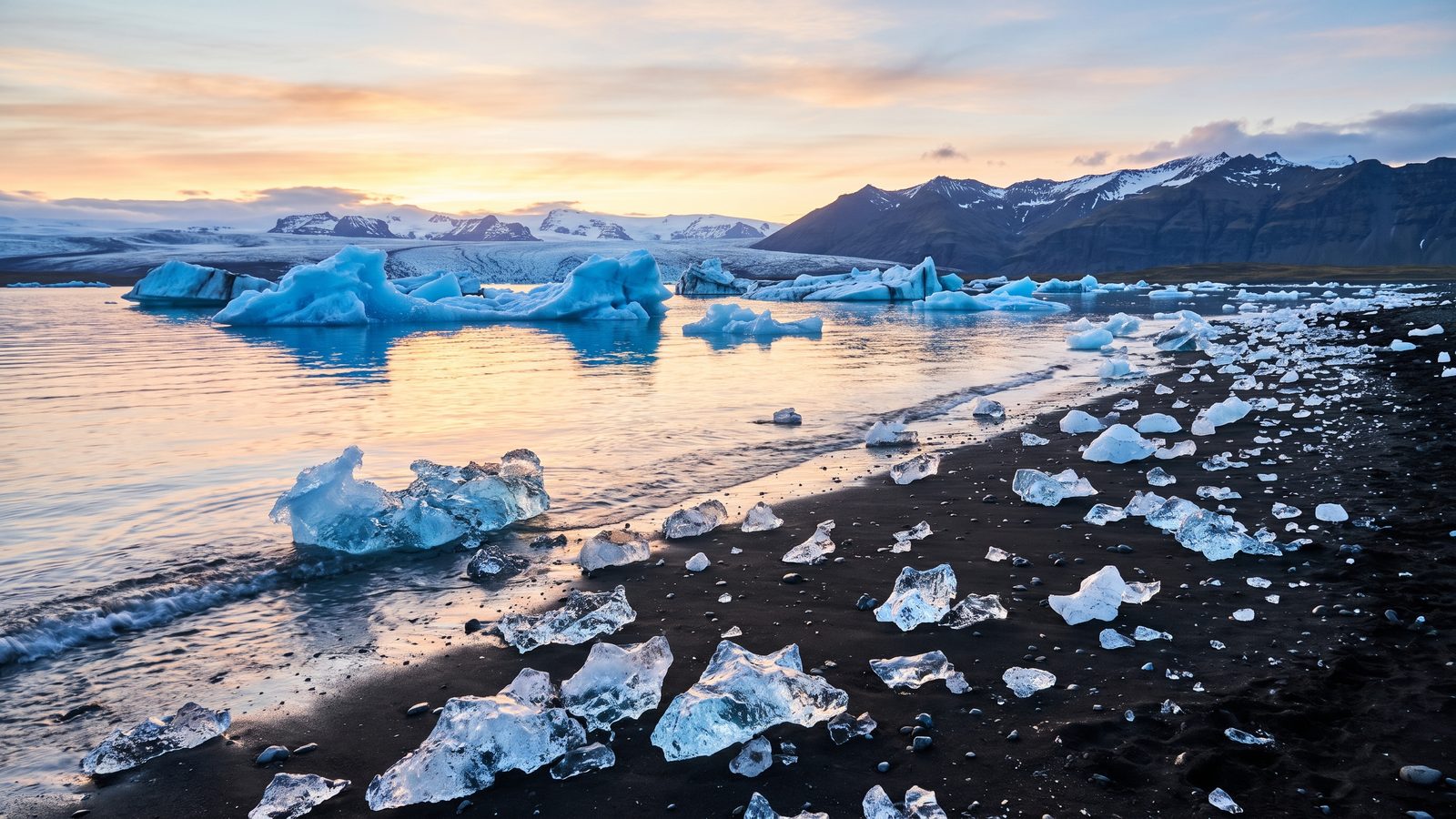
Welcome to Jökulsárlón, one of Iceland's most magnificent natural wonders. Located in southeastern Iceland near Höfn, this dynamic glacial lagoon is a sprawling landscape of floating icebergs carved from the massive Breiðamerkurjökull glacier. As you walk along the shoreline, you witness luminous blue ice drifting slowly toward the Atlantic Ocean, setting a striking contrast against the dramatic jet-black volcanic sand.
This self-guided audio tour brings the history, geology, and wildlife of Jökulsárlón to life. Whether you are capturing photos of glowing ice or watching for seals playing in the frigid water, this guide lets you explore the lagoon's ever-changing glacial artistry at your own relaxed pace.
Listen to a sample
The opening of this tour, exactly as AllTours narrates it on site.
What you'll hear on this tour
Stop 1. A Lagoon of Floating Giants
You stand before Jökulsárlón, a vast wonder born from ice that first formed in 1932. Today, this lagoon covers over 18 square kilometers of dynamic glacial landscape. You watch massive icebergs calve off the Breiðamerkurjökull glacier, with frozen towers reaching up to 50 meters into the sky. You observe these luminous giants as they drift slowly toward the sea, their brilliant blue and white hues creating an extraordinary spectacle. Below your feet, stark black sand stretches along the shore, offering a breathtaking contrast to the floating ice. You witness the raw, powerful forces of nature continually shaping this ever-changing environment.
Stop 2. Glacial Thrills and Ice Caves
You stand at the gateway to true glacial adventure. Imagine embarking on a zodiac boat tour, navigating directly between towering floating ice sculptures while feeling cold meltwater spray against your face. You hear the deep crackling and groaning of ancient ice shifting in the lagoon. Nearby, thrill-seekers strap on crampons and grab ice axes to ascend vivid blue seracs on guided glacier climbs. Farther into the ice, intrepid explorers descend into hidden ice caves, entering ethereal blue chambers sculpted by nature. From water level to frozen crevasses, you experience the untamed power and breathtaking artistry of this icy realm.
Stop 3. Titans of Deep Time
You gaze across vast rivers of ice, massive titans sculpted over thousands of years that relentlessly carve out the surrounding valleys. You see deep crevasses etched into frozen slopes, formed by immense pressure compressing layers of snow into dense blue ice. Scattered along the moraines, you notice solitary erratics—giant boulders carried miles by the glacier's inexorable crawl like prehistoric cargo. As you breathe in the remarkably clean air filtered by pure glacier ice, you feel the raw power of this landscape. Meltwater from these frozen giants feeds the entire surrounding ecosystem, reminding you that these colossal structures are living architects of earth.
Stop 4. Black Sands and Ocean Breakers
You walk along the captivating coastline where the glacial lagoon meets the sea. A cool ocean breeze greets you as crashing Atlantic waves sweep giant icebergs onto jet-black sands. You observe gulls soaring overhead and seabirds resting along the tide line of this vibrant coastal ecosystem. Millennia of ebb and flow have sculpted smooth volcanic rock formations and unique tidal shorelines around you. As sunlight dances across the wet shoreline, fragments of ancient ice glitter like polished diamonds in the surf. You stand at the edge of the continent, feeling the profound connection between moving water, ancient ice, and ocean power.
Stop 5. Capturing the Luminous Ice
You hold your camera or smartphone, tracing a direct lineage to the pioneering photographers who once stood here. Imagine those early artists hauling heavy wooden cameras and fragile plates across rugged terrain to capture these very vistas. They relied on temperamental daguerreotypes and long exposures, requiring subjects to hold still for minutes while carefully framing every natural arch and beam of light. Today, you carry incredible photographic power right in your pocket. As light shifts across the ice and dark sands, you compose your shots with an artist's eye, capturing moments in time just as explorers did generations before you.
Stop 6. A Canvas of Granite and Light
You look out over the surrounding landscape, watching low sunlight dance across sharp mountain peaks and glacial valleys. Millenniums of wind and frost have sculpted sheer rock faces and exposed vertical tapestries woven with glittering quartz and mica veins. Sunlight hits these stone ledges, illuminating delicate alpine flowers clinging tenaciously against stoic rock walls. Deep shadows shift continuously across the mountains with every passing cloud, creating a living panorama that changes by the minute. You feel the elemental beauty of this region, where dramatic geological textures and soft alpine light harmonize into an unforgettable northern vista.
Planning your visit
- Best time to go
- Year-round; early morning or late afternoon offers the best light for photography and fewer crowds.
- Approximate duration
- About 1.5 to 2 hours
- Where to start
- The main Jökulsárlón parking lot near the visitor center along Route 1.
Access and conditions change seasonally — check the official site before you go.
Frequently asked questions
Is Jökulsárlón worth visiting?
Yes, Jökulsárlón is one of Iceland's most famous natural attractions, renowned for massive blue icebergs drifting from Breiðamerkurjökull glacier across a black sand coastline.
How long do you need at Jökulsárlón?
Most visitors spend between 1.5 and 3 hours exploring the lagoon edge, walking across Route 1 to Diamond Beach, and photographing the floating icebergs.
When did Jökulsárlón form?
Jökulsárlón began forming around 1932 as the Breiðamerkurjökull glacier started retreating, creating a glacial lagoon that today covers over 18 square kilometers.
Keep exploring
Header image is an AI-generated illustration of Jökulsárlón. AllTours.ai is an AI audio tour guide — point your camera at any landmark and hear its story.