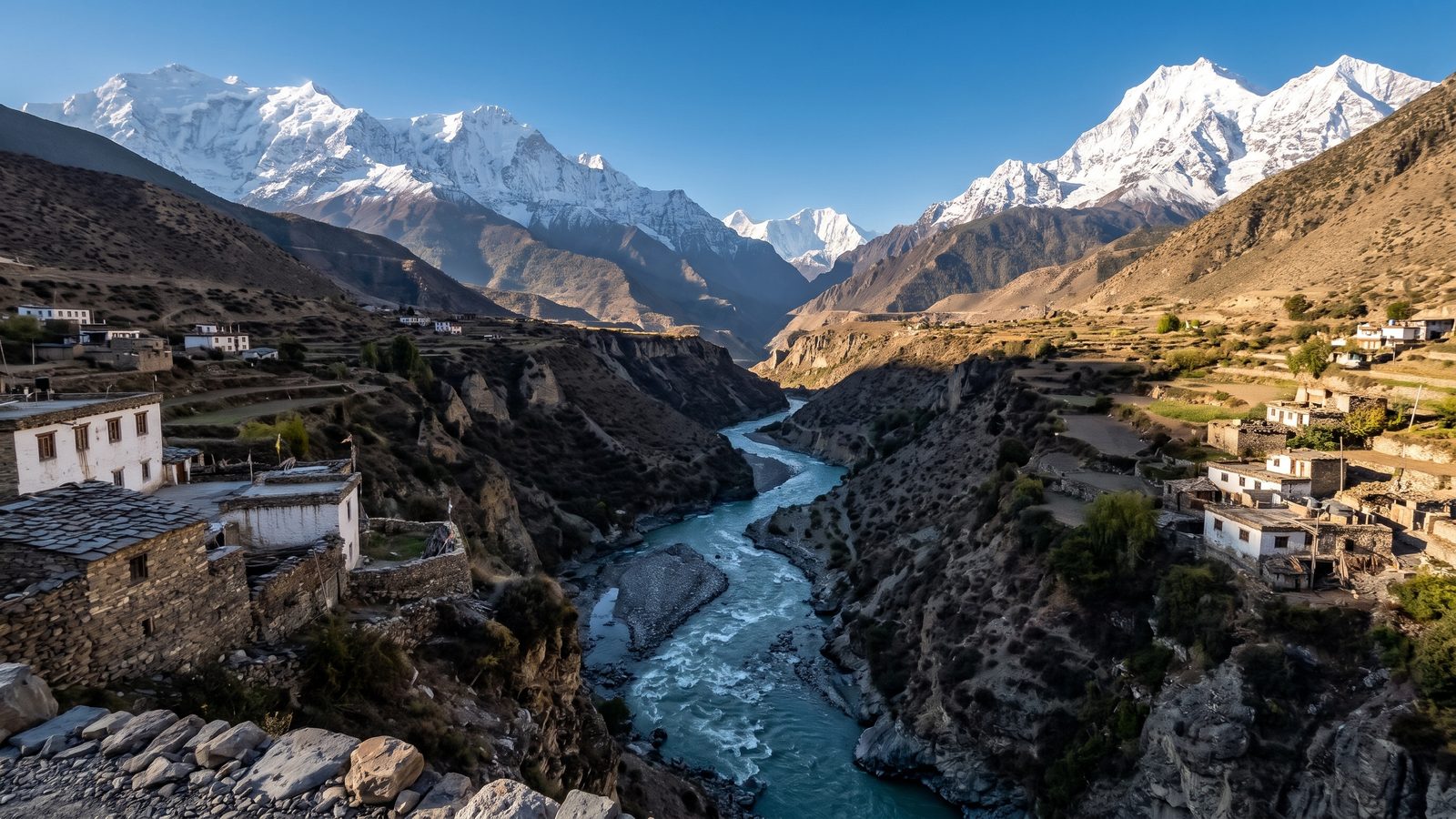
You stand before the Kali Gandaki Gorge, one of the deepest canyons on Earth, dramatically carved between the towering 8,000-meter peaks of Dhaulagiri I and Annapurna I. Formed by an ancient river older than the mountains themselves, this landscape bridges raw geological power with profound spiritual mystery. As you explore this vast canyon, you will discover sacred fossils, dramatic microclimates, and centuries-old mountain trade routes.
Whether you are gazing up at colossal ice-capped summits or following the dark, churning waters down in the valley floor, this self-guided audio tour reveals the natural wonders, rich Thakali culture, and thrilling high-altitude adventures hidden inside this legendary Himalayan gorge.
Listen to a sample
The opening of this tour, exactly as AllTours narrates it on site.
What you'll hear on this tour
Stop 1. Sailing Between Earth's Highest Giants
Look upward to witness the supreme majesty defining the Kali Gandaki Gorge. On your left stands Dhaulagiri I, and to your right sits Annapurna I—two colossal peaks soaring above eight thousand meters. You are standing in the deepest gorge on Earth, framed by two of the world's fourteen highest mountains. Tectonic forces continue to uplift these giants even as the river relentlessly erodes its bed. Feel the humbling air shaped by these snow-capped titans, which dictate local weather patterns and create a profound rain shadow. Local traditions revere these summits as sacred dwelling places of gods, particularly Annapurna, the goddess of nourishment, standing guard over ancient communities.
Stop 2. The Relentless Inky Sacred Waters
Gaze into the dark, churning currents of the Kali Gandaki River far below. This ancient waterway existed before the Himalayas rose, carving its downward path continuously as the mountains thrust skyward. Its name, meaning 'black,' reflects the deep, inky hue created by glacial melt and heavy sediments against dark cliffs. Beyond its sheer geological power, you are looking at a deeply revered spiritual icon, also known as the Krishna Gandaki. As you scan the riverbed, you can find Shaligrams—fossilized ammonites worshiped as direct manifestations of Lord Vishnu. Listen to the loud, resonant roar echoing off the cliffs, serving as the timeless soundtrack of the canyon.
Stop 3. Subtropical Forests to High Alpine Deserts
Sweep your gaze across the vertical gorge walls and observe a dramatic ecological transition unfolding within just a few thousand feet. Down near the riverbed, you tread through lush subtropical forests filled with ancient oaks and vibrant rhododendrons. As you rise higher, the environment shifts rapidly into arid alpine scrub and tough juniper bushes. This massive altitudinal span creates unique microclimates that support rare wildlife. Keep your eyes open for Himalayan tahr clinging to steep cliffs or majestic lammergeier vultures soaring on powerful thermal currents. Look down into the riverbed again to uncover ancient marine fossils, reminding you that a primordial ocean once covered these lofty mountain heights.
Stop 4. Ancient Salt Trails and Windswept Villages
Step onto paths carved over centuries by salt traders and devout pilgrims along the world-famous Annapurna Circuit. As you walk, you feel the powerful, biting Kali Gandaki wind that constantly reshapes the surrounding rock faces. You pass through traditional Thakali stone villages and terraced fields clinging to steep mountain slopes, offering you intimate views of Himalayan life. Notice how the scenery shifts from verdant green valleys into dry, wind-sculpted terrain reminiscent of the high Tibetan plateau. Ahead, trails climb toward historic gateways like Kagbeni and the sacred shrine of Muktinath, rewarding your effort with unforgettable vistas of snowbound peaks echoing with centuries of travel.
Stop 5. Whitewater Rapids and Precipitous Paths
Feel your pulse quicken as you enter a dramatic natural arena built for thrill-seekers. You can navigate narrow trails carved directly into cliff faces, where sheer drops tested generations of travelers. Down on the river, imagine steering through fierce whitewater rapids as the constrained canyon channels immense, untamed hydraulic energy. If you venture on a mountain bike, you descend thousands of feet along winding paths while Dhaulagiri and Annapurna stand as colossal guardians above you. Even stepping onto a swaying suspension bridge over the abyss delivers a heart-pounding sensation. Here, surrounded by raw wilderness, every physical challenge deepens your connection to this monumental landscape.
Stop 6. Twisted Strata and Dramatic Chasm Shadows
Observe the sheer verticality of the gorge walls, where dramatic layers of twisted, uplifted rock showcase millions of years of geological history. As sunbeams pierce the deep chasm, sudden shafts of light illuminate hidden waterfalls and rich rock textures against the deep shadows below. Glacial grey waters snake through the dark canyon floor, creating a dynamic visual ribbon against the stark, ancient cliffs. High above, cloud-wreathed snowy peaks contrast sharply with the shadowed gorge depths, presenting a new breathtaking landscape around every bend. Standing here, you feel completely dwarfed by the immense scale and silent majesty of these ancient mountain guardians.
Planning your visit
- Best time to go
- Spring (March to May) for clear skies and rhododendron blooms, or autumn (September to November) for optimal visibility and dry trails.
- Approximate duration
- about 3 to 5 hours
- Where to start
- Jomsom, Tatopani, or key viewing locations along the Annapurna Circuit route in Gandaki Province.
Access and conditions change seasonally — check the official site before you go.
Frequently asked questions
Is Kali Gandaki Gorge worth visiting?
Yes, the Kali Gandaki Gorge is one of Earth's great natural wonders. Carved between 8,000-meter Himalayan giants Dhaulagiri and Annapurna, it offers spectacular mountain views, ancient sacred traditions, and world-class trekking.
How long do you need at Kali Gandaki Gorge?
Day visitors typically spend 3 to 5 hours exploring viewpoints, riverbeds, and suspension bridges, while multi-day trekkers on the Annapurna Circuit spend several days journeying through its changing ecological zones.
What is the geological origin of Kali Gandaki Gorge?
The Kali Gandaki is an antecedent river that existed before the Himalayas formed. As tectonic forces pushed Dhaulagiri and Annapurna upward, the river continually cut downward, creating one of the deepest gorges on Earth.
Keep exploring
Header image is an AI-generated illustration of Kali Gandaki Gorge. AllTours.ai is an AI audio tour guide — point your camera at any landmark and hear its story.