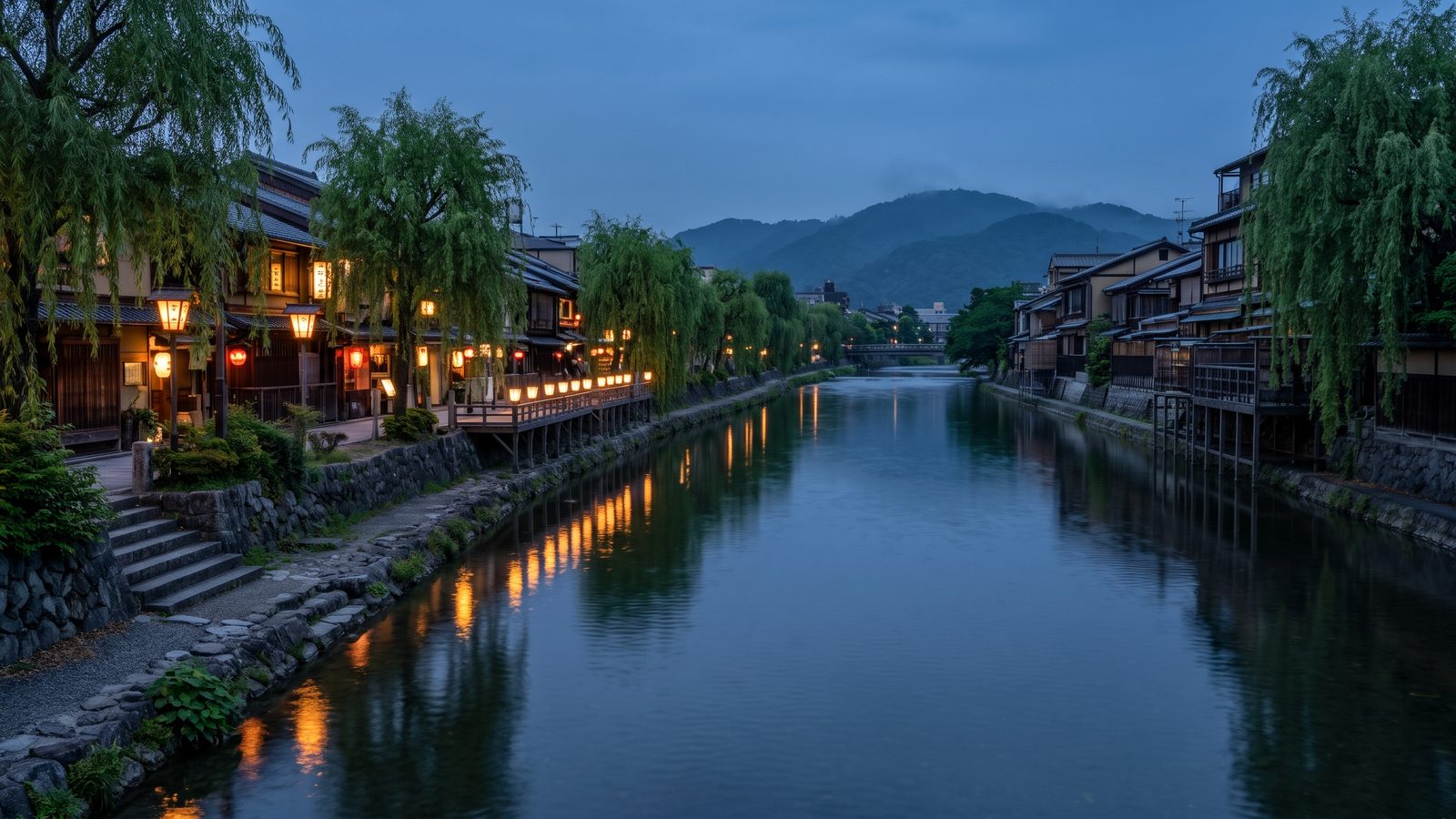
Welcome to the Kamo River, the tranquil heart and historic lifeblood of Kyoto. For centuries, these gentle currents shaped the city's boundaries and daily life. Today, the riverbanks offer a captivating blend of nature, culture, and relaxation where locals and visitors come to unwind. As you walk along its scenic shores, you will discover centuries-old summer dining traditions, vibrant nightlife, and a peaceful escape from the urban pulse.
Experience the shifting seasons through weeping willows, cherry blossoms, and fiery autumn maples. From stepping across river stones to catching glimpses of geisha lanterns along Pontocho Alley, this self-guided audio journey invites you to slow down and immerse yourself in Kyoto's timeless charm.
Listen to a sample
The opening of this tour, exactly as AllTours narrates it on site.
What you'll hear on this tour
Stop 1. A Living Canvas of Shifting Seasons
You gaze upon the gentle current of the Kamo River, reflecting Kyoto's ever-changing sky. Along the banks, weeping willows cascade gracefully toward the water, while distant Higashiyama mountains frame the urban horizon. In spring, delicate cherry blossom petals drift downstream like tiny boats, whereas autumn turns the riverfront maples into a dramatic display of crimson and gold. You notice elegant white egrets standing motionless in shallow water, their reflections mirrored alongside schools of carp swimming below. Meticulously placed stepping stones invite you across, while the traditional latticework of nearby wooden buildings blends human artistry seamlessly with nature.
Stop 2. Elevated Dining Over Flowing Waters
You discover kawayuka, or noryo-yuka, the iconic summer dining tradition along the river's western bank. From May to September, wooden platforms extend directly over the water, offering a cool respite from Kyoto's summer heat. This custom originated during the Edo period when merchants gathered to escape the humidity and enjoy river breezes. Today, you participate in this centuries-old ritual while savoring seasonal kaiseki cuisine above the gently murmuring current. Each temporary platform is carefully built and dismantled each year, showcasing Kyoto's deep commitment to seasonal beauty, traditional craftsmanship, and unique culinary heritage.
Stop 3. Lanterns and Geisha Culture along Pontocho
As twilight deepens, you watch the riverfront transform into Kyoto's nocturnal cultural heart. Parallel to the bank lies Pontocho Alley, where glowing paper lanterns illuminate narrow lanes and traditional machiya townhouses. These historic buildings host cozy izakayas and upscale restaurants filled with the clinking of sake cups. If you watch closely, you might catch a fleeting glimpse of a geiko or maiko gliding between evening appointments in vibrant silk kimonos. Reflections of city lights shimmer across the water's surface, creating a romantic, serene backdrop where contemporary evening enjoyment seamlessly meets centuries of refined entertainment culture.
Stop 4. Kyoto's Sanctuary for Peaceful Repose
You feel a refreshing breeze carrying the scent of fresh water, instantly soothing the urban buzz around you. The rhythmic murmur of the river acts as a natural soundtrack, washing away tension as you sit upon the grassy banks. Nearby, visitors sketch elegant herons, enjoy quiet picnics, or simply close their eyes to absorb the calm atmosphere. You can dip your feet directly into the cool current on a warm day, grounding yourself in the present moment. The Kamo River invites you to slow your pace, breathe deeply, and reconnect with a timeless peace that softens the flow of time itself.
Stop 5. The Cultural Heartbeat and Dyeing Heritage
You observe how the Kamo River shapes Kyoto's cultural identity beyond simple scenery. Historically, craftspeople used these pristine waters for Kyo-yuzen dyeing, rinsing brilliant silk textiles directly in the river to give them their famed luster. Looking across the water toward Pontocho, you see how geisha culture and seasonal rituals remain intertwined with the river's rhythm. For generations, poets and artists have drawn inspiration from these gentle currents. Whether through elevated dining terraces designed to catch summer breezes or traditional art forms, the river remains a living center of refined craftsmanship, creative inspiration, and seasonal heritage.
Stop 6. Stepping Stones and Riverside Promenades
As you walk along the river promenade toward the Kamo-gawa Delta, you feel the fast city pace give way to a gentle rhythm. You encounter famous bird-shaped chidori stepping stones set into the shallow riverbed, inviting you to playfully cross the flowing water. This playful crossing tradition dates back to the Edo period, offering a unique view directly within the river's current. Along the path, you observe everyday Kyoto life unfolding—students studying, artists capturing the light, and couples strolling hand-in-hand. Walking at this deliberate pace allows you to appreciate subtle sounds, from rustling bamboo to distant temple bells.
Planning your visit
- Best time to go
- Late afternoon to early evening, especially from May to September for summer kawayuka dining, or during spring cherry blossoms and autumn foliage.
- Approximate duration
- About 1 to 2 hours
- Where to start
- Kamo-gawa Delta or near Sanjo/Shijo Bridges along the western bank.
Access and conditions change seasonally — check the official site before you go.
Frequently asked questions
Is Kamo River worth visiting?
Yes, the Kamo River is a central highlight of Kyoto, offering scenic seasonal views, historic riverbed walking paths, unique seasonal kawayuka dining over the water, and quick access to historic districts like Pontocho Alley.
How long do you need at Kamo River?
Most visitors spend between 1 and 2 hours strolling along the banks, crossing the famous stepping stones, and enjoying the atmosphere, though you can easily stay longer for evening dining along the river terraces.
What is the historical significance of the Kamo River?
Historically, the Kamo River served as Kyoto's natural boundary and vital water supply, influencing city development and traditional industries such as Kyo-yuzen silk dyeing, while hosting centuries-old summer dining traditions dating back to the Edo period.
Keep exploring
Header image is an AI-generated illustration of Kamo River. AllTours.ai is an AI audio tour guide — point your camera at any landmark and hear its story.