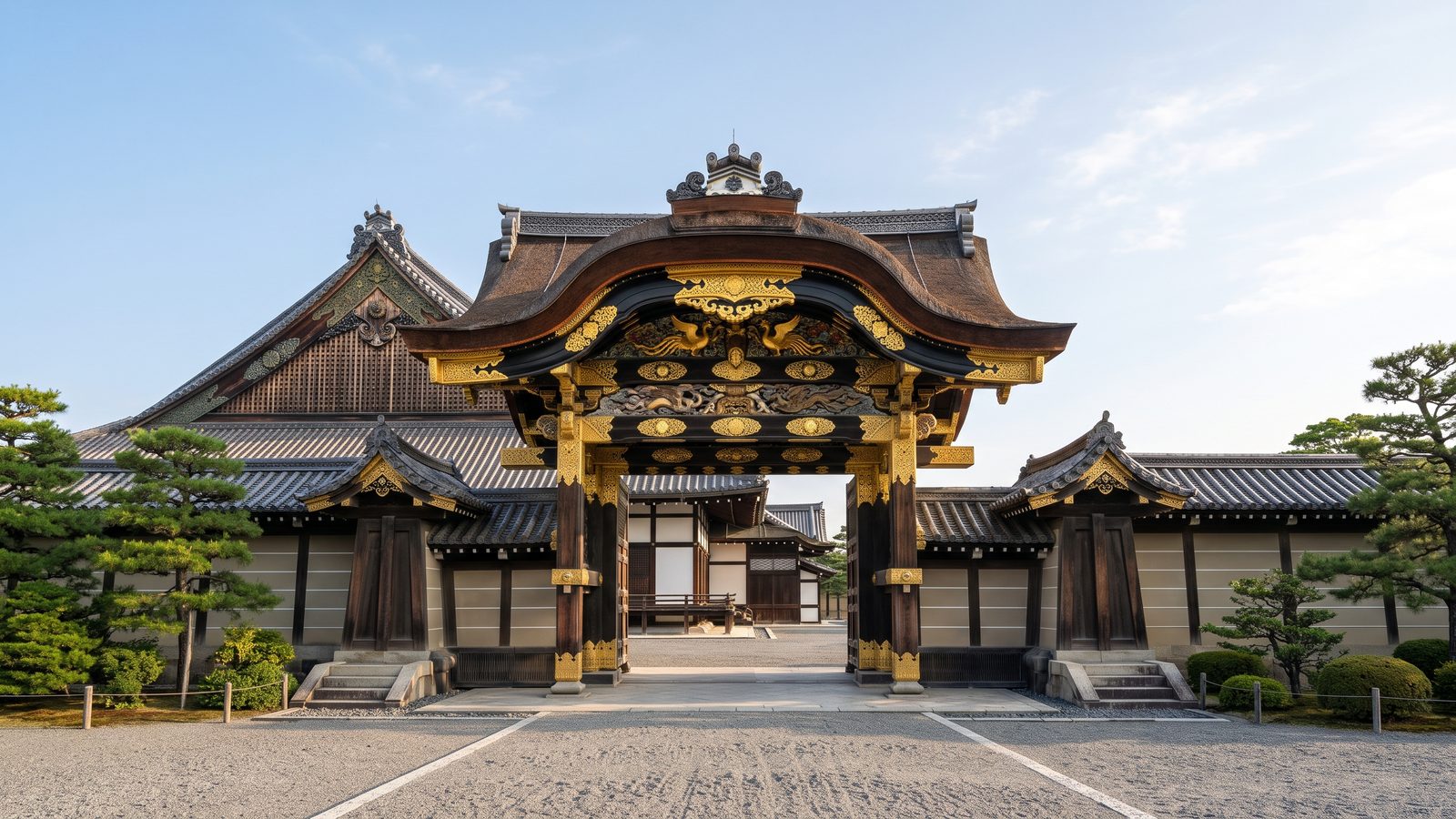
Welcome to Nijo Castle's Karamon Gate, a magnificent National Treasure and UNESCO World Heritage site standing as a monument to Tokugawa shogunate power. Originally constructed at Fushimi Castle before being relocated here, this entrance greeted visiting emperors and lords with extravagant displays of gold leaf, lustrous black lacquer, and intricate cypress carvings. As you step through this gateway, you walk the same path taken by feudal rulers during Japan's most dramatic historic transitions.
This self-guided audio tour reveals the rich symbolism embedded in every carved phoenix, tiger, and peony. Discover how rivalries, imperial visits, and the end of samurai rule left their mark on these historic timbers. Take your time to appreciate the craftsmanship that defines Momoyama architectural artistry.
Listen to a sample
The opening of this tour, exactly as AllTours narrates it on site.
What you'll hear on this tour
Stop 1. Witness to Shoguns and Empires
You stand before a gate that carries centuries of shifting political dominance. Constructed originally for Toyotomi Hideyoshi’s Fushimi Castle, Tokugawa Ieyasu dismantled and relocated this structure to Nijo Castle to signal his supremacy over past rivals and the Imperial Court. As you inspect the cypress frame, imagine the grand procession of Emperor Go-Mizunoo passing through in 1626, an event that spurred lavish castle renovations. Decades later in 1867, this same gate stands sentinel during the Taisei Hokan, when Tokugawa Yoshinobu returns governing power to the Emperor. Every timber beneath your eyes bears silent testimony to the dramatic fall of the samurai era.
Stop 2. Momoyama Craftsmanship in Gold and Cypress
Look closely at the striking curves above you, where the distinctive karahafu and chidori-hafu gables showcase the flamboyant aesthetic of Momoyama-period design. You observe how master artisans carved dynamic phoenixes and blooming peonies directly into hinoki cypress wood. A rich layer of deep black lacquer coats the frame, creating a dramatic backdrop for brilliant gold leaf accents. This gilding offers both blinding opulence and essential weather protection. Above, heavy copper roof tiles mimic traditional ceramic, completing a design engineered to astound distinguished visitors. Every panel presents a seamless blend of artistic extravagance and structural mastery.
Stop 3. Symbols of Prestige and Protection
Pause directly in front of Karamon Gate, the main ceremonial entrance built to impress the shogunate's most esteemed guests. You notice shimmering phoenixes and fierce tigers carved into the facade, symbols crafted to convey authority, prestige, and spiritual protection. The glistening gold leaf catches the light, declaring the unmatched wealth of the Tokugawa clan to anyone approaching the inner palace. As a designated National Treasure, this entrance invites you to feel the imposing weight of feudal court ceremonies. You are standing where warlords once demonstrated their absolute dominance through breathtaking design.
Stop 4. A Living UNESCO Heritage Treasure
You are exploring a key component of the Historic Monuments of Ancient Kyoto UNESCO World Heritage Site. This status recognizes the gate as an exceptional embodiment of Momoyama-period architectural grandeur and feudal heritage. As you examine the gables and figures, appreciate the ongoing preservation efforts required to maintain this historic landmark. Restorers periodically reapply gold leaf and painstakingly repair intricate wood carvings so future generations can experience its original splendor. By standing here today, you connect directly with centuries of preserved Japanese craftsmanship, courtly culture, and warrior history.
Stop 5. The Art of Ninomaru Garden
Pass beyond the gateway to encounter Ninomaru Garden, a pond-stroll landscape designed by the legendary tea master Kobori Enshu. Conceived for Emperor Go-Mizunoo's historic visit in 1626, this garden is framed to offer a magnificent panorama from the palace veranda. You look out over the central pond to spot three distinct islands: Horai-jima, representing eternal youth, flanked by Turtle Island and Crane Island for longevity. Ancient pine trees and carefully balanced stones create a harmonious, idealized world. Notice how the layout subtly asserts the shogun’s refined taste and authority to every imperial visitor.
Stop 6. Capturing Gold Leaf and Shadows
Frame your camera shot to capture the dramatic contrast between polished black lacquer and brilliant gold leaf. You face a rewarding challenge as morning light hits the curved karahafu gable, highlighting delicate cut-gold kirikane patterns and intricate phoenix carvings. Step slightly off-center to add depth, using the gate’s archway to reveal the wooden rooflines of Ninomaru Palace beyond. Try a wide lens to convey the gate’s imposing scale, or zoom in on the detailed animal reliefs. Patiently waiting for crowds to clear lets you capture the solitary grandeur of this ancient entrance.
Planning your visit
- Best time to go
- Early morning right at opening to catch soft sunlight on the gold leaf and avoid tour groups.
- Approximate duration
- about 30 to 45 minutes
- Where to start
- In front of Karamon Gate, just before entering the Ninomaru Palace grounds inside Nijo Castle.
Access and conditions change seasonally — check the official site before you go.
Frequently asked questions
Is Karamon Gate at Nijo Castle worth visiting?
Yes, Karamon Gate is a designated National Treasure and part of Kyoto's UNESCO World Heritage site, famous for its magnificent Momoyama-style gold leaf, black lacquer, and historic connection to the Tokugawa shoguns.
How long do you need at Karamon Gate at Nijo Castle?
You need about 30 to 45 minutes to admire the detailed carvings, take photos, listen to the audio stories, and explore the nearby Ninomaru Garden.
What is the historical significance of Karamon Gate?
Originally built for Toyotomi Hideyoshi's Fushimi Castle and later relocated by Tokugawa Ieyasu, Karamon Gate hosted imperial visits in 1626 and stood as a focal point during the 1867 Taisei Hokan, which marked the end of samurai rule.
Keep exploring
Header image is an AI-generated illustration of Karamon Gate at Nijo Castle. AllTours.ai is an AI audio tour guide — point your camera at any landmark and hear its story.